SoCal Work Trucks

Isuzu NPR-HD near San Bernardino, California

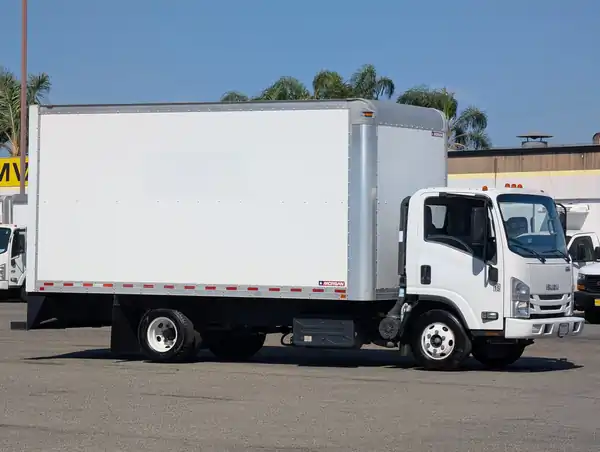
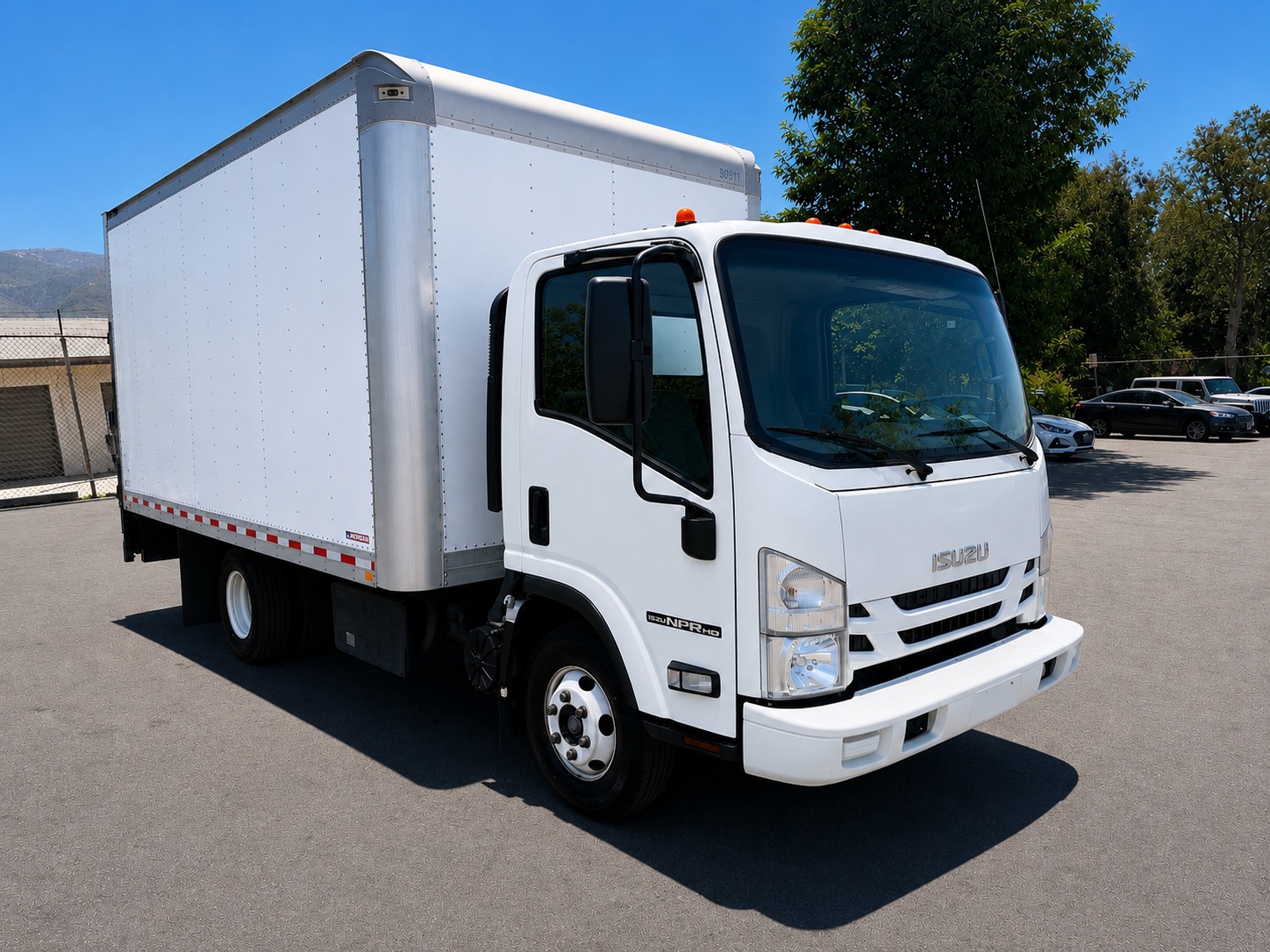
Class 4/5 cab-over commonly sold as a completed box or stake truck. Below: who sells it near San Bernardino, what is available now, and how to choose the right configuration.

Buying a Isuzu NPR-HD near San Bernardino

No sellers in our network are currently listed close to San Bernardino. Commercial dealers routinely deliver across Southern California, so tell us what you need and we will look more widely.

No Isuzu NPR-HD listed in San Bernardino County right now

Commercial inventory turns over quickly. Tell us your specification and a fleet specialist will search participating sellers across Southern California.

Is the Isuzu NPR-HD the right truck for your work?

Class 4/5 cab-over commonly sold as a completed box or stake truck.

Urban delivery needing a 14 to 20 ft box. Tight turning and forward visibility make it far easier to place than a conventional-cab truck of the same capacity.

Typical specifications

Ranges across common configurations of this model. The figures for any individual vehicle depend on its cab, wheelbase, drivetrain and upfit.

GVWR
14,500 lbs
Payload
6,500–9,000 lbs
Seating
3–7 seats

These are model ranges, not a specific truck. Payload in particular varies by well over 1,000 lbs across configurations. Always confirm against the door-jamb sticker and the manufacturer documentation for the exact vehicle before you buy or load it.

Configurations to choose between

  • Regular and Crew Cab
  • Gas and diesel
  • 109 to 176 in wheelbase

What buyers get wrong

At 14,500 lbs GVWR this stays under the 26,001 lb commercial licence threshold, but confirm the loaded weight with the body and cargo, not the bare chassis.

Body types it is built as

Who buys the Isuzu NPR-HD

What else to consider

Vehicles commonly cross-shopped against the Isuzu NPR-HD.

Isuzu NPR-HD: the full picture

Isuzu dominates the light medium-duty market in Southern California, and the NPR-HD is the model most of that volume sits on. Drive through any commercial district in Los Angeles, Orange County or the Inland Empire and the white cab-over box trucks you see are overwhelmingly these.

That ubiquity produces a practical advantage that has nothing to do with the truck itself: availability. Because Isuzu dealers stock completed trucks — chassis already fitted with a box, stake or dump body — a business can frequently buy one and put it to work in days rather than waiting six to sixteen weeks for an upfitter to build a body on a Ford or Chevrolet chassis. For a business replacing a broken truck, that difference is decisive.

The cab-over layout gives the same advantages as the Chevrolet Low Cab Forward, to which it is closely related: a tight turning circle, direct visibility over the front corners, and a longer body on a given wheelbase. On dense urban delivery routes those translate into stops completed per shift, which is the metric that actually pays.

At 14,500 lbs GVWR the NPR-HD sits comfortably below the 26,001 lb threshold that generally triggers a commercial driver licence requirement. That is a substantial part of its appeal: a business can hire from the general driver pool rather than competing for CDL holders, and in a tight labour market that matters more than most specification differences.

Both petrol and diesel are offered, which is genuinely useful. Short urban stop-start routes are exactly the duty cycle where modern diesel after-treatment struggles to regenerate cleanly, and a petrol NPR sidesteps that entirely. Higher-mileage regional work still favours the diesel for torque and economy.

The constraints are the same as any cab-over. Servicing requires tilting the cab, which needs vertical clearance many shops lack. The ride is firmer over distance than a conventional cab. And drivers moving from conventional trucks need a short familiarisation, particularly for the sense of where the front corners are.

How businesses actually use it

Urban box-truck delivery

Furniture and appliance delivery · Wholesale supply · Parcel · Beverage distribution

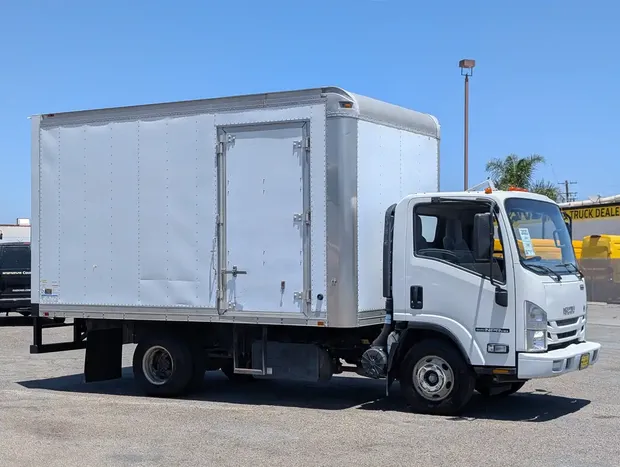
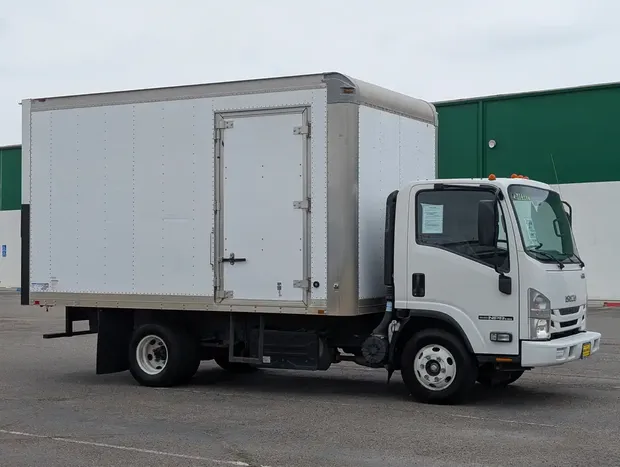
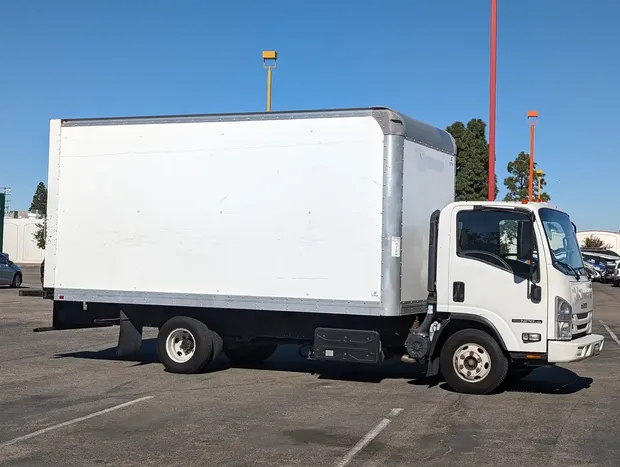
The core NPR-HD application. A 14 to 20 ft box on a chassis that places into loading bays, alleys and forecourts a conventional truck cannot reach. Add a liftgate and a single driver can handle heavy items without a dock, which is what makes residential and small commercial delivery viable.

Typical configuration: Regular Cab with a 16 to 18 ft box body and a liftgate

Landscape and green-waste dump bodies

Landscaping · Tree service · Grounds maintenance · Hardscape

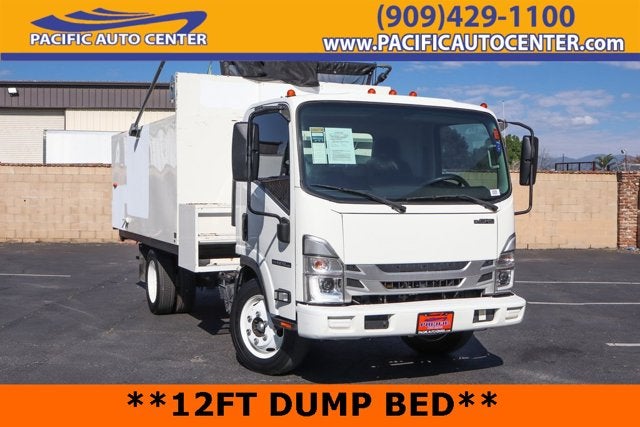
A natural step up for a landscaping business that has outgrown a one-ton pickup dump. The NPR carries substantially more while staying manoeuvrable enough for residential streets, and completed dump trucks are often available from stock rather than requiring a body build.

Typical configuration: Regular or Crew Cab with a 12 to 14 ft dump body

Stake bed material delivery

Building supply · Nurseries · Landscape supply · Fencing

Forklift-loaded from either side, with a longer usable deck than a conventional truck of the same wheelbase. Deck height is worth confirming against the specific yards you collect from, since it determines whether their forklift can load you without a ramp.

Typical configuration: Regular Cab with a 16 to 20 ft stake body

Refrigerated food distribution

Food distribution · Catering · Floral · Restaurant supply

Insulated box with an active refrigeration unit, on a chassis that still works urban routes. On any reefer the unit make, temperature rating and running hours matter more than the chassis — ask for unit hours alongside truck mileage on anything used.

Typical configuration: Regular Cab with an insulated box and a reefer unit matched to the load

Crew-cab configurations for landscape and utility crews

Landscaping · Municipal · Utility contracting · Facilities

The Crew Cab seats up to seven, letting a crew and their equipment travel in one vehicle. For landscape maintenance operations running a crew plus a dump body, this replaces a pickup and a separate truck with a single asset.

Typical configuration: Crew Cab with a dump or landscape body

Moving and rental fleet applications

Household moving · Office relocation · Truck rental

Rental fleets favour cab-over because non-professional drivers find the visibility and turning circle far easier to manage, and because a box on this chassis reaches residential streets and apartment forecourts a conventional truck cannot.

Typical configuration: Regular Cab with a 16 to 20 ft box and a ramp or liftgate

How to choose the right configuration

Start by asking whether you want a completed truck or a chassis. This is the NPR-HD's genuine structural advantage: Isuzu dealers stock finished box, stake and dump trucks, so you can often buy from inventory and work the same week. A Ford or Chevrolet chassis cab means waiting six to sixteen weeks for an upfitter. If you are replacing a broken truck or taking on work now, that difference outweighs most specification comparisons.

Confirm your service arrangements before committing. Tilting the cab needs vertical clearance that many independent shops and some fleet workshops simply do not have. This is the most common practical regret on any cab-over, and one phone call prevents it entirely.

Choose petrol or diesel by duty cycle rather than by default. Short urban routes with frequent stops favour petrol, because diesel after-treatment never gets hot enough to regenerate cleanly and causes avoidable downtime. Higher mileage and heavier sustained loads favour diesel for torque and economy. Having both available is a real advantage over diesel-only rivals — use it.

Size the body to the work, not to the maximum the chassis allows. A longer box seems like free capacity until it will not fit a customer's forecourt or turn in their yard. Map your actual delivery points before specifying length, and remember that a 14,500 lb GVWR fills up faster with dense freight than with volume freight.

If you need more capacity, step up within the range rather than compromising. The NQR at 17,950 lbs and the NRR at 19,500 lbs give more payload on a similar footprint, and all three stay below the 26,001 lb CDL threshold. Running an NPR permanently at its rating is more expensive and less reliable than buying the next model up.

Finally, cross-shop the Chevrolet Low Cab Forward honestly. It is built on the same Isuzu N-Series engineering and sold through the Chevrolet network. If your business already has a Chevrolet service relationship for its pickups, that convenience may outweigh anything else, and the trucks are mechanically very close.

Our assessment

An editorial evaluation written by the SoCal Work Trucks editorial team, last reviewed 2026-09-03. It is our own assessment, not customer reviews or ratings.

The default light medium-duty truck in Southern California, and for good reasons: availability from stock, genuine urban manoeuvrability, a sub-CDL weight rating, and both fuel types offered. The constraints are the cab-over constraints — servicing clearance and ride over distance — and neither is a surprise if you check beforehand. For urban delivery and landscape work it is very hard to argue against.

What it does well

  • Completed trucks available from stock

    Isuzu dealers stock finished box, stake and dump trucks, so you can often buy and work the same week rather than waiting months for an upfitter. For a business replacing a broken truck this is frequently the deciding factor.

  • Urban manoeuvrability that converts to productivity

    Tight turning circle and direct visibility over the front corners place the truck into bays and forecourts a conventional cab cannot reach, which shows up as stops completed per shift.

  • Stays under the CDL threshold

    At 14,500 lbs GVWR a standard licence generally suffices, so hiring draws from the general driver pool rather than competing for CDL holders. In a tight labour market that is worth more than most specification differences.

  • Petrol and diesel both offered

    Genuinely useful against diesel-only medium-duty rivals. Short urban stop-start work is exactly where diesel after-treatment causes downtime, and petrol removes the problem.

  • Ubiquity means parts, service and resale

    The sheer number in service across Southern California means parts availability, familiar technicians and a liquid used market when you come to sell.

Where it falls short

  • Servicing needs cab-tilt clearance

    Many shops cannot tilt the cab. It is the most common post-purchase problem on any cab-over and entirely preventable by asking your service provider first.

  • Firmer ride and more noise over distance

    Sitting above the front axle means road inputs reach the driver directly. Over long regional runs it is more tiring than a conventional cab, which matters for retention.

  • Payload fills quickly with dense freight

    At 14,500 lbs GVWR a box that looks half empty can be at its rating with dense goods. Buyers sizing by box length rather than weight get caught out regularly.

  • Unfamiliar to drivers from conventional trucks

    The seating position and sense of the front corners take a few shifts to adjust to. Worth building into onboarding, since week-one low-speed damage is entirely avoidable.

  • Less structure ahead of the driver

    With the driver above the front axle there is less crush space in a frontal impact than in a conventional cab. A legitimate consideration when weighing route types and driver experience.

Ownership and used-buying notes

Check the cab tilt mechanism and its latches specifically on any used cab-over. It is operated at every service, and a stiff or seized mechanism suggests the truck has been serviced somewhere without proper clearance — which raises questions about what else was skipped.

The body carries most of the value on a completed truck, so assess it accordingly. On a box, check the roll-up door tracks and seals and the liftgate operation and rating. On a refrigerated unit, ask for the reefer hours and service record — a tired refrigeration unit costs more to replace than most buyers expect.

Urban delivery trucks accumulate low-speed damage as a matter of course. Scraped corners and replaced mirrors are normal and negotiable. Structural damage to the cab or frame is not, and on a cab-over the cab is more integral to the structure than on a conventional truck, so treat any repair there seriously.

Questions buyers ask

Why is the Isuzu NPR-HD so common in Southern California?
Availability and fit. Isuzu dealers stock completed box, stake and dump trucks so businesses can buy and work the same week, the cab-over layout suits dense urban delivery, and at 14,500 lbs GVWR it stays under the CDL threshold. That combination is hard to beat for regional delivery and landscape work.
Do I need a CDL to drive an NPR-HD?
Generally no. At 14,500 lbs GVWR it sits well below the 26,001 lb threshold that typically triggers a commercial driver licence requirement, so a standard licence usually suffices. Towing changes the combined rating, so confirm your specific configuration with the California DMV.
Can my regular shop service it?
Ask before buying. Servicing requires tilting the whole cab forward, which needs vertical clearance many independent shops and some fleet workshops do not have. This is the single most common practical problem fleets discover after purchase and one phone call prevents it.
Should I buy petrol or diesel?
Petrol for short urban routes with frequent stops, where diesel after-treatment never gets hot enough to regenerate cleanly and causes downtime. Diesel for higher mileage and heavier sustained loads, where it returns better torque and economy. Having both offered is a genuine advantage over diesel-only competitors.
How does the NPR-HD compare with a Chevrolet Low Cab Forward?
They are closely related — the Low Cab Forward is built on Isuzu N-Series engineering and sold through Chevrolet. Mechanically very similar. Choose on the dealer and service relationship that suits your business, and cross-shop the pricing, since it can differ meaningfully between networks.
What is the difference between the NPR-HD, NQR and NRR?
Weight rating. The NPR-HD is 14,500 lbs GVWR, the NQR 17,950 and the NRR 19,500, with payload rising accordingly on a broadly similar footprint. All three stay under the 26,001 lb CDL threshold. If you find yourself running an NPR at its rating regularly, step up rather than compromising.
How long does it take to get one with a body fitted?
Frequently days, which is the NPR-HD's structural advantage. Isuzu dealers stock completed trucks with box, stake and dump bodies already fitted. A Ford or Chevrolet chassis cab typically means six to sixteen weeks waiting on an upfitter, so for urgent replacement the difference is decisive.
How much can an NPR-HD actually carry?
Payload runs roughly 6,500 to 9,000 lbs depending on configuration and body. The important caveat is that dense freight reaches the 14,500 lb GVWR long before the box looks full — size by weight rather than by box length, which is where buyers most often get caught out.
Is an NPR-HD a good step up from a one-ton dump truck?
Yes, and it is a very common progression for landscaping businesses. It carries substantially more than an F-350 or Silverado 3500HD dump while staying manoeuvrable on residential streets and below the CDL threshold, so it is a natural next vehicle rather than a category change.
Can an NPR-HD tow a trailer?
It can, though towing is not what the platform is optimised for and ratings are modest relative to a conventional medium-duty truck. More importantly, trailer weight counts against the combined rating, which can push the outfit towards thresholds that change licensing requirements. If regular heavy towing is part of the job, a conventional chassis cab such as an F-550 or Silverado 5500HD is the better tool, and confirm any combined rating with the California DMV before committing.
What should I check on a used NPR-HD?
The cab tilt mechanism and latches first — a seized one suggests poor servicing access. Then the body, which carries most of the value: roll-up door tracks and seals, liftgate operation and rating, and on a reefer the unit hours and service record. Corner and mirror damage is normal on urban trucks; cab or frame damage is not.
How does an NPR-HD hold its value?
Well, and better than most commercial vehicles, precisely because so many are in service across Southern California. A liquid used market means a straightforward sale when you replace it, and it also means a completed truck with a good body is easier to value honestly than a one-off custom build. That resale depth is worth factoring into total cost of ownership rather than judging on purchase price alone.
What are the ongoing running costs beyond fuel?
Tyres are the item people underestimate — six of them, and urban delivery duty wears them unevenly. Beyond that, brakes take a beating on stop-start routes, and any body brings its own maintenance: liftgate servicing, roll-up door tracks, or refrigeration unit servicing on a reefer. Budget body maintenance as a separate line, because it is frequently what takes the truck off the road rather than the drivetrain.
Is a Crew Cab worth it?
For landscape and utility crews, often yes — it seats up to seven, so a crew and their equipment travel in one vehicle rather than needing a separate pickup, which removes a whole vehicle from the fleet along with its insurance, fuel and maintenance. The cost is wheelbase and body length: the finished truck is meaningfully longer and turns in a wider circle, which can undo some of the manoeuvrability advantage that made you choose a cab-over in the first place. Confirm the finished dimensions against the sites you actually work before specifying it.

Official sources and further reading

Manufacturer and regulatory sources for specifications and requirements. We do not link to other vehicle-selling websites.

Shop Isuzu NPR-HD by model year

Nearby cities

Find a Isuzu NPR-HD near San Bernardino

Two quick steps. A fleet specialist will follow up.

  1. 1. Your needs
  2. 2. Your details