
Cargo van for food and goods distribution
The common answer for food banks and donation collection. It secures contents, protects them from weather, drives much like a large car, and does not need a specialist licence in most configurations.
Configurations commonly used to move people and goods on a constrained budget.
The work involves move people and goods on a constrained budget, which most often points to passenger & shuttle vans, cargo vans, cutaway vans & trucks. The right choice depends on how much weight you carry, whether you tow, and how tools need to be reached on site.
This is general guidance, not engineering advice. Confirm payload, GVWR, towing capacity and upfit suitability against the specific vehicle and the manufacturer’s documentation.
200 vehicles · page 1 of 9

XL · Passenger Van
$67,500
Stock #F26710W
Check AvailabilityBase · Cargo Van
$56,085
Stock #2026102
Check Availability
Base · Cargo Van
$52,155
Stock #F26030W
Check AvailabilityBase · Cargo Van
$59,000
Stock #F26686W
Check Availability
XL · Passenger Van
$63,275
Stock #F25446W
Check Availability
XL · Passenger Van
$63,275
Stock #F25447W
Check Availability
Base · Cargo Van
$43,765
Stock #F25720W
Check Availability
Base · Cargo Van
$53,380
Stock #F25416W
Check Availability
Base · Cargo Van
$46,810
Stock #F25719W
Check Availability
Base · Cargo Van
$46,540
Stock #F25718W
Check Availability
Base · Cargo Van
$54,690
Stock #F25516W
Check Availability
Medium Roof · Cargo Van
$53,365
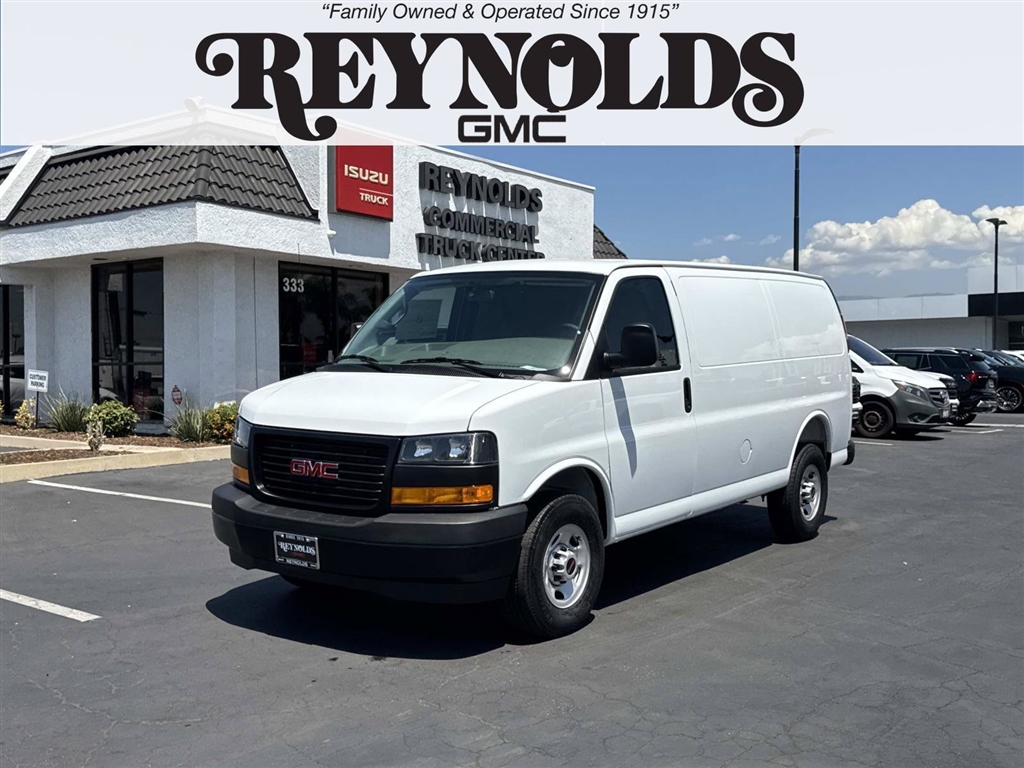
LS 2500 · Cargo Van
$46,798
Stock #260494
View Original Listing
LT · Cargo Van
$54,985

Ext · Cargo Van
$51,515

Ext · Cargo Van
$51,905

907 (VS30) · Cargo Van
$67,191

907 (VS30) · Cargo Van
$67,740

907 (VS30) · Cargo Van
$86,377

907 (VS30) · Cargo Van
$86,785

907 (VS30) · Cargo Van
$78,854

907 (VS30) · Cargo Van
$73,324

907 (VS30) · Cargo Van
$65,342

907 (VS30) · Cargo Van
$91,391
Nonprofit buying is shaped less by the task than by how the money works. Funds are frequently restricted, grant-tied to a stated purpose, or raised specifically for a vehicle, and each of those imposes conditions a commercial buyer never encounters.
That produces an unusual pattern: capital can be genuinely difficult to find, while the vehicle is then expected to serve for a very long time. Replacement is harder to fund than the original purchase, so durability matters more than it would commercially.
Who drives is the other distinguishing factor. Volunteers and staff of widely varying experience share the vehicle, often without commercial licences, which argues for something straightforward to drive, easy to park and forgiving of inexperience.
Reliability outranks capability for most organisations. A vehicle that fails on the day of a distribution or a client run does damage that no specification advantage compensates for, and there is rarely a spare to fall back on.
Running cost deserves close attention because it comes from operating budgets that are often tighter and less flexible than the capital that bought the vehicle. Fuel, insurance and maintenance recur every year whether or not funding does.
The common answer for food banks and donation collection. It secures contents, protects them from weather, drives much like a large car, and does not need a specialist licence in most configurations.
Where the organisation moves people, seat count determines the licensing regime, so confirm which threshold a configuration crosses before ordering. Accessibility is worth considering from the outset for most client-facing work.
Organisations moving pallets or running regular large distributions need volume and a lift gate, particularly where volunteers rather than trained handlers are loading. It costs more to run and to insure.
Camps, community facilities and land-holding organisations need towing and open load space more than enclosed volume. A straightforward pickup covers maintenance, hauling and trailer work without specialist requirements.
Reviewed by SoCal Work Trucks editorial team on 2026-09-17. General guidance, not engineering advice — confirm payload, GVWR, towing capacity and upfit suitability against the specific vehicle and the manufacturer’s documentation.