SoCal Work Trucks

Chevrolet Express near Corona, California

Long-running body-on-frame cargo and passenger van. Below: who sells it near Corona, what is available now, and how to choose the right configuration.

Buying a Chevrolet Express near Corona

No sellers in our network are currently listed close to Corona. Commercial dealers routinely deliver across Southern California, so tell us what you need and we will look more widely.

No Chevrolet Express listed in Riverside County right now

Commercial inventory turns over quickly. Tell us your specification and a fleet specialist will search participating sellers across Southern California.

Buying a work vehicle in Corona

Corona is a border town in commercial terms. The 91 runs west into Orange County and the I-15 runs north and south, which means a business based here can reach Anaheim, Irvine, Riverside and Temecula within a working radius. That positioning shapes almost everything about local vehicle demand.

The practical consequence is that Corona businesses often serve two very different markets. Orange County work means tighter sites, stricter parking, more constrained access and customers who expect a presentable vehicle. Inland Empire work means open sites, easier parking and more towing. A fleet serving both has to specify for the harder of the two, which usually means the Orange County side.

Corona has a genuine industrial and manufacturing base that most Riverside County cities lack — light manufacturing, fabrication and industrial services concentrated in the older commercial districts. That sustains demand for flatbeds, stake beds and service trucks serving industrial customers rather than residential ones, which is a different buying pattern from the valley cities.

Traffic is the defining daily condition and it is worse here than most of the county. The 91 through Corona is among the most congested corridors in Southern California, and the Corona-to-Orange County commute is notorious. A crew crossing it twice a day loses substantial time, which makes cabin comfort operational and strengthens the diesel case on high-mileage vehicles.

On buying, Corona is well positioned. It has reasonable local commercial representation and sits close to both the Riverside dealer cluster and the Orange County market, so a fleet buyer can genuinely put dealers in two counties into competition. Upfit capacity is better than the southern valleys though still concentrated further into the Inland Empire.

What Corona businesses actually buy

Industrial and manufacturing services

Corona's light manufacturing and fabrication base sustains industrial maintenance, machine service and materials handling businesses. These need flatbeds and stake beds for awkward industrial loads, and service trucks with genuine crane capability rather than the parts-storage vans that suit residential trades.

Cross-county contracting

Contractors serving both Riverside and Orange counties from a Corona base. Working two markets means specifying for the harder one — Orange County sites are tighter and parking is more constrained, which pushes towards shorter wheelbases and away from duallies where possible.

Distribution and freight services

Warehousing along the corridor generates box truck, cargo van and cutaway demand, plus the fleet maintenance businesses that serve commercial vehicles. Dock compatibility and liftgate capability matter more than payload for this work.

Automotive and equipment services

A notable concentration of automotive aftermarket and performance businesses, generating demand for enclosed trailers, flatbeds and vehicle transport capability. Towing rating and secure enclosed carrying tend to be the deciding specifications.

Residential trades

Established housing across Corona sustains the usual plumbing, HVAC, electrical and roofing demand. What differs from the valley cities is that many of these businesses also work Orange County, so vehicles have to cope with tighter residential streets than Hemet or Menifee ever present.

Landscaping and grounds maintenance

Both residential and commercial contracts, with the commercial side generating more material per visit. Corona's mix of industrial parks and residential development means many operators run both a dump truck for installation and a lighter pickup-and-trailer for maintenance rounds.

Local conditions that change the decision

The 91 corridor is the defining condition and it is genuinely bad. Congestion through Corona towards Orange County costs real time daily, which makes cabin comfort and air conditioning operational considerations rather than preferences, and strengthens the diesel case on high-mileage trucks despite the stop-start pattern.

The climb over the Santa Ana Mountains on the 91 into Orange County is a genuine grade. A loaded truck or trailer works hard on it, and in summer that combination of grade, heat and slow traffic is demanding on cooling systems. Specify the towing and cooling packages properly.

Working two counties means specifying for the tighter one. Orange County sites, older commercial parking and constrained residential streets are all harder than anything in the Inland Empire, so a fleet crossing regularly should think twice about crew cabs with long beds and about dual rear wheels.

Summer heat is moderated somewhat relative to the inland valleys by the Santa Ana Canyon drawing coastal air, but it is still hot enough to matter. Extended idling in 91 traffic is genuinely demanding on air conditioning and cooling systems.

Corona buying questions

Does working both Riverside and Orange counties change what I should buy?
Yes, and it is the single most useful local insight. Specify for the harder market, which is Orange County — tighter sites, more constrained parking, older commercial access. That usually means favouring a shorter wheelbase and thinking carefully before choosing dual rear wheels, even if the Inland Empire side of your work would accommodate them.
How much does 91 traffic actually affect vehicle choice?
More than most buyers account for. Crews crossing the 91 daily spend substantial time in congestion, which makes seat comfort and air conditioning capacity operational costs. On high-mileage vehicles it also strengthens the diesel case, since the fuel penalty of stop-start running is worse in petrol.
Is Corona a good base for a business serving two counties?
Geographically it is among the best in the region — the 91 and I-15 junction puts Anaheim, Irvine, Riverside and Temecula all within a working radius. The trade-off is that the 91 commute is genuinely punishing, so factor driver fatigue and time lost into the business case rather than just the map.
What vehicles suit Corona's industrial customers?
Flatbeds and stake beds for awkward industrial loads, and service trucks with genuine crane capability. Industrial maintenance work involves lifting components rather than carrying small parts, which is a different specification from the high-roof vans that suit residential trades.
Where should I buy a commercial vehicle if I am based in Corona?
Get quotes from both directions. Corona sits close to the Riverside dealer cluster and within reach of the Orange County market, so a fleet buyer can genuinely put dealers in two counties into competition on the same order. Few Riverside County cities are as well positioned for that.
Do I need four-wheel drive in Corona?
Rarely. Industrial, distribution and established residential work are all on paved ground, and 4WD costs payload and economy for capability that goes unused. It becomes worth considering only for construction on ungraded sites or work extending into the hills south of the city.
Does the Santa Ana Mountains grade matter when specifying a truck?
If you tow, yes. The 91 climb into Orange County works a loaded truck genuinely hard, and combining that grade with summer heat and slow traffic is demanding on cooling. Specify the factory towing and cooling packages and avoid buying a truck rated exactly to your maximum load.

Local guidance reviewed by the SoCal Work Trucks editorial team, last updated 2026-09-03.

Is the Chevrolet Express the right truck for your work?

Long-running body-on-frame cargo and passenger van.

Operators who want a simple, familiar, easily-serviced van and do not need to stand up inside it. Body-on-frame construction suits heavy shelving and rough use.

Typical specifications

Ranges across common configurations of this model. The figures for any individual vehicle depend on its cab, wheelbase, drivetrain and upfit.

GVWR
8,600–9,900 lbs
Payload
3,000–4,200 lbs
Towing
6,000–10,000 lbs
Cargo volume
240–314 cu ft
Seating
2–15 seats

These are model ranges, not a specific truck. Payload in particular varies by well over 1,000 lbs across configurations. Always confirm against the door-jamb sticker and the manufacturer documentation for the exact vehicle before you buy or load it.

Configurations to choose between

  • 2500 and 3500 series
  • Regular and Extended length
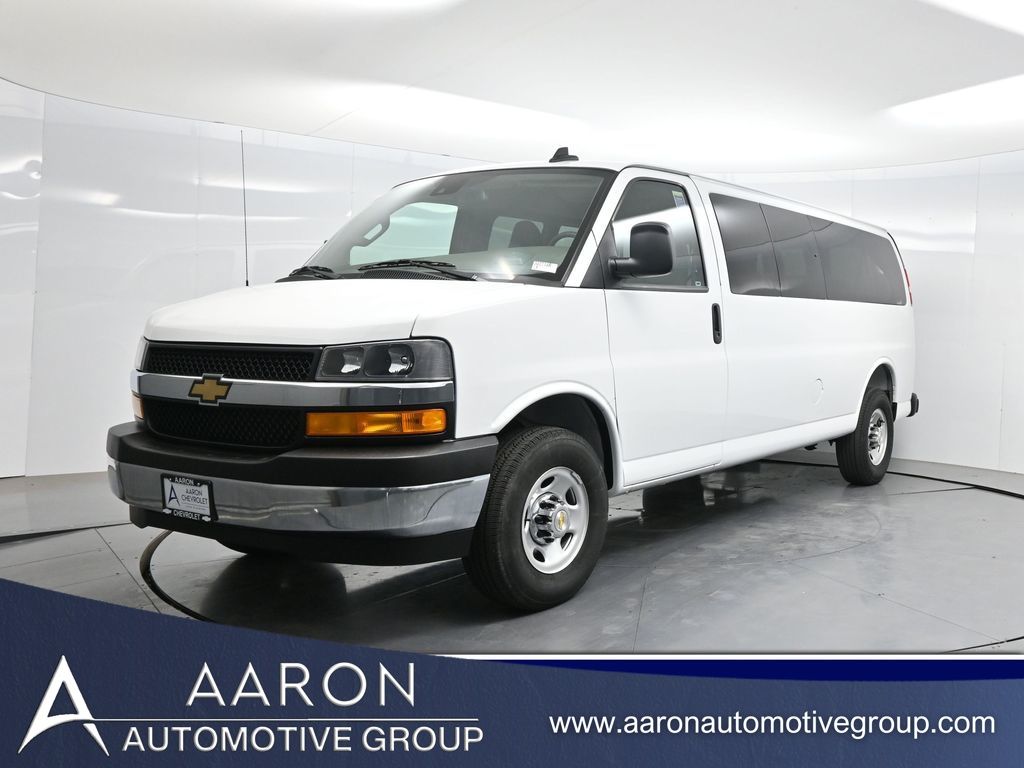
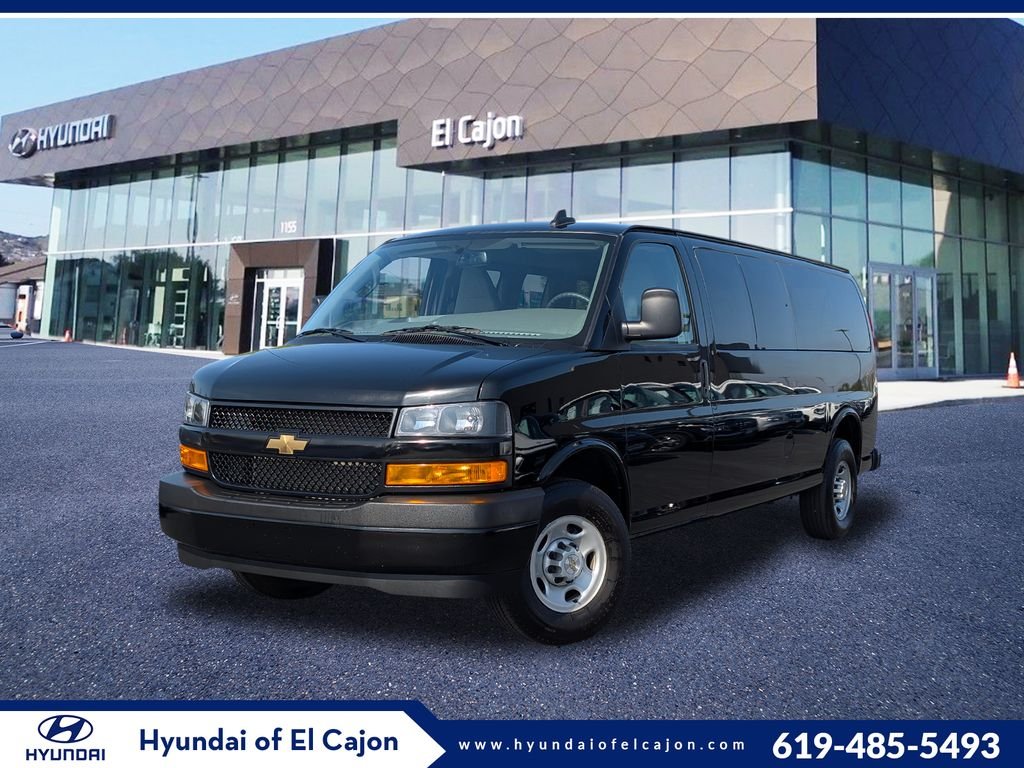
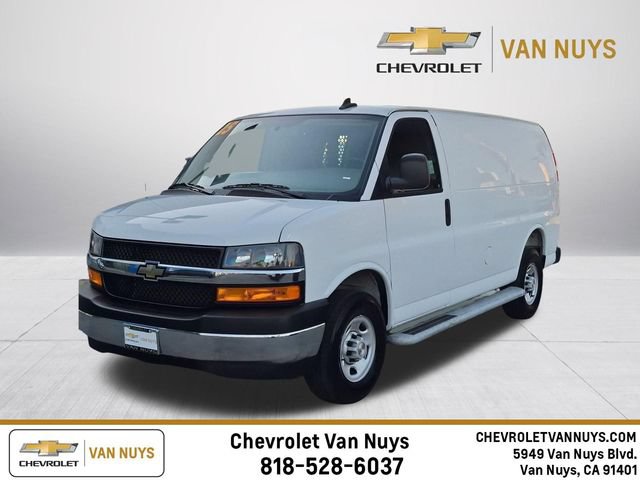
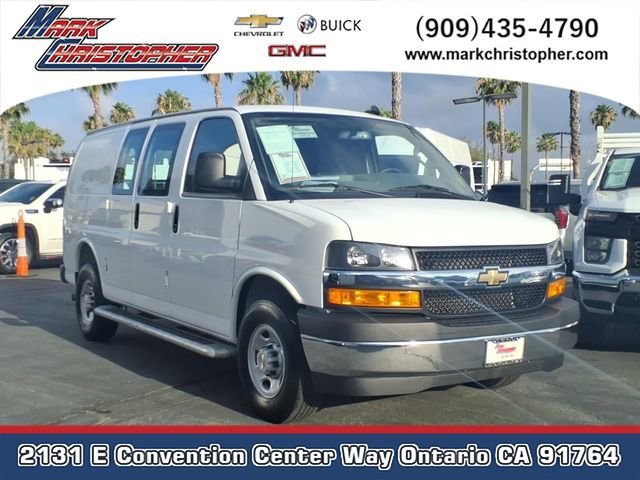
  • Cargo, Passenger and Cutaway

What buyers get wrong

Standard roof only — there is no high-roof factory option. If your crews need to work upright inside, a Transit, ProMaster or Sprinter is the right comparison.

Body types it is built as

Who buys the Chevrolet Express

What else to consider

Vehicles commonly cross-shopped against the Chevrolet Express.

Chevrolet Express: the full picture

While Ford, Ram and Mercedes-Benz moved to tall European-format vans, Chevrolet kept the Express on its older body-on-frame architecture. The result is a van that feels dated next to a Transit or Sprinter and is genuinely better at some jobs than either.

Body-on-frame construction means a separate ladder frame under a bolted body, rather than a single welded unibody structure. In practice that makes the Express more tolerant of heavy, concentrated loads and of the sort of abuse that work vans receive — bolting racking directly through the floor, running consistently loaded, taking knocks. It is also simpler to repair, and almost every independent shop in Southern California has worked on one.

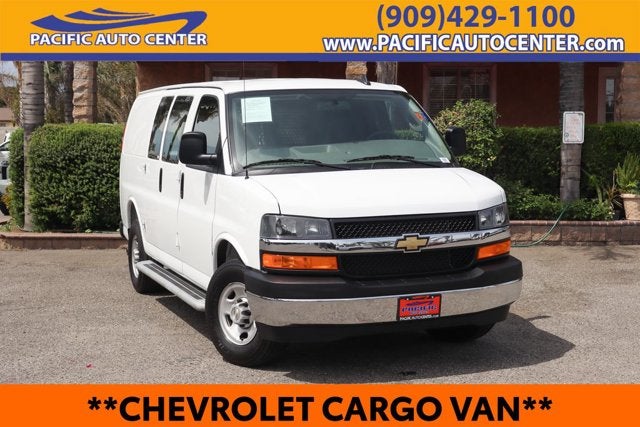
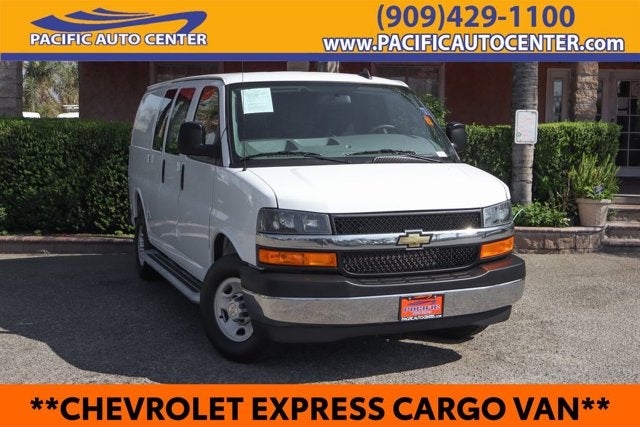
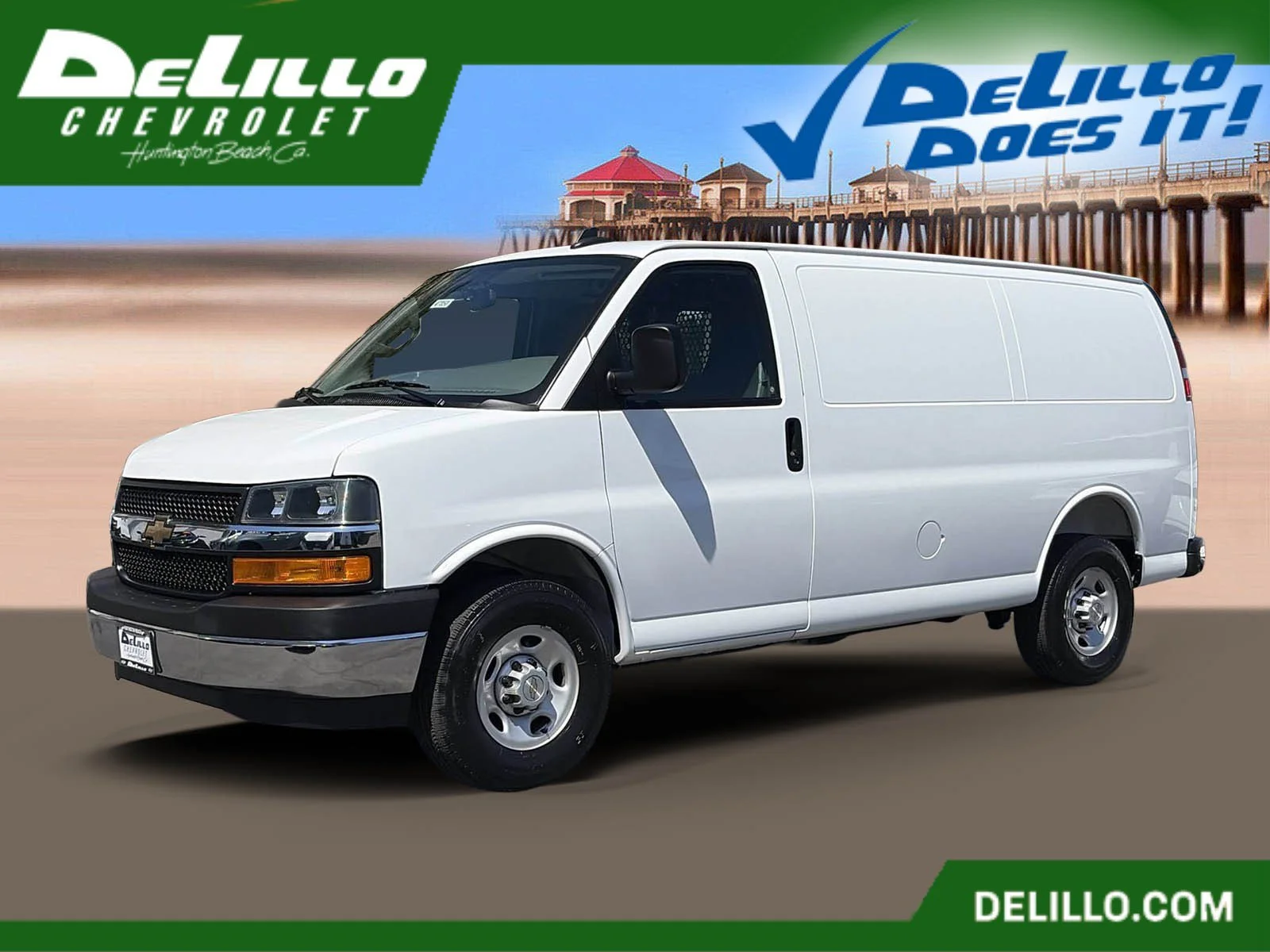
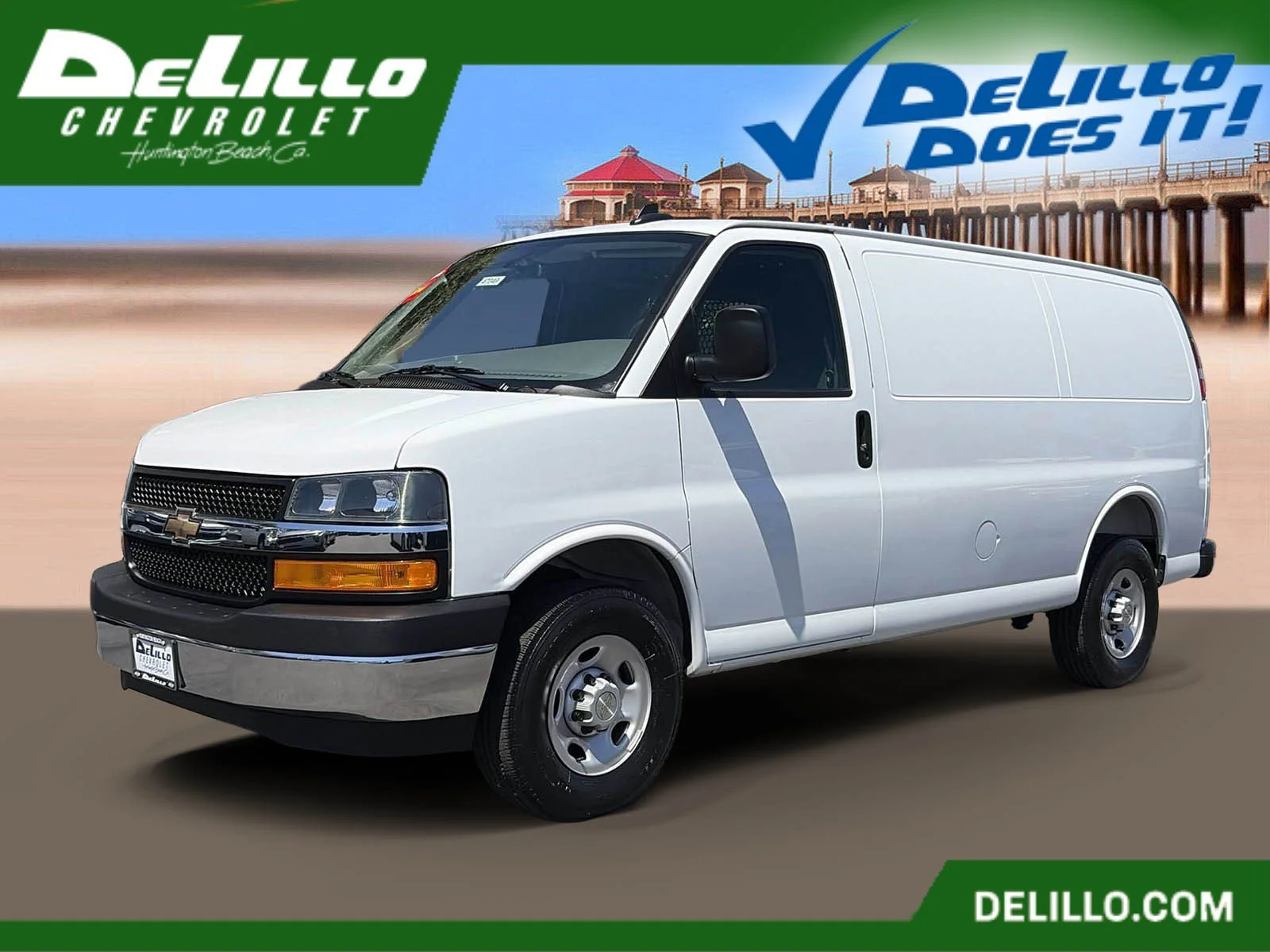
The limitation is unavoidable and it decides most purchases: standard roof only. There is no factory high-roof Express. An average adult cannot stand inside one. For a plumber or electrician who picks parts from shelving at a customer’s house all day, that is disqualifying, and no amount of durability compensates.

Where the Express makes sense is where the van is a container rather than a workspace. Deliveries loaded at a depot and unloaded at the kerb. Equipment transport. Parts running between branches. Shuttle and passenger work, where the Express seats up to fifteen. And critically, as a Cutaway base for box bodies and specialty conversions, which is a large part of why it is still in production.

The Express is also unusually easy to drive for its size, which matters more than buyers expect. The seating position is car-like rather than the upright, bus-like posture of a tall European van, visibility over the bonnet is familiar, and drivers moving from a pickup adapt almost immediately. For fleets with high driver turnover or shared vehicles, that shorter learning curve reduces low-speed damage in the first weeks — which is where most van damage actually happens.

Value is the other argument. Express vans typically cost less to buy than a comparable Transit, and used examples are plentiful and cheap because so many were sold into fleets. For a business that needs secure enclosed capacity and does not need standing height, that price gap is real money.

How businesses actually use it

Parts and equipment transport between sites

Wholesale supply · Equipment rental · Multi-site contractors

Moving material between a yard, a branch and a job site is exactly the job the Express does well. The load is put in at one end and taken out at the other, so standing height is irrelevant, while body-on-frame durability suits heavy, awkward items and frequent rough handling.

Typical configuration: 2500 or 3500 Cargo, Regular or Extended length

Cutaway base for box bodies

Delivery · Moving · Restoration · Rental fleets

The Cutaway is a cab on a bare frame ready for a body builder, and it is one of the most common bases for 12 to 16 ft box bodies in Southern California. It gives box capacity on a familiar, easy-to-drive, easy-to-service platform without stepping up to a medium-duty truck the route does not need.

Typical configuration: 3500 or 4500 Cutaway with a box body and liftgate

Passenger and shuttle transport

Shuttle services · Nonprofit · Churches · Schools · Hotels

The Passenger Van seats up to fifteen, which makes it a staple for shuttle operations and community organisations. Be realistic about luggage: with all rows in place, usable cargo space behind the rear seat is limited, and a fully loaded fifteen-passenger van is a substantially different vehicle to drive.

Typical configuration: Express Passenger, Extended length for luggage capacity

Depot-loaded delivery routes

Courier · Catering · Laundry and linen · Medical supply

Routes where the van is loaded once at a depot and items are handed out at each stop suit the Express well. The lower roof is not a constraint when the driver reaches in from the side or rear rather than working inside, and the purchase saving against a high-roof competitor is meaningful across a fleet.

Typical configuration: 2500 Cargo with basic shelving sized to the load

Secure overnight tool storage

Construction · Trades with residential parking · Multi-crew operations

A cargo van is a lockable steel box, which for many trades is the real reason to buy one rather than a pickup. Tools stay out of sight and out of weather, and crews can load at the end of a day without unloading again. The Express does this as well as any van and costs less to buy, and its body-on-frame structure tolerates heavy racking bolted through the floor better than a unibody competitor.

Typical configuration: 2500 Cargo with a full bulkhead and lockable interior racking

Heavy or awkward equipment carriage

Welding · Generator service · Industrial maintenance

Where equipment is heavy and mounted rather than shelved, body-on-frame construction is genuinely advantageous. Mounting points through a ladder frame are more forgiving than through a unibody floor, and the structure tolerates concentrated loads better.

Typical configuration: 3500 Cargo with equipment mounted to the frame by an upfitter

How to choose the right configuration

The first question is the only one that really matters: will crews work inside the van? If they will — picking parts, assembling fittings, using a bench — do not buy an Express. There is no high-roof version and there is no way to add one economically. Buy a Transit, ProMaster or Sprinter instead. This single question disqualifies the Express for most trade service work and qualifies it for most logistics work.

If the van is a container, the Express becomes a strong value proposition. Then choose series by payload: the 2500 covers most delivery and parts work, the 3500 adds capacity for heavy loads or an upfit, and the 4500 Cutaway supports larger bodies.

Length is straightforward. Regular suits urban work and tight parking; Extended adds useful floor length behind the rear axle for longer loads, at the cost of a larger rear overhang that makes tight reversing harder.

For Cutaway buyers, the body decision comes before the chassis. Body length, whether you need a liftgate, and the interior height you require all determine which chassis and wheelbase to order. Getting this backwards — buying the chassis then finding a body — is the most common and most expensive mistake in this category. Talk to the body builder first.

On powertrain, the petrol V8s are the mainstream choice and suit almost all commercial use. The Express is not an economical van by modern standards, and for very high-mileage delivery work that fuel gap against a modern turbo-diesel competitor is worth modelling before committing a fleet.

Finally, weigh the age of the platform honestly. The Express has older safety equipment, an older cabin and older driver-assistance technology than its competitors. For a fleet with many drivers, that gap has a real cost in accident frequency and insurance that should be set against the lower purchase price.

Our assessment

An editorial evaluation written by the SoCal Work Trucks editorial team, last reviewed 2026-09-03. It is our own assessment, not customer reviews or ratings.

The Express is a specialist choice that is excellent when its limitation does not apply. If your van is a container — depot-loaded delivery, parts transport, a Cutaway base for a box body, or passenger work — it is durable, cheap to buy, cheap to fix and easy to find. If crews need to work inside it, no other quality matters and you should be looking at a Transit. Buy it deliberately for what it is good at, not because it is the cheapest van on the lot.

What it does well

  • Body-on-frame durability

    Tolerates heavy concentrated loads, frame-mounted equipment and general abuse better than unibody competitors. For equipment carriage and hard fleet use that is a genuine structural advantage, not a nostalgia argument.

  • Lower purchase price

    Typically cheaper new than a comparable Transit, and dramatically cheaper used because fleets bought so many. Across several vans that gap funds real equipment.

  • Simple and universally serviceable

    Almost any independent shop in Southern California can work on one, and parts are everywhere. Downtime tends to be shorter and cheaper than for European-format vans.

  • Strong Cutaway platform

    One of the most widely supported bases for box bodies and specialty conversions, with a deep upfitter ecosystem and predictable lead times.

  • Fifteen-passenger capability

    Few vehicles carry fifteen people at this price. For shuttle operators, nonprofits and community organisations that is often the deciding factor.

Where it falls short

  • No high-roof option, at all

    Crews cannot stand up inside. For plumbing, electrical, HVAC and any trade that picks parts on site this is disqualifying, and it cannot be fixed after purchase.

  • Dated safety and driver-assistance equipment

    The platform predates much of the driver-assist technology now standard elsewhere. Across a fleet with mixed drivers that has a measurable cost in incidents and insurance.

  • Poor fuel economy

    Petrol V8s in an older, less aerodynamic body are thirsty. Over high-mileage delivery duty the running-cost gap against modern competitors erodes the purchase saving.

  • Dated cabin and ergonomics

    Seating position, storage and interior design are a generation behind. Drivers spending a full shift in the vehicle notice, and driver retention is a real fleet cost.

  • Uncertain long-term platform future

    It is the last of its kind, which raises reasonable questions about how long parts and support remain plentiful. Worth considering for a long fleet replacement cycle.

Ownership and used-buying notes

Used Express vans are abundant and cheap in Southern California because so many went into fleets. That makes them a strong budget option, but it also means many have worked hard. Prioritise service history over mileage, and prefer ex-fleet vans with documentation over private sales without it.

Check the load floor and the frame carefully. Look for previous racking bolt holes and whether they were properly sealed, and inspect the frame for corrosion and for any signs of repair. On body-on-frame vehicles the body-to-frame mounts are worth a specific look.

Sliding and rear doors take heavy cycle counts in delivery work, so operate every door repeatedly. On Passenger vans, check seat mounting points and belt condition on every row, because those carry both a safety and a liability consequence for a business moving people.

Questions buyers ask

Does the Chevrolet Express come with a high roof?
No. There is no factory high-roof option, and an average adult cannot stand inside one. Aftermarket roof conversions exist but are expensive and rarely make economic sense. If crews need to work upright inside the van, look at a Transit, ProMaster or Sprinter.
How much can a Chevrolet Express carry?
Published payload runs roughly 3,000 to 4,200 lbs depending on series and configuration, with 240 to 314 cu ft of cargo volume. The figure for your van is on its door-jamb sticker, and shelving, racking and permanently fitted equipment all come out of it.
Is the Express still a good buy given its age?
For the right job, yes. Body-on-frame durability, low purchase price and universal serviceability are genuine advantages for depot-loaded delivery, parts transport, equipment carriage and Cutaway box applications. For trade service work where crews work inside the van, no — the lack of a high roof is decisive.
What is a Cutaway and why would I want one?
A Cutaway is the cab and frame supplied without a rear body, so an upfitter can fit a box, service body or specialty conversion. It gives box-truck capacity on a van-like cab that is easy to drive and service, which suits routes needing more volume than a van but less truck than a medium-duty chassis.
How does the Express compare with a Ford Transit?
The Transit offers high-roof standing height, better economy and more modern safety equipment. The Express offers body-on-frame durability, a lower price and simpler servicing. If crews work inside, buy the Transit. If the van is a container or a Cutaway base, the Express is often the better business decision.
Can an Express carry fifteen passengers?
The Passenger version seats up to fifteen. Be realistic about luggage, because with every row occupied the remaining cargo space is small, and a fully loaded fifteen-passenger van handles and stops quite differently from an empty one — worth building into driver training.
Do I need a special licence to drive one?
A standard Express is rated well below the 26,001 lb GVWR threshold that generally triggers a commercial driver’s licence requirement, so a normal Class C licence is typically sufficient. Passenger-carrying rules can differ depending on how the vehicle is used, so confirm with the California DMV if you are transporting people commercially.
What should I check on a used Express?
Service history, frame condition and corrosion around body-to-frame mounts. Check the load floor for previous racking holes and whether they were sealed, and operate every door repeatedly — sliding door mechanisms take heavy wear in delivery work. Ex-fleet vans with documentation usually beat undocumented private sales.
Is the Express economical to run?
Not by modern standards. The petrol V8s in an older, less aerodynamic body use noticeably more fuel than current turbo-diesel competitors. For low-mileage local work that rarely matters; for high-mileage delivery routes, model the fuel difference before committing a fleet.
Can I add shelving and racking to an Express?
Yes, and body-on-frame construction is genuinely advantageous here. Mounting racking through a ladder frame is more forgiving than through a unibody floor, and the structure tolerates the concentrated loads that fully stocked shelving creates. All the major shelving manufacturers support the Express, so installer choice and lead times are good.
How does the Express compare with a Ram ProMaster?
The ProMaster has a much lower load floor and a high-roof option, which makes it far better for hand-loaded delivery and any work done inside the van. The Express is more durable under heavy concentrated loads, simpler to service and cheaper to buy. Choose the ProMaster for lifting-heavy delivery work; choose the Express for equipment carriage, Cutaway applications and budget-constrained fleets.
Is the Express a good base for a refrigerated van?
It can be, particularly as a Cutaway with an insulated box, and Southern California upfitters build these routinely. On any refrigerated vehicle the refrigeration unit matters more than the chassis: ask for the unit make, its temperature rating and its running hours, which are a better guide to condition than the van’s mileage.
How many Express vans should a growing fleet standardise on?
Standardising matters more than the specific number. Running one configuration means one set of shelving, one parts inventory, one set of driver habits and one service relationship, which reduces cost per vehicle noticeably once you pass three or four vans. The Express suits this well because used examples are plentiful, so adding a matching vehicle later is usually straightforward rather than a special order.
Is an Express suitable for a mobile workshop conversion?
For equipment that is mounted rather than accessed while standing, yes — the ladder frame takes mounting loads well and upfitters build on it routinely. For a conversion where a technician works inside the vehicle, no: the standard roof means working stooped all day, and a high-roof Transit or Sprinter is the correct choice regardless of the price difference.
What body types can be built on an Express Cutaway?
Box bodies are the most common, typically 12 to 16 ft, often with a liftgate. Beyond that, service bodies, refrigerated boxes, shuttle conversions and mobility conversions are all routinely built on this chassis by Southern California upfitters.

Official sources and further reading

Manufacturer and regulatory sources for specifications and requirements. We do not link to other vehicle-selling websites.

Shop Chevrolet Express by model year

Nearby cities

Find a Chevrolet Express near Corona

Two quick steps. A fleet specialist will follow up.

  1. 1. Your needs
  2. 2. Your details