SoCal Work Trucks

Chevrolet Silverado 2500HD near San Jacinto, California

Three-quarter-ton pickup with Work Truck trim aimed squarely at fleets. Below: who sells it near San Jacinto, what is available now, and how to choose the right configuration.

Buying a Chevrolet Silverado 2500HD near San Jacinto

No sellers in our network are currently listed close to San Jacinto. Commercial dealers routinely deliver across Southern California, so tell us what you need and we will look more widely.

No Chevrolet Silverado 2500HD listed in Riverside County right now

Commercial inventory turns over quickly. Tell us your specification and a fleet specialist will search participating sellers across Southern California.

Buying a work vehicle in San Jacinto

San Jacinto and Hemet function as a single labour market — many businesses serve both without distinguishing between them — but the vehicle mix skews differently. San Jacinto is smaller, sits closer to working agricultural land, and rises towards the mountains, which produces more demand for capability and less for urban manoeuvrability.

The agricultural fringe is the defining difference from Hemet proper. Irrigation contractors, fencing businesses, equipment services and hay and feed haulage all operate here, and all of them need trucks that tow implements and reach ground that has never been paved. This is one of the clearer cases in Riverside County for specifying four-wheel drive deliberately rather than treating it as an unnecessary cost.

Elevation matters more than most buyers expect. The ground rises towards the San Jacinto Mountains, and Highway 74 climbs seriously towards Idyllwild. A truck towing a loaded trailer up that grade in August is working genuinely hard, and it is a real argument for specifying the towing and cooling packages properly rather than trimming them.

The residential trade base mirrors Hemet: an older housing stock with an established population, sustaining steady plumbing, HVAC, roofing and landscaping work. Those businesses buy much as their Hemet counterparts do, and many serve both cities from one base.

Commercial buying almost always happens elsewhere. San Jacinto has minimal local commercial dealer presence and effectively no specialist upfit capacity, so businesses source from Hemet, Riverside or further west. Commercial dealers routinely deliver across a 75 to 100 mile radius, so the practical advice is to search the whole Inland Empire rather than the nearest lot.

What San Jacinto businesses actually buy

Agricultural and irrigation services

Working farmland on the valley floor sustains irrigation installation and repair, equipment servicing and related contracting. These businesses need trucks that tow implements and reach unpaved ground reliably, which makes four-wheel drive and genuine towing capacity worth their cost here in a way they are not in suburban work.

Fencing and land clearing

Larger rural parcels and agricultural boundaries sustain fencing and clearing work. This is flatbed and trailer territory — posts, panels, wire and equipment are long and awkward rather than dense, so deck length and towing matter more than payload rating.

Landscaping and green waste

Larger lots than typical suburban development, with more hauling per job. Dump trucks and dump trailers dominate, and the constraint is payload rather than bed volume — a full bed of wet soil reaches a three-quarter-ton rating long before it looks full.

Plumbing and HVAC service

Older residential housing stock generates steady repair work shared with Hemet. Jobs are spread across both cities, so vehicles cover real mileage between calls, and service-body pickups compete directly with cargo vans depending on whether the business also tows.

Equipment hauling and heavy transport

Moving tractors, implements and construction equipment between agricultural and residential sites. Gooseneck towing capability is the deciding specification, which puts these businesses firmly into one-ton or medium-duty territory.

Roofing and exterior trades

Serving the shared Hemet and San Jacinto housing stock. Towing-heavy work — material to site, debris trailers away — and summer heat makes cooling capacity a genuine specification consideration rather than an afterthought.

Local conditions that change the decision

Summer heat matches the wider San Jacinto Valley pattern, regularly exceeding 100°F for extended stretches. It stresses cooling systems, batteries and air conditioning, and the effect compounds sharply for anything towing near its rating. Specify towing and cooling packages properly rather than trimming them to save cost.

Elevation rises towards the mountains and Highway 74 climbs seriously towards Idyllwild. A loaded truck or trailer works hard on that grade, particularly in summer, which argues for buying capability with margin rather than exactly to your maximum load.

Unpaved and agricultural access is genuinely common here, unlike most of suburban Riverside County. This is one of the few local markets where four-wheel drive earns its payload and fuel-economy cost rather than going unused.

Parking and manoeuvring constraints are minimal. Rural and semi-rural roads accommodate crew cabs, long beds and duallies without difficulty, so the urban-footprint compromises that shape choices in Riverside or Orange County simply do not apply.

San Jacinto buying questions

Is San Jacinto a different market from Hemet for work vehicles?
They share a labour market and many businesses serve both, but the vehicle mix skews differently. San Jacinto sits closer to working agricultural land and rising ground, so towing capability and unpaved access matter more, and four-wheel drive is worth considering rather than dismissing.
Do I need four-wheel drive in San Jacinto?
More often than elsewhere in Riverside County. Agricultural properties, unimproved rural parcels and land-clearing work all involve ground that has never been paved. For purely residential service work within the city it remains an unnecessary cost in payload and economy.
Where do San Jacinto businesses buy commercial vehicles?
Almost always elsewhere — Hemet, Riverside or further west. Local commercial dealer presence is minimal and specialist upfit capacity is effectively absent. Commercial dealers deliver across a 75 to 100 mile radius, so search the whole Inland Empire rather than the nearest lot.
Does the climb towards Idyllwild affect what I should buy?
If you tow, yes. Highway 74 is a serious grade and a loaded trailer works a truck hard on it, especially in summer heat. Specify the factory towing and cooling packages, and avoid buying a truck rated exactly to your maximum load — the margin is what keeps it reliable.
What should an agricultural services business buy here?
A three-quarter or one-ton truck with four-wheel drive and genuine gooseneck towing capability, often with a flatbed rather than a pickup bed. The work is defined by towing implements and reaching unpaved ground, so towing rating and traction matter more than cargo volume.
Is a dump truck or a dump trailer the better choice for landscaping here?
A dump trailer behind a three-quarter-ton is cheaper and more flexible for lighter work. A one-ton dump truck is faster to operate and better if you tip several loads a day. Larger local lots mean more material per job than typical suburban work, which pushes the calculation towards the dump truck sooner than you might expect.
How far will a dealer deliver to San Jacinto?
Commercial dealers across Southern California routinely deliver 75 to 100 miles, which covers the entire Inland Empire and much of Orange County. That means a San Jacinto business has the full regional market available and should not limit its search geographically.

Local guidance reviewed by the SoCal Work Trucks editorial team, last updated 2026-09-03.

Is the Chevrolet Silverado 2500HD the right truck for your work?

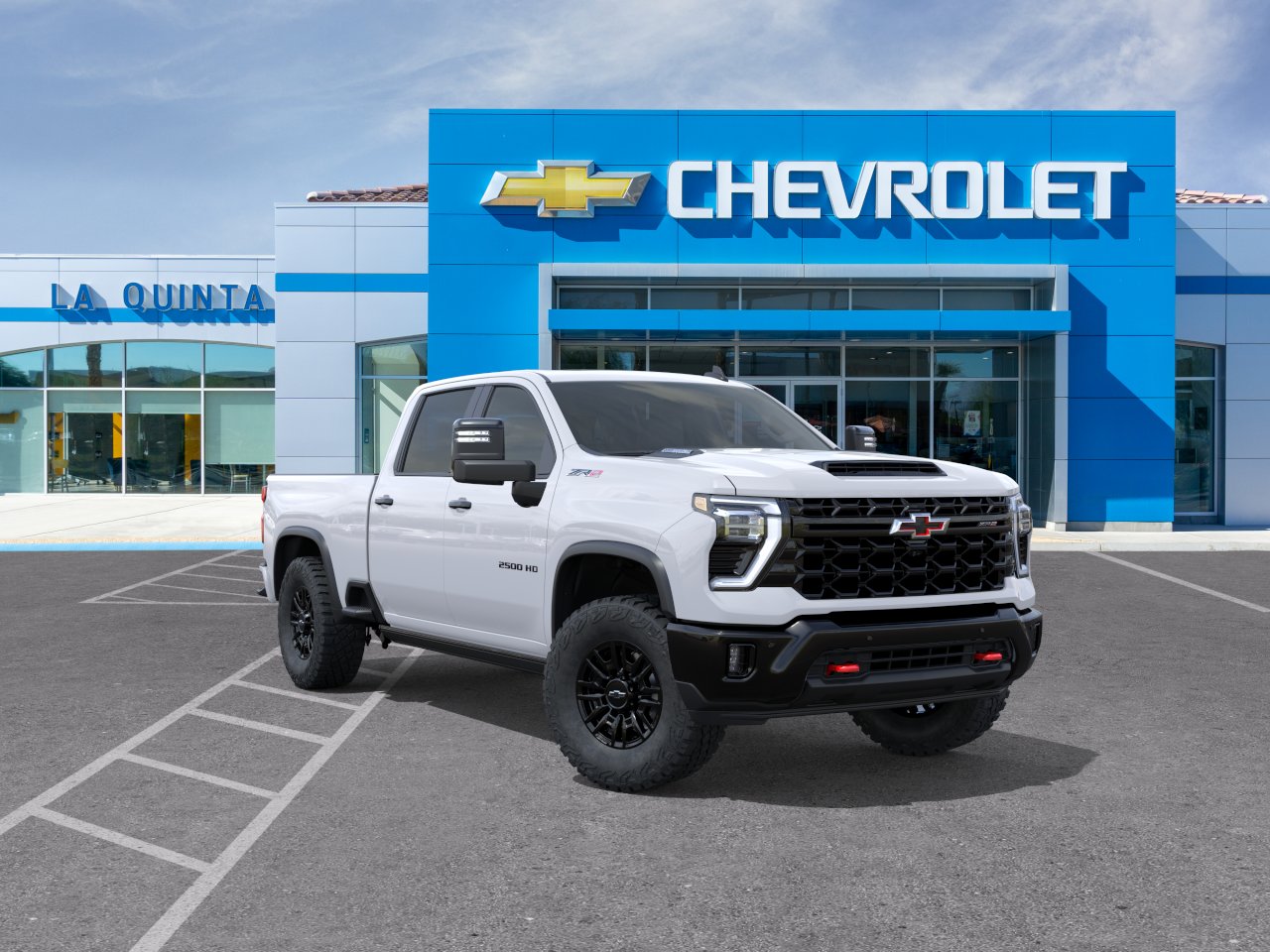
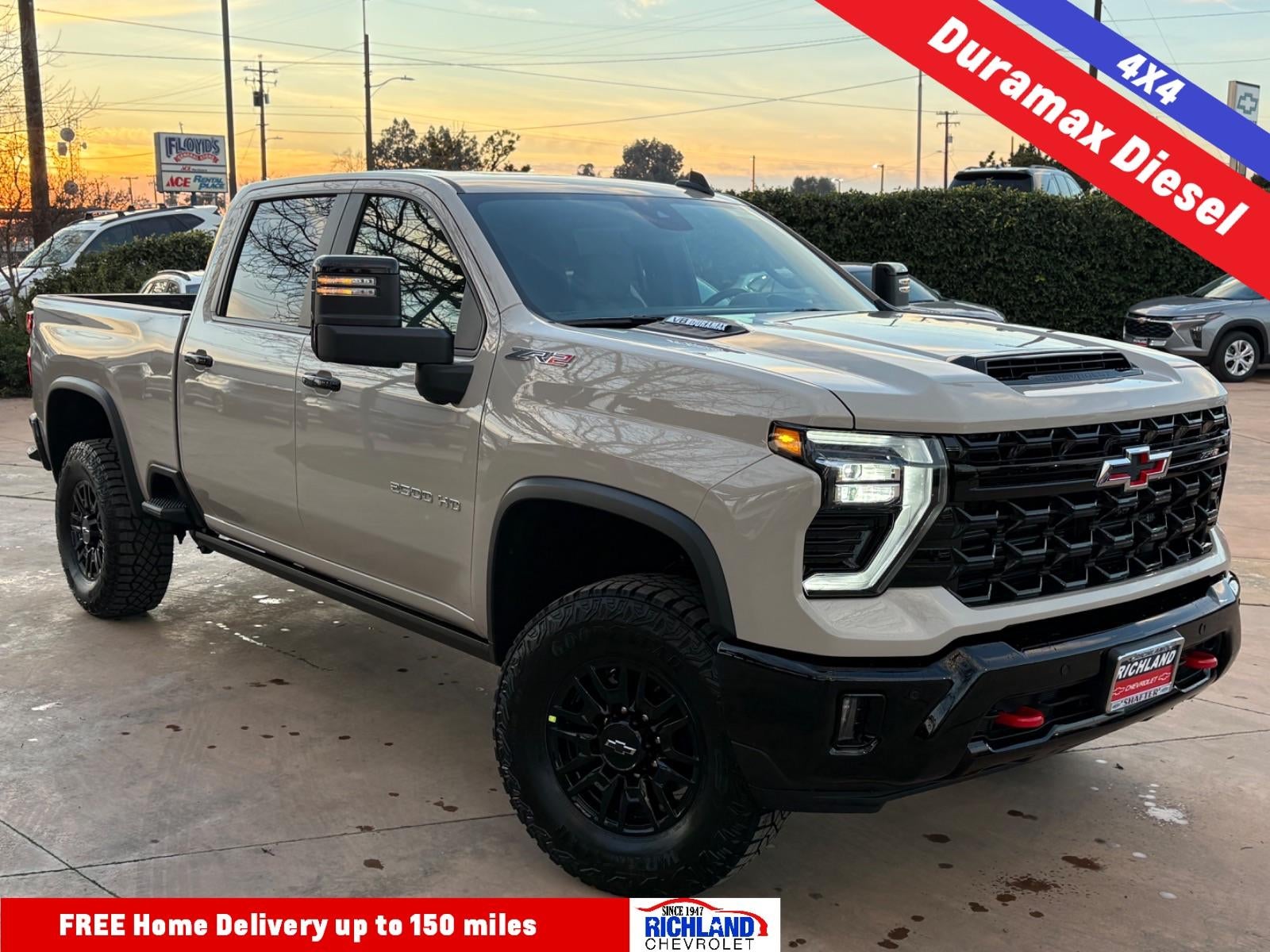
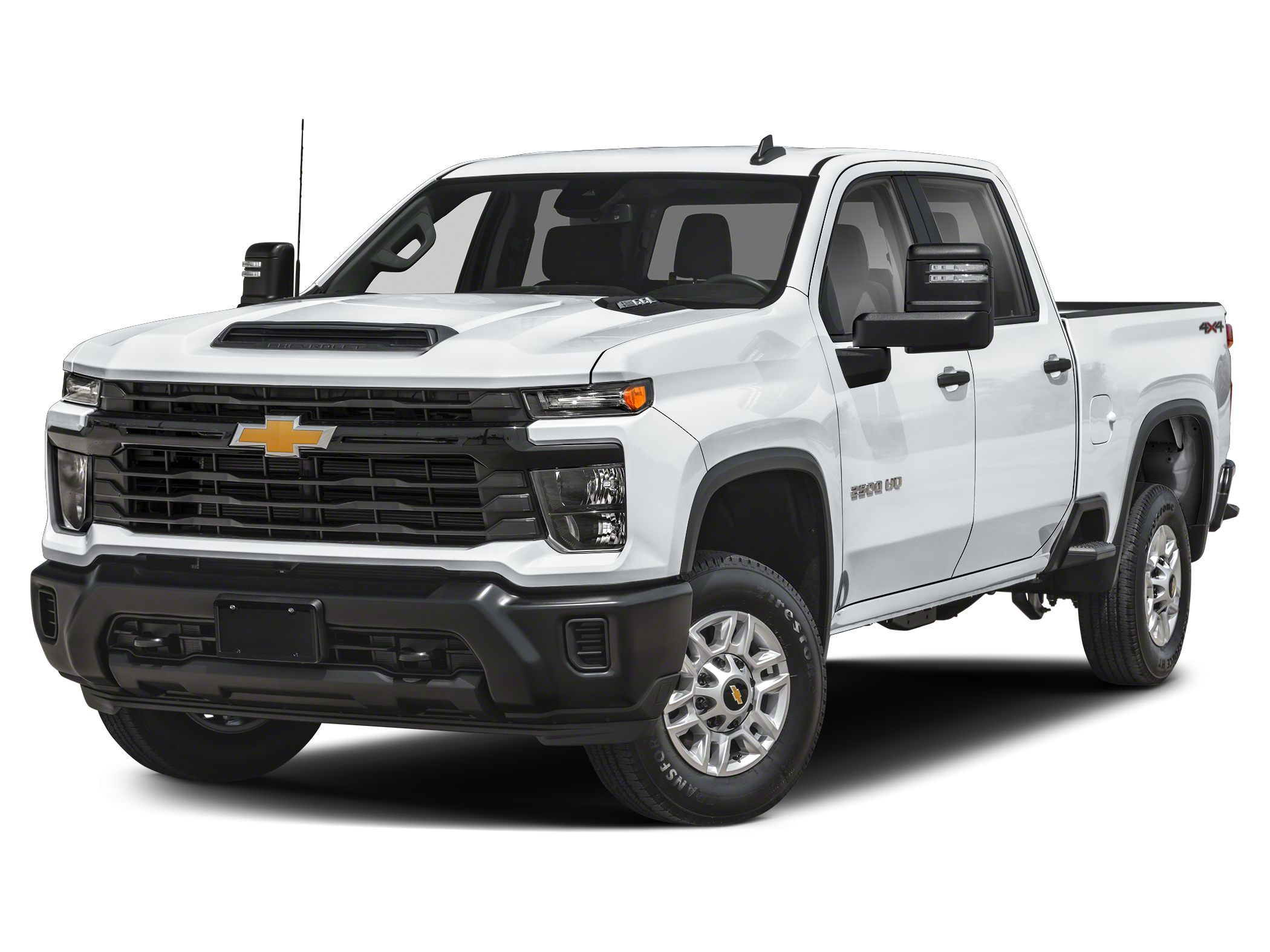
Three-quarter-ton pickup with Work Truck trim aimed squarely at fleets.

Fleets already running Chevrolet service networks, and crews that want a simple, durable Work Truck trim without paying for equipment they will not use.

Typical specifications

Ranges across common configurations of this model. The figures for any individual vehicle depend on its cab, wheelbase, drivetrain and upfit.

GVWR
10,000–11,350 lbs
Payload
2,900–4,000 lbs
Towing
14,500–22,500 lbs
Seating
3–6 seats

These are model ranges, not a specific truck. Payload in particular varies by well over 1,000 lbs across configurations. Always confirm against the door-jamb sticker and the manufacturer documentation for the exact vehicle before you buy or load it.

Configurations to choose between

  • Regular, Double and Crew Cab
  • 6.9 ft and 8.2 ft beds
  • Gas and Duramax diesel

What buyers get wrong

Work Truck trim omits some driver-assist features that reduce insurance and accident costs across a fleet. Price the mid trim before defaulting to base.

Body types it is built as

Who buys the Chevrolet Silverado 2500HD

What else to consider

Vehicles commonly cross-shopped against the Chevrolet Silverado 2500HD.

Chevrolet Silverado 2500HD: the full picture

The Silverado 2500HD occupies the same ground as the Ford F-250 and Ram 2500: a three-quarter-ton pickup built for sustained towing and payload rather than occasional peak loads. For most Southern California trades the choice between the three comes down to fleet pricing, dealer relationship and upfitter preference rather than any decisive capability gap.

What distinguishes Chevrolet in this segment is the Work Truck (WT) trim and the Business Elite dealer programme behind it. Work Truck is specified as a commercial product from the start — vinyl or cloth surfaces that survive being climbed over in dirty boots, rubberised flooring that hoses out, and a deliberately plain interior. It is not a consumer truck with features deleted, and that shows up in how it wears over a fleet life.

Powertrain choice is between the 6.6-litre petrol V8 and the 6.6-litre Duramax diesel. As with the Ford, this is the biggest cost decision on the truck and the answer depends on duty cycle rather than on headline towing figures. The Duramax with the Allison transmission has a strong reputation for durability under sustained load, which matters for fleets pulling equipment trailers over Inland Empire grades day after day.

Cab and bed configurations mirror the segment: Regular, Double and Crew Cab, with 6.9 ft and 8.2 ft beds. As always, every step towards more cab costs payload, and buyers who specify a comfortable Crew Cab and then fit a service body frequently find they should have bought a 3500HD instead.

Chevrolet also offers a factory-installed snow plough preparation package and a range of power take-off provisions on some configurations, which matter for municipal and utility buyers whose trucks run auxiliary equipment. These are far cheaper specified at order than retrofitted, and they are the sort of option that gets forgotten until the body builder asks for it. If the truck will run a crane, compressor, liftgate or plough, raise it with the dealer before the order goes in rather than after the chassis arrives.

For Riverside County fleets the practical consideration is often dealer support. Chevrolet Business Elite dealers are required to hold commercial inventory and provide priority service, and where that programme is well run locally it materially reduces downtime. Where it is not, the advantage evaporates — so it is worth assessing the specific dealership rather than the badge.

How businesses actually use it

Towing equipment and material trailers

General contracting · Landscaping · Hardscape · Fencing

The primary reason to buy a 2500HD over a half-ton. Skid steers, mini excavators and loaded dump trailers sit comfortably within its capability, and the Duramax and Allison combination handles repeated heavy pulls well. Integrated trailer brake control and the available camera package genuinely help drivers who hitch and reverse trailers many times a day.

Typical configuration: Crew Cab 4WD Work Truck with the Duramax and factory tow package

Service body and utility applications

Mobile mechanics · Utility contracting · Welding · Equipment service

A common Silverado configuration in Southern California, usually on a Regular or Double Cab to preserve payload. The body adds 1,000 to 1,800 lbs installed before tools, so the arithmetic needs doing before ordering. Chevrolet publishes body-builder information that upfitters follow, and most regional body companies build on this chassis routinely.

Typical configuration: Regular Cab 2WD or 4WD with a Harbor, Scelzi or Knapheide service body

Municipal and public works fleets

Municipal · Public works · Water districts · Parks

Public-sector buyers favour the Work Truck trim for exactly the reasons it exists: durable surfaces, straightforward specification and predictable fleet pricing. Petrol engines usually suit these duty cycles better than diesel, because municipal use tends towards short trips where after-treatment does not regenerate cleanly.

Typical configuration: Double Cab Work Truck with the 6.6L petrol V8

Crew transport with materials

Roofing · Solar · Framing · Concrete

A Crew Cab carries a crew of five or six and retains a usable bed, so one vehicle covers what would otherwise need two. The trade-off is payload: cab structure plus five or six people at roughly 200 lbs each consumes a substantial share of the rating before any material is loaded.

Typical configuration: Crew Cab with the 6.9 ft bed for urban work, 8.2 ft where parking allows

Running auxiliary equipment from the truck

Utility contracting · Municipal · Mobile welding · Crane service

Trucks that power a crane, compressor, welder or liftgate need the electrical and, on some configurations, power take-off provisions specified at order. Retrofitting is possible but costs considerably more and is untidy. The 2500HD supports these applications well, but the requirement has to be identified before the chassis is built, which means involving the body builder in the specification conversation early.

Typical configuration: Regular Cab with upfitter switches and the relevant power provisions

Landscape and aggregate hauling

Landscaping · Pool service · Demolition · Tree service

A bed of wet soil, aggregate or green waste reaches the payload rating long before the bed is physically full — the most common overloading mistake in the trades. Crews hauling dense material regularly should price a 3500HD with a dump body, where the rating matches the work and the bed tips.

Typical configuration: Regular or Double Cab with the 8.2 ft bed, or step up to a 3500HD dump

How to choose the right configuration

Start with the engine and be honest about duty cycle. The 6.6-litre Duramax diesel paired with the Allison transmission is the stronger tool for sustained heavy towing and returns better economy when working, but it costs meaningfully more up front, adds weight over the front axle, and brings after-treatment maintenance that short-trip work handles badly. The 6.6-litre petrol V8 is cheaper, simpler and better suited to local service trucks doing stop-start runs.

Then think carefully about trim, which is where Chevrolet fleet buying goes wrong most often. Work Truck is the right base for genuine commercial use, but on some configurations it omits driver-assist equipment — forward collision alert, lane keeping, blind-spot monitoring — that reduces accident frequency across a fleet. For a business running several trucks with mixed drivers, the insurance and downtime saving from that equipment can outweigh the trim difference. Price the next trim up before defaulting to base.

Cab choice should follow headcount, not comfort. A service truck carrying one technician does not need a Crew Cab, and the payload difference is real. Reserve Crew Cabs for trucks that genuinely move crews.

Drivetrain deserves the same scrutiny as on any Southern California work truck. Four-wheel drive costs payload and fuel economy, and a large share of regional commercial work never leaves pavement. Specify it where crews work unimproved ground and skip it where they do not.

On bed length, the 8.2 ft bed carries full sheets flat and suits material work; the 6.9 ft bed is far easier in residential streets and older commercial parking. A Crew Cab with the long bed is a very large vehicle for urban Riverside and Corona routes.

Finally, use Chevrolet’s fleet pricing properly. Business Elite dealers can quote multi-unit orders differently from single retail sales, and the gap against Ford is often widest on fleet quotes rather than sticker. If you are buying more than two trucks, get a fleet quote from a Business Elite dealer before comparing brands.

Our assessment

An editorial evaluation written by the SoCal Work Trucks editorial team, last reviewed 2026-09-03. It is our own assessment, not customer reviews or ratings.

A well-judged fleet truck that is genuinely competitive with the F-250 and often cheaper to buy in multiples. The Work Truck trim is the real argument for it — a commercial interior designed to be worked in rather than a consumer cabin with equipment removed. The main caution is not to strip the specification so far that you lose safety equipment worth having, and as always not to assume brochure payload applies to your configuration.

What it does well

  • Work Truck trim is genuinely commercial

    Durable surfaces and rubberised flooring designed to be hosed out. Over a fleet life that holds up markedly better than a consumer interior in the same use.

  • Duramax and Allison durability under sustained load

    The diesel and transmission pairing has a strong reputation in repeated heavy towing, which is exactly the duty cycle Inland Empire contractors put trucks through.

  • Competitive fleet pricing

    On multi-unit orders through Business Elite dealers, Chevrolet frequently undercuts the equivalent Ford. On a five or ten truck order that difference is material.

  • Strong trailering equipment

    Integrated brake control and the camera systems meaningfully reduce hitching and reversing errors for drivers who tow many times a day.

  • Well-supported by regional body builders

    Southern California service body companies build on this chassis routinely, so lead times and installer competition are comparable to Ford.

Where it falls short

  • Work Truck omits useful safety equipment

    Some driver-assist features are unavailable or optional on base trim. Across a fleet with mixed drivers, accident frequency and insurance cost can exceed the money saved.

  • Payload falls sharply with popular options

    Crew Cab, 4WD and diesel together remove a large share of the rating. Specifying the comfortable truck and then fitting a service body is a recurring fleet mistake.

  • Resale trails the Ford equivalent

    Super Duties generally retain value better. Over a full ownership cycle that can offset part of Chevrolet’s purchase-price advantage, so compare total cost rather than sticker.

  • Business Elite quality varies by dealership

    The programme is only as good as the specific store running it. Where commercial inventory and priority service are not genuinely maintained, the advantage disappears.

  • Diesel after-treatment dislikes short trips

    The same limitation as every modern diesel: local stop-start service work never gets hot enough to regenerate cleanly, causing avoidable downtime.

Ownership and used-buying notes

Ex-fleet Silverados are common in Southern California and often come with better documentation than private sales, because fleets service on schedule and keep records. An ex-fleet truck with a full history is frequently a better buy than a lower-mileage private one with none.

On used diesels, ask specifically about after-treatment work and fuel filter intervals. On petrol trucks the drivetrain is generally robust, so focus on how hard it towed: hitch wear, transmission service records, and brake and tyre wear patterns tell you more than the odometer does.

If a service body is fitted, inspect the body-to-frame mounting points for rust and check compartment seals and door alignment. Also confirm the body layout matches your trade — removing and refitting a body is expensive enough to change whether the truck makes sense.

Questions buyers ask

How much can a Silverado 2500HD carry?
Published payload runs roughly 2,900 to 4,000 lbs depending on cab, bed, drivetrain and engine. Regular Cab 2WD petrol sits near the top and Crew Cab 4WD diesel near the bottom. The governing figure is the door-jamb sticker on the specific truck, and anything permanently fitted comes out of it.
Is the Duramax diesel worth the extra cost?
For sustained heavy towing and high annual mileage, generally yes — the Duramax and Allison combination is durable and returns better economy under load. For a local service truck doing short stop-start runs it is usually the wrong choice, because after-treatment causes more downtime than the fuel saving is worth.
What is Work Truck trim and should I buy it?
Work Truck is Chevrolet’s commercial base trim, specified with durable surfaces and rubberised flooring intended to be worked in and cleaned out. It is a genuine fleet product rather than a stripped consumer truck. Do check which driver-assist features it omits, though — across a fleet those can be worth more than the trim saving.
How does it compare with the Ford F-250?
Capability is broadly comparable and neither is decisively better. Ford tends to lead on resale and upfitter depth; Chevrolet often leads on fleet pricing and offers a more genuinely commercial base interior. For a multi-unit order, get quotes on identical configurations from both before deciding.
Do I need a CDL to drive a Silverado 2500HD?
A standard 2500HD is rated around 10,000 lbs GVWR, below the 26,001 lb threshold that generally triggers a commercial driver’s licence requirement, so a normal Class C licence is typically sufficient. Heavy towing can change the combined rating, so confirm your specific setup with the California DMV.
Should I buy a 2500HD or a 3500HD?
Step up to the 3500HD if you are fitting a service body, hauling dense material such as wet soil or aggregate, or towing near the top of the range. The 3500HD also offers dual rear wheels, which is what makes a dump or flatbed body practical. The price difference is small next to the cost of operating permanently at a rating.
Can I get fleet pricing on multiple trucks?
Yes. Chevrolet Business Elite dealers quote multi-unit commercial orders differently from retail sales, and the advantage against competing brands is often widest on fleet quotes rather than sticker price. If you are buying more than two trucks it is worth requesting one specifically.
Is 4WD necessary for commercial work in Southern California?
Often not. A large share of regional commercial work happens on paved or graded sites, and 4WD costs payload and fuel economy for capability that goes unused. Specify it when crews genuinely work unimproved ground, and save the weight and money when they do not.
What should I check on a used Silverado 2500HD?
Service history first, particularly on diesels. Then look for evidence of how hard it towed: hitch and receiver wear, transmission service records, brake and tyre wear patterns. Ex-fleet trucks often have better documentation than private sales, which makes them a stronger buy than the mileage alone suggests.
What is the Allison transmission and does it matter?
Allison is a heavy-duty automatic transmission paired with the Duramax diesel, and it has a long-standing reputation for durability under sustained load. For a fleet doing repeated heavy towing it is a genuine reason to consider the diesel, because transmission failure is one of the more expensive ways a work truck comes off the road.
How long do Silverado service body upfits take?
Simple additions are days. A full service body typically runs six to sixteen weeks depending on the builder and current Southern California workload. Order the body alongside the chassis rather than afterwards — upfitter capacity, not truck availability, is usually what determines when the truck actually enters service.
Is a used ex-fleet Silverado a good buy?
Frequently yes, and often better than a private sale. Fleets service on schedule and keep records, so an ex-fleet truck usually comes with documentation a private seller cannot produce. Check how it was worked — hitch wear, transmission service history, brake and tyre wear — rather than judging on mileage alone.
What is the difference between Work Truck, Custom and LT trims?
Work Truck is the commercial base, specified with durable surfaces and minimal equipment. Custom adds some convenience and appearance items while staying fleet-priced. LT moves towards a consumer specification with more comfort and technology. For a genuine work vehicle, Work Truck or Custom is usually right — but check which driver-assistance features each level includes, because across a fleet those affect incident rates and insurance more than the trim price difference.
Does the Silverado 2500HD offer a factory power take-off?
Power take-off and upfitter power provisions are available on some configurations, and they matter for any truck running a crane, compressor, welder or liftgate. Specify them at order — retrofitting is possible but costs considerably more and is far less tidy. Involve your body builder in the specification before the chassis order goes in.
Can a Silverado 2500HD take a dump body?
It can, but the 3500HD is usually the better base because dual rear wheels and the higher rating suit a dump application properly. A dump body on a 2500HD is workable for light material but reaches its payload quickly with anything dense or wet.

Official sources and further reading

Manufacturer and regulatory sources for specifications and requirements. We do not link to other vehicle-selling websites.

Shop Chevrolet Silverado 2500HD by model year

Nearby cities

Find a Chevrolet Silverado 2500HD near San Jacinto

Two quick steps. A fleet specialist will follow up.

  1. 1. Your needs
  2. 2. Your details