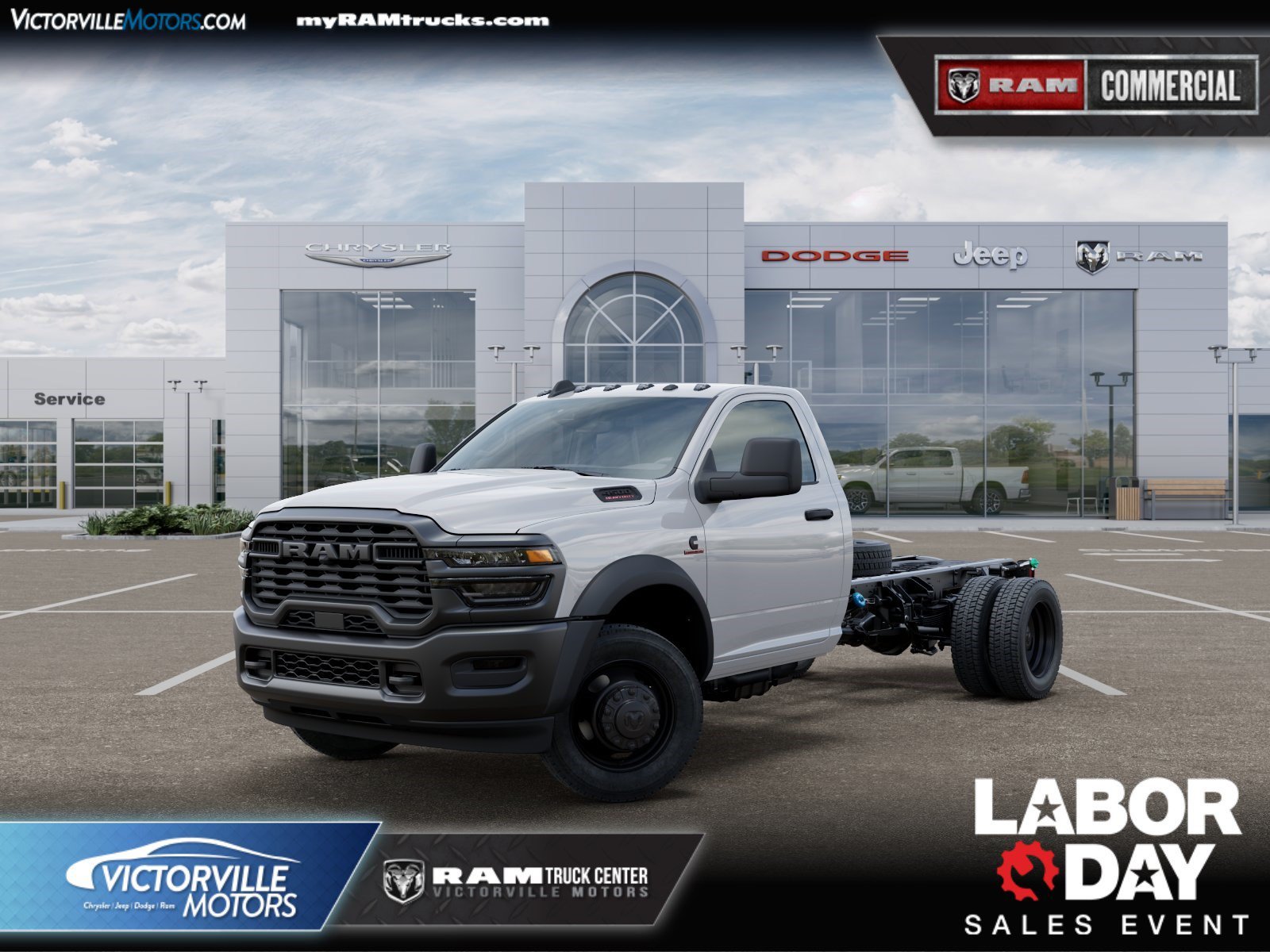
- Is the Ram 4500 available as a pickup?
- No. It is sold as a chassis cab, intended for a body builder to fit a service body, flatbed, dump or similar. If you want a bed, the 3500 pickup is the vehicle to look at. Buying a 4500 only makes sense when a body is part of the plan.
- When should I choose a 4500 over a 3500?
- When the body plus its permanent equipment exceeds what a one-ton can carry honestly. Crane service bodies, compressor units and dump bodies used daily are the usual triggers. If a properly specified 3500 covers the work with margin, it costs less to buy and run and is easier to live with.
- When should I step up to a 5500 instead?
- If your calculated weights already sit near the 4500 ceiling, or if you expect the work to grow. Running any chassis permanently at its rating costs you in brakes, tyres and resale. The 5500 usually costs modestly more and leaves room for the next body you buy.
- What is cab-to-axle and why does it matter so much?
- It is the distance from the back of the cab to the centre of the rear axle, and it determines what body will fit and how the load sits over the axle. It is fixed when the chassis is built and cannot be changed afterwards, which is why the body builder must specify it before the order is placed.
- Do I need a commercial licence for a Ram 4500?
- For the truck alone, generally not, since it sits below the 26,001 lb point at which California licensing requirements typically change. A completed truck plus a loaded trailer can produce a combined rating that does cross it, so confirm your specific configuration with the California DMV.
- How long does a body build take?
- Commonly several months once the chassis arrives, and longer for specialist bodies such as cranes or recovery equipment. The chassis is seldom the delay. Get a written estimate from the builder and make customer commitments against that rather than against vehicle delivery.
- Is the Cummins the only engine?
- Yes, it comes as standard at this weight, which suits a truck that spends its working life loaded. It does mean there is no cheaper petrol option for lighter duty, and modern diesel after-treatment considerations apply, though sustained working loads are the duty cycle those systems handle best.
- How does the Ram 4500 compare with an F-450 or Silverado 4500HD?
- All three are competent chassis with good upfitter support, and the honest differences are commercial. Ford has the densest service network in the region; Chevrolet often competes hard on fleet terms; Ram brings the Cummins. Quote all three as complete finished trucks rather than comparing chassis prices.
- What should I check when buying a used Ram 4500?
- The body first, since that is where the value and the risk sit: who built it, whether they still trade, and whether parts remain available. Then the frame for drilling or welding from the upfit. Then hydraulics on a dump, or the crane’s own inspection record if one is fitted.
- Can one 4500 chassis serve several different roles?
- Not really, once bodied — the body is effectively permanent. What fleets do instead is standardise on the chassis and body it differently for different departments, which gives shared parts, shared technician knowledge and driver familiarity across a varied fleet while each truck stays purpose-built.
- How well does a Ram 4500 hold its value?
- Reasonably, and the body matters more than the chassis. A quality service or dump body from a recognised Southern California builder, in good condition with documented maintenance, sells readily because demand for working trucks at this weight is steady. An unbranded one-off build is much harder to value and slower to sell.
- Does the 4500 need four-wheel drive for Southern California work?
- For most contracting, no. Sites are largely paved, the weather is dry for most of the year, and a loaded chassis with weight over the rear axle finds traction well enough. Leaving it off saves purchase cost, saves weight that comes straight off payload, and removes a drivetrain that needs servicing on a truck that already has plenty to maintain. It earns its place if you regularly reach graded or unmade sites, work on fresh fill or soft ground, or operate on agricultural land, all of which are common enough inland that plenty of contractors specify it deliberately.
- How does a loaded 4500 cope with grades and brakes?
- Sustained descents are the hard part rather than the climbs, and Southern California has plenty of long grades between inland sites and the coastal basin. A fully loaded dump or service body puts real heat into the brakes on the way down, and repeated over months that shows up as shortened pad and rotor life rather than as any dramatic event. An exhaust brake takes a meaningful share of that work off the service brakes and is worth having. When buying used, ask about brake service intervals rather than only current pad thickness, because the interval tells you how the truck was actually worked.
- What are the main running costs at this weight?
- Tyres and brakes are the recurring items and both cost more than on a one-ton, particularly on a truck that works loaded and descends grades regularly. Beyond that, budget body maintenance as a separate line — hydraulics, crane servicing, hinge and mounting inspection — because on a chassis cab it is frequently the body rather than the truck that takes the vehicle off the road.