SoCal Work Trucks

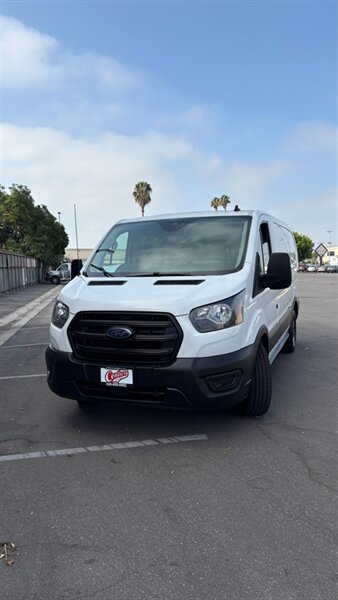
Ford Transit near Menifee, California

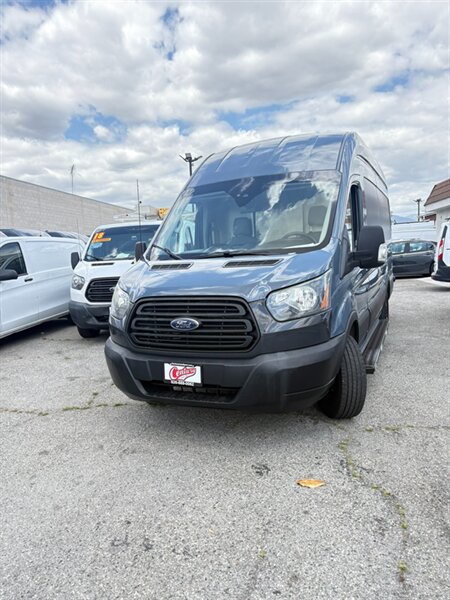
Full-size cargo and passenger van in three roof heights and three lengths. Below: who sells it near Menifee, what is available now, and how to choose the right configuration.

Buying a Ford Transit near Menifee

No sellers in our network are currently listed close to Menifee. Commercial dealers routinely deliver across Southern California, so tell us what you need and we will look more widely.

No Ford Transit listed in Riverside County right now

Commercial inventory turns over quickly. Tell us your specification and a fleet specialist will search participating sellers across Southern California.

Buying a work vehicle in Menifee

Menifee is a construction town in a way that Hemet and Riverside are not. Rapid residential development over the past decade means a large share of local commercial vehicle demand comes from trades working new-build sites rather than servicing existing housing stock. That is a meaningfully different buying pattern.

New construction favours different vehicles than service work. A framing or concrete crew moves people and material to a site and works there for days or weeks, rather than making many short stops. That pushes towards crew cab pickups with real payload, dump trucks and trailers for material, and flatbeds for lumber and equipment — not the organised parts vans that suit a plumbing service business.

The I-215 puts Menifee within easy reach of Perris, Murrieta, Temecula and Riverside, and many local businesses work across all of them. Sites are typically 15 to 40 minutes apart, which is far enough that vehicle comfort matters but close enough that range and refuelling never do.

New-build sites are frequently ungraded, especially early in a development. Unlike established suburban work, that makes four-wheel drive a genuine consideration for trades arriving before the streets are finished — though it becomes unnecessary once a development matures, so it depends which phase of work you do.

As construction completes, the trade mix shifts. Newly built homes generate landscaping, hardscape, solar and pool work within a few years, then HVAC and appliance service after that. A business buying vehicles here should think about which phase of that cycle it serves, because the right vehicle for a framing crew is wrong for an HVAC service technician.

Commercial upfit capacity is limited locally. Like Hemet, Menifee businesses commissioning a dump or service body will usually be working with a builder further north in the Inland Empire, which adds transit time and argues for ordering the body with the chassis rather than after it arrives.

What Menifee businesses actually buy

Framing and structural contracting

New residential construction sustains substantial framing work. These crews need to move people and lumber to site, which means crew cab pickups with long beds, or flatbeds where material volume justifies it. Payload with a full crew aboard is the constraint people underestimate.

Concrete and hardscape

Foundations, driveways, patios and retaining walls follow new construction closely. This is heavy material work — one-ton trucks with dump bodies, or three-quarter-ton trucks towing dump trailers, where the rating rather than the bed size is the real limit.

Roofing

New-build and re-roof work across the developing housing stock. A towing-heavy trade: material to site, debris trailers away from it. Summer heat makes cooling capacity a genuine specification consideration for trucks working loaded through the afternoon.

Landscaping and irrigation

New homes generate landscape installation within a few years of completion, followed by ongoing maintenance. Installation is dump-truck work moving soil and material; maintenance is lighter and better served by a pickup with a trailer.

HVAC installation and service

New construction means installation work — moving complete condensing units and air handlers, which suits a box truck or cutaway rather than a service van. As the housing stock ages, that shifts towards service work better suited to a high-roof cargo van.

Solar and electrical

Newer housing with favourable roof orientation and modern electrical panels supports active solar work. Crews carry panels and racking, which are long and awkward rather than heavy, so rack capacity matters more than payload.

Local conditions that change the decision

Sites are close together but journeys are frequent, with Perris, Murrieta, Temecula and Riverside all within a short freeway run on the I-215. Daily mileage is moderate rather than high, which means the diesel-versus-petrol case is genuinely close and worth calculating rather than assuming.

New-build sites are often ungraded before streets are finished, which is a real argument for four-wheel drive for trades arriving early in a development. Once a development matures the argument disappears, so it depends on which phase of construction your work sits in.

Summer heat matches the wider San Jacinto and Perris valley pattern, regularly exceeding 100°F. That stresses cooling systems and air conditioning, and it compounds for anything towing near its rating. Specify cooling and towing packages properly rather than trimming them to save cost.

Parking is unconstrained by Southern California standards. New developments and commercial areas accommodate crew cabs with long beds and even duallies without difficulty, so the urban-footprint compromises that shape vehicle choice in Riverside or Orange County simply do not apply. Buy the configuration the work needs.

Menifee buying questions

What work vehicles are most common in Menifee?
Crew cab pickups and one-ton trucks with dump bodies. The trade base is weighted towards new residential construction — framing, concrete, roofing, landscaping — which moves crews and heavy material rather than carrying parts inventory, so trucks dominate over vans.
Do I need four-wheel drive for new construction sites?
For trades arriving early in a development, before streets and driveways are finished, yes — it is one of the clearer cases in the region. For work on completed developments, or for service trades working established homes, it is an unnecessary cost in payload and fuel economy.
Should a framing crew buy a crew cab or a regular cab?
Crew cab, almost always — the whole point is moving the crew and their material together. The catch is payload: cab structure plus five or six people at roughly 200 lbs each consumes a large share of a three-quarter-ton rating before any lumber is loaded. Price the one-ton before defaulting to the three-quarter.
Is Menifee a good place to base a construction business?
Geographically, yes. The I-215 puts Perris, Murrieta, Temecula and Riverside all within a short run, so a single base serves a wide working area. The trade-off is limited local commercial upfit capacity — specialist bodies usually mean working with a builder further north.
Where do Menifee businesses get dump bodies fitted?
Generally further north in the Inland Empire, since local specialist upfit capacity is limited. Build the transit time into your schedule and order the body at the same time as the chassis — the upfitter queue, not chassis availability, usually determines when the truck can start earning.
Is diesel worth it for a Menifee-based business?
Genuinely marginal, and worth calculating rather than assuming. Daily mileage is moderate and journeys are short-to-medium, which does not play to diesel's strengths and can cause after-treatment problems. If you tow heavy every day the diesel still wins; if you do mixed local work, the petrol V8 is often the better operational choice.
How does buying in Menifee compare with Hemet or Temecula?
All three have limited specialist commercial capacity compared with Riverside or the Fontana corridor, so most fleet buyers end up sourcing from further north regardless of which of the three they are based in. Commercial dealers routinely deliver across a 75 to 100 mile radius, so do not limit your search to the nearest lot.

Local guidance reviewed by the SoCal Work Trucks editorial team, last updated 2026-09-03.

Is the Ford Transit the right truck for your work?

Full-size cargo and passenger van in three roof heights and three lengths.

Trades that need to stand up inside the van and want organised shelving. The High Roof is the reason most plumbing and electrical fleets pick a Transit over a pickup.

Typical specifications

Ranges across common configurations of this model. The figures for any individual vehicle depend on its cab, wheelbase, drivetrain and upfit.

GVWR
8,670–10,360 lbs
Payload
3,100–4,640 lbs
Towing
4,700–7,500 lbs
Cargo volume
246–487 cu ft
Seating
2–15 seats

These are model ranges, not a specific truck. Payload in particular varies by well over 1,000 lbs across configurations. Always confirm against the door-jamb sticker and the manufacturer documentation for the exact vehicle before you buy or load it.

Configurations to choose between

  • T-150 / T-250 / T-350 series
  • Low, Medium and High Roof
  • Regular, Long and Extended wheelbase
  • Cargo, Crew, Passenger and Cutaway

What buyers get wrong

Payload varies by more than 1,500 lbs across the series. A T-150 High Roof loaded with shelving, a partition and a full parts inventory can run out of payload faster than buyers expect — check the door-jamb sticker on the specific van, not the brochure.

Body types it is built as

Who buys the Ford Transit

What else to consider

Vehicles commonly cross-shopped against the Ford Transit.

Ford Transit: the full picture

Ford replaced the E-Series van with the Transit in 2015, and in doing so moved the American work van from a body-on-frame, standard-roof design to the tall European format that had dominated Europe for two decades. The practical consequence is simple and it is the single most important thing to understand about the vehicle: in a High Roof Transit, an average adult can stand up inside and work. In the E-Series, and in the Chevrolet Express that still uses the older format, they cannot.

That one change is why the Transit took over the trade van market. A plumber fitting a van out with shelving gains an entire working surface at standing height. An electrician can organise conduit and parts bins vertically instead of crawling over them. A mobile repair business can effectively operate a small workshop from the vehicle. None of that is possible in a standard-roof van, and no amount of extra floor length compensates for it.

The Transit line is organised around three variables that a buyer chooses independently. Series (T-150, T-250, T-350 and T-350 HD) determines weight rating and therefore payload. Roof height (Low, Medium and High) determines interior working height. Body length (Regular, Long and Extended) determines floor area and, on Extended vans, adds an extension behind the rear axle. Those three choices produce a very wide range of vehicles that all wear the same Transit badge, which is the source of most buying mistakes.

Beyond the cargo van, the Transit is sold as a Crew Van with a second row of seats, a Passenger Van seating up to fifteen, and a Cutaway and Chassis Cab for box, service and specialty upfits. The Cutaway in particular is a common base for 12 to 16 ft box bodies where a full medium-duty truck would be more vehicle than the route needs.

In Southern California specifically, the Transit benefits from the density of the Ford Pro commercial dealer network. Chassis and upfit-ready inventory is more often on the ground here than for competing brands, which matters when a vehicle is out of service and a replacement is needed in weeks rather than months. That availability advantage is frequently a bigger factor in a fleet decision than any specification difference.

Powertrain choice is comparatively straightforward. The 3.5-litre V6 in naturally aspirated and EcoBoost forms covers the great majority of commercial use. The EcoBoost is the sensible pick for consistently loaded vans and for anything regularly climbing the Cajon Pass or the grades out of the Inland Empire. All-wheel drive is available and is genuinely useful for service businesses working unpaved sites, though it costs payload and fuel economy.

How businesses actually use it

Mobile plumbing and drain service

Plumbing · Drain cleaning · Water treatment

Plumbers carry heavy, dense inventory — fittings, valves, sections of pipe, a drain machine — in a form that must be findable quickly at a customer’s house. A High Roof Transit with full-height shelving down both sides and a floor-mounted rack for pipe is the standard answer. The weight is what catches people out: a fully stocked plumbing van routinely carries 1,500 to 2,000 lbs of parts and equipment before the driver gets in.

Typical configuration: T-250 or T-350 High Roof, Long wheelbase, with shelving and a partition

Electrical contracting and low-voltage installation

Electrical · Low voltage · Solar · Telecom

Electrical work is about small-parts organisation and carrying long material. Conduit, ladders and cable reels do not fit the way plumbing parts do. Most electrical fleets specify a High Roof for interior bin storage plus a roof rack for conduit and ladders, and that roof load needs to be counted against payload alongside everything inside.

Typical configuration: T-250 High Roof with interior bins, roof rack and ladder access

HVAC installation and service

HVAC · Refrigeration · Mechanical contracting

HVAC is the hardest van case because the loads are both heavy and bulky. A condenser, a furnace, recovery equipment and a full set of gauges and tools add up quickly, and installation crews often need to carry a complete unit to site. Many HVAC fleets run a T-350 specifically for the payload headroom, and some move to a box truck or cutaway for install crews while keeping Transits for service calls.

Typical configuration: T-350 High Roof Extended, or a Cutaway with a box body for install crews

Parcel, courier and last-mile delivery

Courier · Last-mile delivery · Medical courier

Delivery work is defined by stop count rather than load weight. What matters is how quickly a driver can get in, find the item and get out, repeated a hundred or more times a day. High Roof vans let a driver move upright inside instead of stooping, which compounds across a shift, and the low step-in height reduces cumulative strain.

Typical configuration: T-250 High Roof, Long wheelbase, with shelving sized to the parcel profile

Mobile workshops and specialty conversions

Mobile repair · Locksmiths · Equipment service · Restoration

When the van is the business, the Transit works as a base because the upfitter ecosystem is deep and Ford publishes body-builder documentation that converters actually follow. Power, lighting, workbenches and equipment mounts are all well-trodden ground.

Typical configuration: T-350 High Roof Extended with an upfitter-installed interior and power system

Crew transport to job sites

General contracting · Construction · Landscaping

The Crew Van adds a second row behind the front seats with a bulkhead separating a cargo area behind, which lets a supervisor move a small crew and their tools in one vehicle. For larger crews the Passenger Van seats up to fifteen, though at that point luggage and tool space is largely gone.

Typical configuration: Transit Crew Van, or Passenger Van for crews above five

How to choose the right configuration

Start with roof height, because it is the decision that cannot be corrected later. If crews will work inside the van — assembling fittings, picking parts, using a bench — buy the High Roof. The most common regret we hear about is a Low or Medium Roof bought to fit an existing garage or parking structure, after which crews spend years stooping. Measure the garage; if it genuinely will not take a High Roof, the Medium Roof is the compromise, not the Low.

Then choose series by payload, and do the arithmetic properly. A T-150 is rated well below a T-350, and the shortfall is easy to consume. Shelving on both sides is typically 300 to 500 lbs. A steel partition adds 80 to 150. A roof rack with ladders adds 150 to 250. A full plumbing or HVAC parts inventory can exceed 1,500 lbs. Two crew members and fuel add another 400. It is entirely possible to specify a van that is over its rating before it leaves the upfitter, and that is both a safety problem and a liability one.

The number that matters is on the door-jamb sticker of the specific van, not in the brochure. Brochure payload figures describe a base vehicle with no options; the van in front of you may be several hundred pounds heavier. When comparing two listings, compare their stickers.

Body length is the easiest decision and the least consequential. Regular length suits urban service work and tight parking. Long is the volume seller and the safe default. Extended adds length behind the rear axle, which increases capacity but also increases rear overhang — worth thinking about for anyone regularly reversing into driveways or tight commercial loading areas.

On powertrain, the naturally aspirated V6 is adequate for lightly loaded urban work. The EcoBoost is the better buy for consistently loaded vans, for anything towing, and for routes with sustained grades, which in this region means most work that leaves the valley floor. All-wheel drive is worth it only if crews genuinely work unpaved sites; otherwise it costs payload and economy for capability that goes unused.

Finally, decide on the partition before the upfit rather than after. A full steel bulkhead protects the driver from shifting load, which is the accident nobody plans for, but it costs payload and prevents reaching through from the cab. A partition with a window and pass-through is the common compromise.

Our assessment

An editorial evaluation written by the SoCal Work Trucks editorial team, last reviewed 2026-09-03. It is our own assessment, not customer reviews or ratings.

The Transit is the sensible default for a Southern California trade fleet, and the burden of proof sits with any alternative. It is not the cheapest van to buy, the most economical to run, or the nicest to drive, but the combination of standing-height working space, a deep upfitter ecosystem and genuine local parts and service availability is difficult to beat. The main risk in buying one is not the vehicle — it is specifying the wrong series and discovering the payload problem after the shelving is installed.

What it does well

  • Standing-height working space

    The High Roof is the reason most trades choose a Transit. Being able to stand and work inside changes how a service van is used every single day, and no competitor advantage outweighs it for trades that pick parts on site.

  • The widest upfit ecosystem of any American van

    Nearly every shelving manufacturer, rack maker and specialty converter supports the Transit first. That means shorter lead times, more competition on price and more installers who have done your exact configuration before.

  • Local availability and service depth

    The Ford Pro commercial network across Southern California carries more chassis and upfit-ready stock than competing brands. When a van is off the road, that difference is measured in weeks of lost revenue.

  • One platform covers most of a mixed fleet

    Cargo, crew, passenger and cutaway variants share a platform, so a fleet can standardise driver familiarity, parts and service across several very different jobs.

  • Configuration range

    Three roofs, three lengths and four series mean the van can be matched closely to the work rather than the work compromised to fit the van.

Where it falls short

  • Payload is easy to over-promise and under-deliver

    The same configuration flexibility that is a strength is also the biggest trap. The gap between a T-150 and a T-350 is large, brochure figures describe a base van, and an upfit consumes payload faster than most buyers expect.

  • High Roof height creates real access problems

    High Roof vans do not fit many older parking structures, drive-throughs or residential garages, and adding a roof rack makes it worse. This has to be checked against actual routes, not assumed.

  • Not the most economical van to run

    The petrol V6 is thirstier than the four-cylinder diesels some European rivals offer, and over a high-mileage delivery duty cycle that difference is material.

  • Interior durability under hard use

    Cabin materials are specified to a commercial price point. In fleets where several drivers share a van across shifts, interiors show wear noticeably faster than the drivetrain does.

  • Rear overhang on Extended models

    The Extended body adds capacity behind the rear axle, which makes tight reversing and steep driveway transitions harder and increases the chance of low-speed damage.

Ownership and used-buying notes

Service intervals are conventional and most independent commercial shops in Southern California will work on a Transit, which keeps maintenance competitive and avoids the dealer-only dependency that comes with some European vans.

On used examples, the highest-value checks are the upfit rather than the drivetrain. Look for how roof racks were mounted and whether the holes were properly sealed, since water ingress around badly fitted racks is the most common expensive fault on ex-trade vans. Check the load floor for the pattern of shelving bolt holes from a previous fitout, and confirm the door-jamb payload sticker is still legible and matches the van’s configuration.

Sliding door mechanisms and rear door hinges take heavy cycle counts in delivery work. On a high-mileage ex-parcel van, operate every door repeatedly before buying — replacement is straightforward but not cheap, and a worn mechanism is a daily irritation for the driver.

Questions buyers ask

How much can a Ford Transit carry?
Depending on series, roof and body length, published payload runs from roughly 3,100 to 4,600 lbs. A T-150 sits near the bottom of that range and a T-350 HD near the top. The figure that governs your van is on its door-jamb sticker, not the brochure, and any shelving, racking, partition or permanent equipment already fitted comes out of it.
Do I need a High Roof Transit?
If crews will work inside the van — picking parts, assembling fittings, using a bench — yes, and it is the single most valuable option on the vehicle. If the van is purely a container that is loaded and unloaded from outside, a Medium or Low Roof saves money and fits more parking structures. Measure your garage and depot clearances before deciding.
What is the difference between a T-150, T-250 and T-350?
Series denotes weight rating. The T-150 is the lightest and cheapest with the least payload; the T-250 is the common middle choice; the T-350 and T-350 HD carry the most and are the right answer for heavy trades such as HVAC. They can look identical from outside, so confirm the series on any listing rather than judging by appearance.
Does a Ford Transit need a commercial driver’s licence in California?
A standard Transit is rated well below the 26,001 lb GVWR threshold that generally triggers a commercial driver’s licence requirement, so a normal Class C licence is typically sufficient. Requirements change with towing and with certain passenger configurations. Confirm your specific situation with the California DMV and FMCSA rather than relying on a general answer.
Is the EcoBoost engine worth it for a work van?
For a consistently loaded van, for towing, or for routes with sustained grades, yes — the turbocharged V6 holds speed on hills without labouring and is more pleasant to drive loaded. For a lightly loaded urban van the naturally aspirated V6 is adequate and cheaper to buy.
How does the Transit compare with a Ram ProMaster?
The ProMaster is front-wheel drive with a notably lower load floor, which reduces lifting strain in high-stop-count delivery work. The Transit offers more series and roof combinations, higher towing ratings and a deeper upfit ecosystem. For hand-loaded delivery the ProMaster’s floor height is a genuine advantage; for mixed trade work the Transit’s configuration range usually wins.
How does the Transit compare with a Mercedes-Benz Sprinter?
The Sprinter generally rides better on long routes and supports the most specialised upfits, particularly refrigerated and medical conversions. It also costs more to buy and to service, and parts availability is thinner outside metropolitan areas. For most Southern California trade fleets the Transit is the more economical answer; for a specialist conversion the Sprinter often is not beatable.
Should I buy a new or used Transit?
Used Transits are plentiful because so many were sold into fleets, and ex-fleet vans often come with documented maintenance histories that private sales do not. The risk is the upfit rather than the mechanicals — check roof penetrations, previous shelving mounts and door mechanisms. A well-maintained used van with the right series usually beats a new van in the wrong one.
Can a Ford Transit tow?
Yes. Published towing ranges from about 4,700 to 7,500 lbs depending on configuration and equipment. As with payload, the rating that applies is the one for the specific van, and towing capacity and payload interact — loading the van heavily reduces what it can safely tow.
What is the difference between a Transit Cargo, Crew and Cutaway?
Cargo is an empty box with two seats. Crew adds a second row of seats with a bulkhead and a smaller cargo area behind. Cutaway is a cab on a bare frame, supplied without a rear body so an upfitter can fit a box, service body or specialty conversion.
How long do commercial upfits take?
Straightforward shelving packages are often days once the van is available. Specialty conversions can run to months. The practical advice is to order the body or upfit at the same time as the chassis rather than after it arrives, because upfitter lead time, not chassis supply, is usually what delays a van entering service.
Is the electric E-Transit a sensible replacement?
For fixed routes under roughly 100 miles a day that return to the same yard each night, it can be. The decisive questions are real-world range when fully loaded in summer heat, whether depot charging exists or must be built, and payload after battery weight. It is not a like-for-like swap for a van that roams unpredictably across the region.

Official sources and further reading

Manufacturer and regulatory sources for specifications and requirements. We do not link to other vehicle-selling websites.

Shop Ford Transit by model year

Nearby cities

Find a Ford Transit near Menifee

Two quick steps. A fleet specialist will follow up.

  1. 1. Your needs
  2. 2. Your details