SoCal Work Trucks

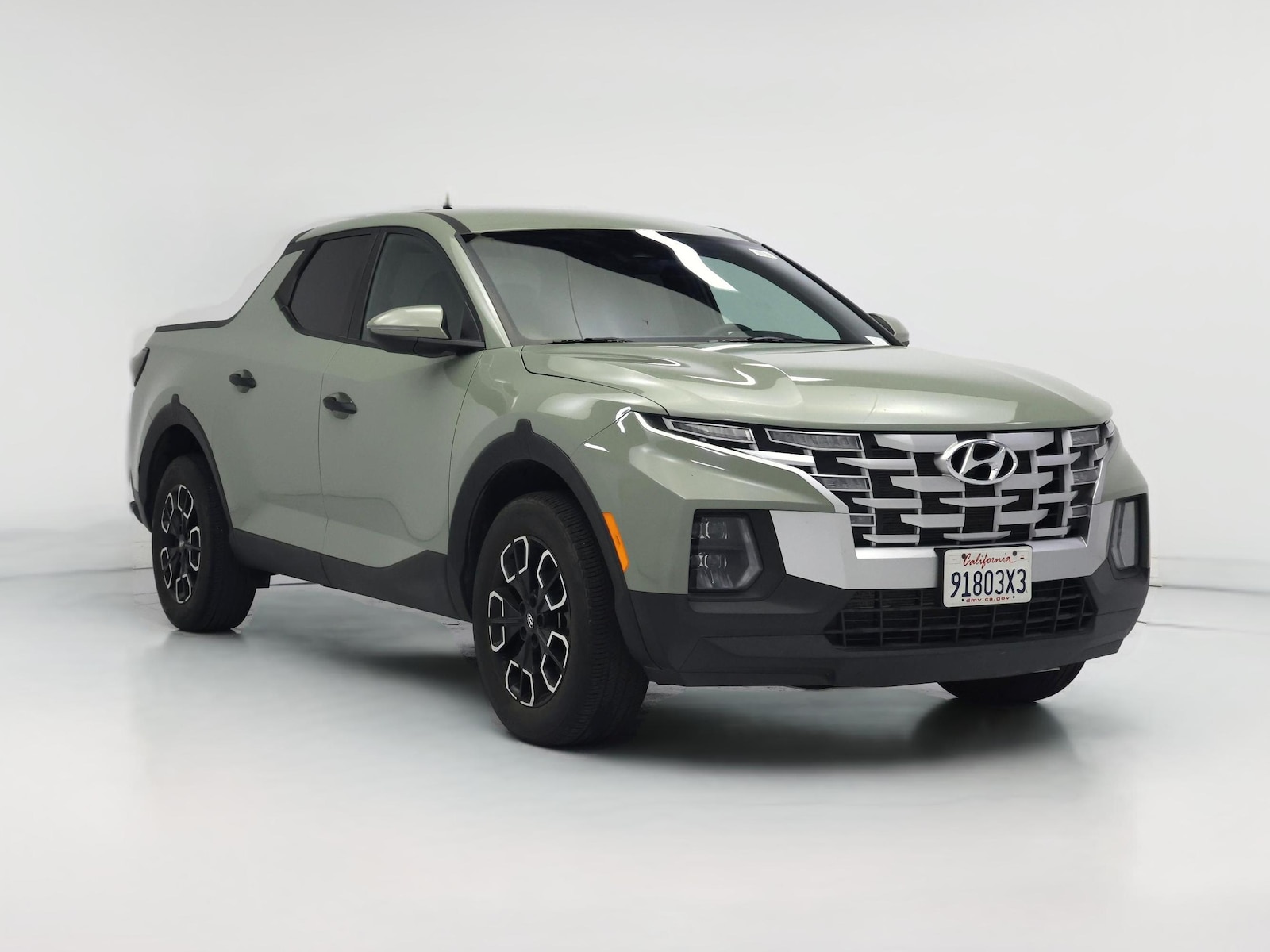
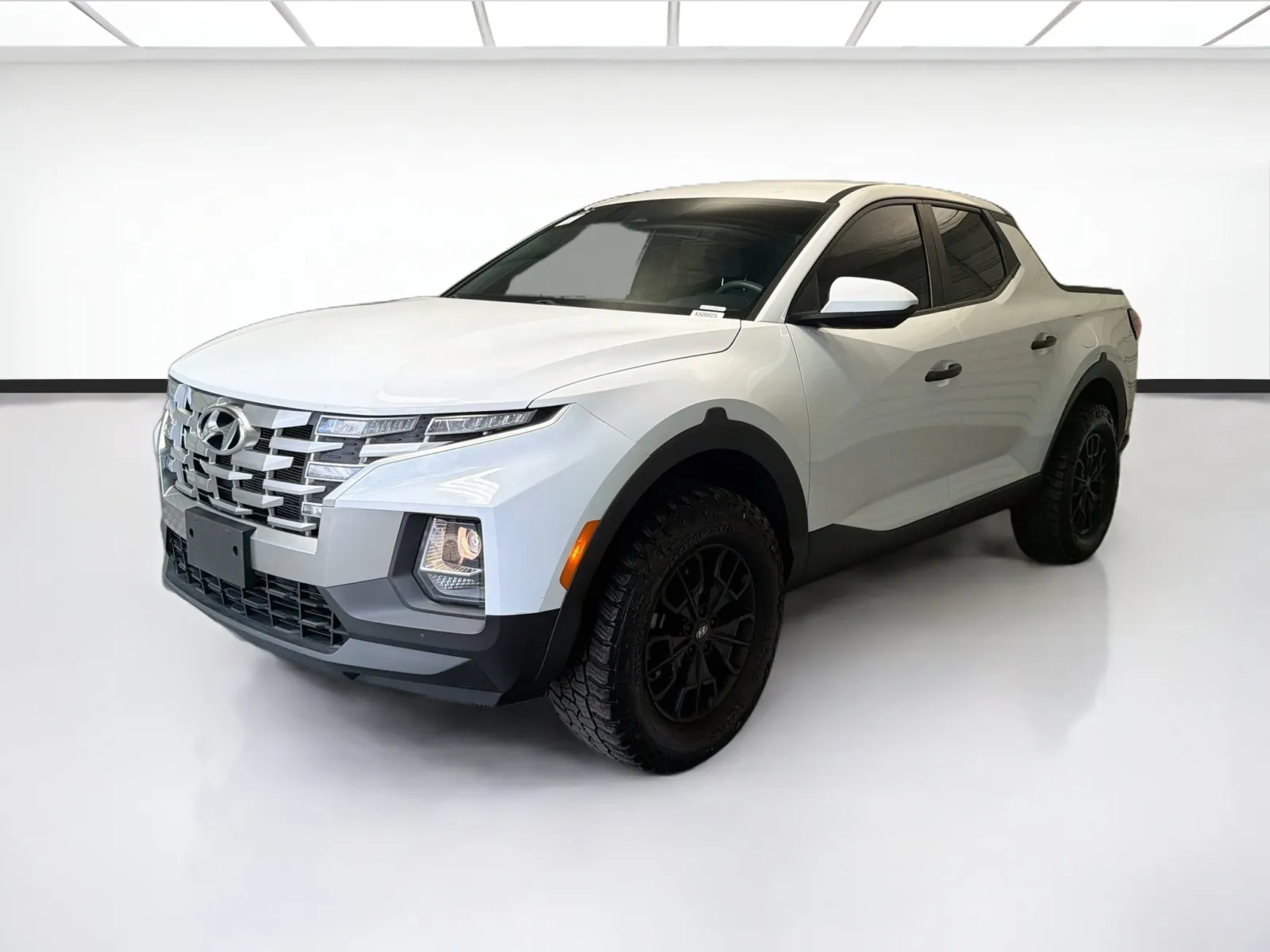
Hyundai Santa Cruz near Banning, California

Unibody compact pickup based on the Tucson crossover, with an open bed and car-like handling. Below: who sells it near Banning, what is available now, and how to choose the right configuration.

Buying a Hyundai Santa Cruz near Banning

No sellers in our network are currently listed close to Banning. Commercial dealers routinely deliver across Southern California, so tell us what you need and we will look more widely.

11 Hyundai Santa Cruz listings in Riverside County

Filters

Buying a work vehicle in Banning

Banning is frequently spoken about in the same breath as its neighbour immediately west, which obscures how different the two are. Where that city has expanded rapidly with new housing, Banning is longer-established, with an older building stock and a slower rate of change. The commercial vehicle work that follows reflects repair and upkeep rather than construction.

The single most distinctive feature of the local economy is renewable energy. The slopes running east from the city carry one of the largest concentrations of wind turbines anywhere in the country — several hundred machines across many separate projects, generating at utility scale. Keeping that equipment running supports a technical service sector that has no equivalent in the valley cities.

Immediately east, the Cabazon area and the Morongo resort anchor a substantial visitor and hospitality economy. Outlet retail, casino operations and the businesses feeding them generate steady demand for refrigerated distribution, facilities maintenance, commercial kitchen servicing and the delivery work that supports any concentration of hospitality.

Position matters here as much as in any pass town. Everything travelling by road between the inland basin and the Coachella Valley passes through, which sustains haulage and the vehicle servicing attached to it. Unlike its western neighbour, Banning sits at the desert end of that transition, so conditions lean warmer and drier.

Operating costs are among the lower ones in the region, and that is a genuine draw. Yard and property costs here sit below the western Inland Empire, which makes the city a practical base for businesses working a wide area and willing to accept the drive.

Commercial infrastructure is correspondingly limited. There is no meaningful local upfit capacity, and buyers travel for both specialist bodies and substantial dealer inventory. Used trucks with bodies already fitted are consequently a larger share of what changes hands here than new chassis orders.

What Banning businesses actually buy

Wind turbine and renewable energy servicing

Technicians and contractors maintaining utility-scale generating equipment on the slopes east of the city. Requirements are specific: secure lockable tool storage, substantial electrical capacity, and the ability to reach unpaved service tracks in exposed terrain.

Hospitality and food service supply

The resort and outlet concentration nearby generates constant supply runs and equipment servicing. Refrigerated bodies and moderate box trucks with liftgates predominate, working to delivery windows around loading areas that are frequently shared and tight.

Commercial refrigeration and kitchen service

Casino kitchens, restaurants and retail food operations depend on refrigeration that fails expensively and urgently. High-roof cargo vans fitted as mobile workshops, carrying enough parts inventory to finish the repair on the first visit.

Residential repair and maintenance trades

Older housing stock generates plumbing failures, electrical updating and roofing renewal rather than new installation. Organised cargo vans suit this work far better than open beds, because the value lies in carrying the right part rather than bulk material.

Haulage and roadside vehicle services

Traffic moving through the pass sustains recovery operators, mobile mechanics and tyre services. Rollback carriers and heavy service bodies, where uptime matters more than purchase price because a stopped support vehicle stops other vehicles earning.

Landscape and open-ground maintenance

Larger lot sizes and dry open ground produce grounds maintenance, brush clearance and fire abatement work. Pickups towing trailers for routine rounds, stepping up to a one-ton dump where green waste volumes justify it.

Local conditions that change the decision

Exposure to wind is the defining local condition, and it is stronger here than most of the region. High-sided vehicles on the open stretches of freeway need genuine attention during windy periods, and an empty box trailer is meaningfully harder to control than a loaded one.

Conditions run hotter and drier than the western end of the pass, tending towards desert rather than basin. Cooling systems, air conditioning and battery condition all deserve attention, and tyre pressures shift more than owners expect between a cold morning and a hot afternoon.

Dust and fine grit are constant on unpaved access, particularly on the service tracks in the hills. Air filters clog faster than a standard service interval assumes, and radiators pack with debris on vehicles working off sealed roads.

Older residential streets are narrower and driveways tighter than in newer developments to the west. That penalises long wheelbases and dual rear wheels on domestic service work, and is a fair argument for a shorter vehicle even where capacity suggests otherwise.

Banning buying questions

What makes the vehicle market in Banning different from Beaumont?
Age and economy. Beaumont is dominated by new housing construction, which drives demand for dumps and crew cabs. Banning has older property, an energy servicing sector and a hospitality economy nearby, which favours organised service vans and refrigerated distribution instead.
What vehicles suit wind energy service work?
Service-bodied trucks or well-organised vans with lockable compartments, substantial electrical provision for tooling, and the ground clearance to reach unpaved service tracks. Tool security matters because the equipment carried is specialised and expensive to replace.
Is refrigerated capacity worth the cost for local delivery?
If you supply the hospitality operations nearby, it is not optional. Specify the refrigeration unit against peak summer conditions rather than an average, because this end of the pass runs hotter, and a failure on a loaded perishable run is a total loss rather than a delay.
How bad is the dust for vehicle maintenance?
Worse than most owners plan for if you work off sealed roads. Air filters clog well ahead of the standard interval, and radiators and intercoolers pack with fine debris. Check and clean both more often than the manufacturer schedule suggests.
Is Banning a sensible base for a business covering a wide area?
It can be, and lower yard and property costs are the reason people choose it. The freeway gives good reach in both directions. The trade-off is limited local commercial support, so plan servicing and any upfit work around travelling.
Where do local businesses buy work trucks?
Mostly outside the city. The nearest substantial commercial inventory is west towards Hemet, and specialist body builders are further out again around Fontana and Ontario. Completed used trucks with bodies fitted are a practical route given that distance.
Does the wind affect fuel consumption?
Noticeably on high-sided vehicles. A box truck working into a persistent headwind through the pass uses appreciably more fuel than the same run on a still day, and it is worth factoring into route costing rather than treating published figures as what you will see.

Local guidance reviewed by the SoCal Work Trucks editorial team, last updated 2026-09-12.

Is the Hyundai Santa Cruz the right truck for your work?

Unibody compact pickup based on the Tucson crossover, with an open bed and car-like handling.

Light-duty business use where a full-size truck is more vehicle than the job needs: sales and estimating visits, light service calls, and businesses whose staff need occasional bed use but drive mostly on road.

Typical specifications

Ranges across common configurations of this model. The figures for any individual vehicle depend on its cab, wheelbase, drivetrain and upfit.

Payload
1,411–1,753 lbs
Towing
3,500–5,000 lbs
Seating
5 seats

These are model ranges, not a specific truck. Payload in particular varies by well over 1,000 lbs across configurations. Always confirm against the door-jamb sticker and the manufacturer documentation for the exact vehicle before you buy or load it.

Configurations to choose between

  • Single crew-cab body style only
  • 2.5L naturally aspirated and 2.5L turbocharged
  • Front-wheel drive and HTRAC all-wheel drive
  • Lockable, weatherproof under-bed storage

What buyers get wrong

This is a unibody crossover with a bed, not a work truck. Payload tops out around 1,750 lbs and towing around 5,000 lbs, which is a fraction of a half-ton pickup, and the bed is too short for full sheets of plywood. Hyundai has also reportedly ended production after the 2026 model year, so factor long-term parts and resale into any multi-year fleet decision.

Body types it is built as

    Who buys the Hyundai Santa Cruz

    What else to consider

    Vehicles commonly cross-shopped against the Hyundai Santa Cruz.

    Hyundai Santa Cruz: the full picture

    Hyundai does not sell commercial work trucks, cargo vans or chassis cabs in the United States. If you have arrived here looking for a Hyundai equivalent of an F-250 or a Silverado HD, it does not exist. The Santa Cruz is the only Hyundai with an open bed, and it is a very different kind of vehicle.

    The Santa Cruz shares its unibody platform with the Tucson crossover, which is the single most important fact about it. A body-on-frame pickup has a separate ladder frame carrying the load; a unibody vehicle carries loads through the same structure that forms the passenger cabin. That makes the Santa Cruz ride and handle far better than a work truck, and makes it far less suited to heavy, concentrated or repeated commercial loads.

    The numbers put the difference in perspective. Santa Cruz payload runs roughly 1,411 to 1,753 lbs depending on trim and drivetrain, with towing from about 3,500 lbs on the naturally aspirated engine to 5,000 lbs on the turbocharged version. A three-quarter-ton pickup carries two to three times as much and tows three to four times as much. Even a half-ton pickup substantially exceeds it.

    The bed is about four feet long, which will not take a full sheet of plywood or drywall flat, and will not take standard lengths of pipe or conduit without overhang. For trades whose work is defined by carrying sheet goods or long material, that alone rules it out.

    None of which makes it a bad vehicle — it makes it a different one. There is a genuine business case for the Santa Cruz, and it is worth stating clearly because the alternative is a business either overloading a compact pickup or overpaying for a work truck it does not need. It also has a lockable, drainable under-bed storage compartment that is genuinely useful for securing tools, which most pickups at any size lack.

    It is worth being precise about where the line falls, because "light duty" is doing a lot of work in that sentence. A Santa Cruz will comfortably carry a technician, a tool bag, a stepladder and a few boxes of parts. It will carry a couple of bags of soil or a green-waste load from a small residential garden. It will not carry a pallet of pavers, a day’s worth of aggregate, or the parts inventory a plumbing or HVAC van holds. If your daily load is closer to the second list than the first, this is the wrong vehicle and no trim level fixes it.

    One further consideration: multiple outlets have reported that Hyundai is ending Santa Cruz production after the 2026 model year. For a personal vehicle that is largely irrelevant. For a business planning a five-year replacement cycle, discontinued models can mean weaker resale and thinner long-term parts availability, and that belongs in the decision.

    How businesses actually use it

    Estimating, sales and site visits

    Contracting sales · Estimating · Project management · Insurance assessment

    Staff who visit sites all day but rarely carry material are badly served by a full-size work truck: it costs more, uses more fuel and is harder to park. The Santa Cruz drives like a crossover, parks like one, and still has a bed for the occasional sample, ladder or piece of equipment. For this role it is genuinely the better business decision.

    Typical configuration: SE or SEL front-wheel drive with the naturally aspirated engine

    Light service calls with hand tools

    Pest control · Appliance service · Locksmiths · Alarm and low-voltage service

    Trades whose work is diagnostic and light-tool based, where the vehicle carries a service kit rather than a parts inventory. The lockable under-bed compartment secures tools out of sight, which matters for technicians parking in residential streets all day.

    Typical configuration: SEL with the under-bed storage and a tonneau cover

    Mobile professional services

    Mobile detailing · Photography · Inspection services · Property management

    Businesses needing occasional open-bed capacity plus a comfortable, economical vehicle for long driving days across the Inland Empire. Fuel and comfort matter more here than payload, and the Santa Cruz is far better suited than a half-ton pickup.

    Typical configuration: SEL or Limited with the turbocharged engine for freeway work

    Fleet vehicles for staff who mostly drive

    Multi-site management · Field supervision · Compliance and safety officers

    Businesses covering the spread of Southern California put serious mileage on staff vehicles. Where those staff need occasional bed capacity but spend most of the day driving between Hemet, Riverside, Ontario and beyond, a compact pickup costs substantially less in fuel and tyres than a full-size truck and is far less tiring to drive. The saving across several vehicles and several years is real money.

    Typical configuration: SEL front-wheel drive, specified for economy rather than capability

    Light landscaping and garden maintenance

    Garden maintenance · Pool service · Light landscaping

    Viable only at the lighter end. Mowers, blowers and hand tools are within capability. Hauling soil, aggregate, green waste or towing a loaded dump trailer is not — those loads exceed a compact unibody pickup quickly, and this is where buyers most often get into trouble.

    Typical configuration: AWD turbocharged with the tow package, kept well within its rating

    How to choose the right configuration

    The first decision is not which Santa Cruz to buy — it is whether a Santa Cruz is the right category at all. Work through it honestly. Do you carry full sheets of plywood or drywall? Standard lengths of pipe or conduit? More than about 1,500 lbs? Do you tow anything heavier than a small utility trailer? Do you need a service body, a rack or a dump bed? If the answer to any of those is yes, buy a full-size truck. A Silverado 2500HD or an F-250 will do the work; a Santa Cruz will be overloaded, and an overloaded vehicle is both a safety problem and a liability exposure.

    If the answers are all no, the Santa Cruz is likely the more sensible business purchase, and you will spend less buying and running it than a truck you do not need.

    On engines, the 2.5-litre naturally aspirated version is adequate for light use and cheaper to buy. The turbocharged version adds meaningful performance, raises towing from about 3,500 to 5,000 lbs, and is the better choice for anyone regularly loaded or driving Inland Empire grades. If you tow at all, buy the turbo.

    HTRAC all-wheel drive is worth it for unpaved site access and is required for the highest towing rating on some configurations. Like any drivetrain addition it costs a little payload and economy, so specify it for a reason rather than by default.

    Trim choice matters less than usual because the body style is fixed — every Santa Cruz is a crew cab with the same bed. Focus on the practical items: the lockable under-bed storage, a tonneau cover for security and weather, and the tow package if you will tow.

    Finally, factor the reported end of production into the decision. If this is one vehicle for a specific role, it is a minor consideration. If you are standardising a fleet on it for five or more years, weigh resale and long-term parts support, and consider whether a continuing-production compact pickup better suits a fleet commitment.

    Our assessment

    An editorial evaluation written by the SoCal Work Trucks editorial team, last reviewed 2026-09-03. It is our own assessment, not customer reviews or ratings.

    Judged as what it is — a comfortable, economical compact pickup for light business use — the Santa Cruz is a good vehicle and often the smarter purchase for staff who drive far more than they haul. Judged as a work truck it fails, and it is not close. The single most valuable thing a buyer can do is be honest about which of those two jobs they actually need. The reported end of production is a real consideration for fleet standardisation.

    What it does well

    • Drives and parks like a crossover

      For staff covering long distances across Southern California with occasional bed use, the ride, economy and manoeuvrability are far better suited than a full-size truck, and the daily cost difference is real.

    • Lockable, weatherproof under-bed storage

      A genuinely useful feature most pickups lack at any size. Tools stay secure and out of sight, which matters for technicians parking in residential streets all day.

    • Lower running costs than any work truck

      Fuel, tyres and servicing all cost less than a half-ton, let alone a three-quarter-ton. For a high-mileage, low-payload role that difference compounds over a fleet.

    • Comfortable for long driving days

      Crossover-derived interior and ride quality make it a better place to spend a full day than a commercial-trim work truck, which affects staff retention in driving-heavy roles.

    • Standard crew cab seating

      Every Santa Cruz seats five, so it doubles as a light crew vehicle without the payload penalty a full-size crew cab carries.

    Where it falls short

    • Payload and towing are a fraction of a work truck

      Roughly 1,750 lbs and 5,000 lbs at best, against 4,000 lbs and 22,000 lbs for a three-quarter-ton pickup. Anyone hauling material or towing equipment will exceed it.

    • The bed is too short for sheet goods

      About four feet long — it will not take plywood or drywall flat, or standard pipe and conduit lengths without overhang. For construction trades that is disqualifying.

    • Unibody construction limits hard commercial use

      Loads pass through the same structure as the passenger cabin. It tolerates repeated heavy or concentrated loading far less well than a body-on-frame truck.

    • No commercial upfit path

      There is no service body, no rack system of consequence and no dump option. If your work needs any upfit, this is the wrong vehicle entirely.

    • Reportedly discontinued after 2026

      Multiple outlets report production ending after the 2026 model year, which raises reasonable questions about resale and long-term parts support for a fleet commitment.

    Ownership and used-buying notes

    Mechanically the Santa Cruz shares most of its componentry with the Tucson, which is a high-volume crossover. That is good news for parts availability and for the number of shops able to service it, and it means maintenance costs behave like a car rather than a truck.

    On a used example, the thing to establish is how it was used. A Santa Cruz that spent its life carrying laptops and sample cases is a very different proposition from one that was loaded to the limit with soil twice a day. Look for sagging or uneven rear ride height, suspension and tyre wear, and any signs of towing beyond its rating at the hitch.

    Given the reported end of production, check resale trends before committing to a multi-unit purchase. Discontinued models can depreciate faster, which changes total cost of ownership even when the purchase price looks attractive.

    Questions buyers ask

    Does Hyundai make a work truck?
    Not in the United States. Hyundai sells no commercial work trucks, cargo vans or chassis cabs here. The Santa Cruz is its only vehicle with an open bed, and it is a unibody compact pickup based on the Tucson crossover rather than a work truck. If you need work truck capability, look at Ford, Chevrolet, Ram or Isuzu.
    How much can a Hyundai Santa Cruz carry?
    Published payload runs roughly 1,411 to 1,753 lbs depending on trim and drivetrain. For comparison, a three-quarter-ton pickup carries between 2,500 and 4,200 lbs. The Santa Cruz is genuinely capable for light loads and genuinely unsuitable for material hauling.
    How much can a Santa Cruz tow?
    About 3,500 lbs with the naturally aspirated engine and up to 5,000 lbs with the turbocharged version and the tow package. That covers a small utility or equipment trailer. It does not cover a skid steer, a mini excavator or a loaded dump trailer.
    Can I fit a service body or ladder rack to a Santa Cruz?
    No meaningful commercial upfit path exists. The bed is short, the unibody structure is not designed for body mounting, and upfitters do not build service bodies for it. If your work needs a service body, rack or dump bed, you need a full-size truck.
    Will a sheet of plywood fit in the bed?
    Not flat. The bed is roughly four feet long, so full 4x8 sheets of plywood or drywall will not lie flat, and standard pipe or conduit lengths will overhang substantially. For trades built around sheet goods or long material this is the deciding limitation.
    Is the Santa Cruz being discontinued?
    Multiple outlets have reported that Hyundai is ending Santa Cruz production after the 2026 model year. Confirm current status with Hyundai or your dealer before making a fleet decision, since a discontinued model can affect both resale value and long-term parts availability.
    Which businesses is the Santa Cruz actually right for?
    Businesses whose staff drive far more than they haul: estimating and sales visits, project management, inspection services, and light service trades such as pest control, appliance repair and alarm servicing. In those roles it is cheaper to buy and run than a work truck, and more comfortable for long days on the road.
    Should I buy a Santa Cruz or a Silverado 2500HD?
    They are not really competitors. If you carry material, tow equipment, need an upfit or regularly exceed 1,500 lbs, buy the Silverado — the Santa Cruz will be overloaded. If your vehicle mostly carries a person and a laptop with occasional light bed use, the Santa Cruz will cost substantially less to buy and run.
    Do I need all-wheel drive?
    HTRAC all-wheel drive helps on unpaved site access and is needed for the highest towing rating on some configurations. If your work is entirely on paved roads and you do not tow, front-wheel drive is lighter, cheaper and slightly more economical.
    How does the Santa Cruz compare with a Ford Maverick?
    They are direct competitors — both unibody compact pickups aimed at buyers who want occasional bed use without a full-size truck. The Maverick offers a hybrid powertrain with notably better economy for high-mileage driving, while the Santa Cruz has the lockable under-bed storage and a more car-like interior. For a business the deciding factors are usually fuel cost and, given the reported end of Santa Cruz production, long-term availability.
    What happens if I overload a Santa Cruz?
    Handling, braking and steering all degrade, and on a unibody vehicle repeated overloading stresses the structure that also forms the passenger cabin. Beyond the mechanical risk, operating a commercial vehicle above its rating is a liability exposure — in an incident, weight is one of the first things examined. If you are close to the rating regularly, the vehicle is wrong for the job.
    Does Tim Moran Hyundai in Hemet handle business purchases?
    Hyundai dealers can sell to businesses, though Hyundai has no dedicated commercial division equivalent to Ford Pro or Chevrolet Business Elite. For a light-duty vehicle like the Santa Cruz that rarely matters. For genuine work truck needs you will be better served by a Ford or Chevrolet commercial department, which is set up for fleet quoting, upfit coordination and priority service.
    Is a Santa Cruz a sensible fleet vehicle?
    For a light-duty role, it can be — running costs are low and it is comfortable for high-mileage staff. The caution for fleets specifically is the reported end of production, which affects resale and long-term parts support across a five-year replacement cycle. Weigh that against a compact pickup still in production.

    Official sources and further reading

    Manufacturer and regulatory sources for specifications and requirements. We do not link to other vehicle-selling websites.

    Shop Hyundai Santa Cruz by model year

    Nearby cities

    Find a Hyundai Santa Cruz near Banning

    Two quick steps. A fleet specialist will follow up.

    1. 1. Your needs
    2. 2. Your details