
Low-floor step van
Built for high stop density. Standing height inside, a low step and a wide door make repeated entry and exit fast and far less punishing on the driver, which is the dominant cost on a route with a hundred or more stops.
Configurations commonly used to repeated stops with parcels or palletised goods.
The work involves repeated stops with parcels or palletised goods, which most often points to cargo vans, box trucks, cutaway vans & trucks. The right choice depends on how much weight you carry, whether you tow, and how tools need to be reached on site.
This is general guidance, not engineering advice. Confirm payload, GVWR, towing capacity and upfit suitability against the specific vehicle and the manufacturer’s documentation.
197 vehicles · page 1 of 9

Base · Cargo Van
$56,085
Stock #2026102
Check Availability
Base · Cargo Van
$52,155
Stock #F26030W
Check AvailabilityBase · Cargo Van
$59,000
Stock #F26686W
Check Availability
Base · Cargo Van
$43,765
Stock #F25720W
Check Availability
Base · Cargo Van
$53,380
Stock #F25416W
Check Availability
Base · Cargo Van
$46,810
Stock #F25719W
Check Availability
Base · Cargo Van
$46,540
Stock #F25718W
Check Availability
Base · Cargo Van
$54,690
Stock #F25516W
Check Availability
Medium Roof · Cargo Van
$53,365
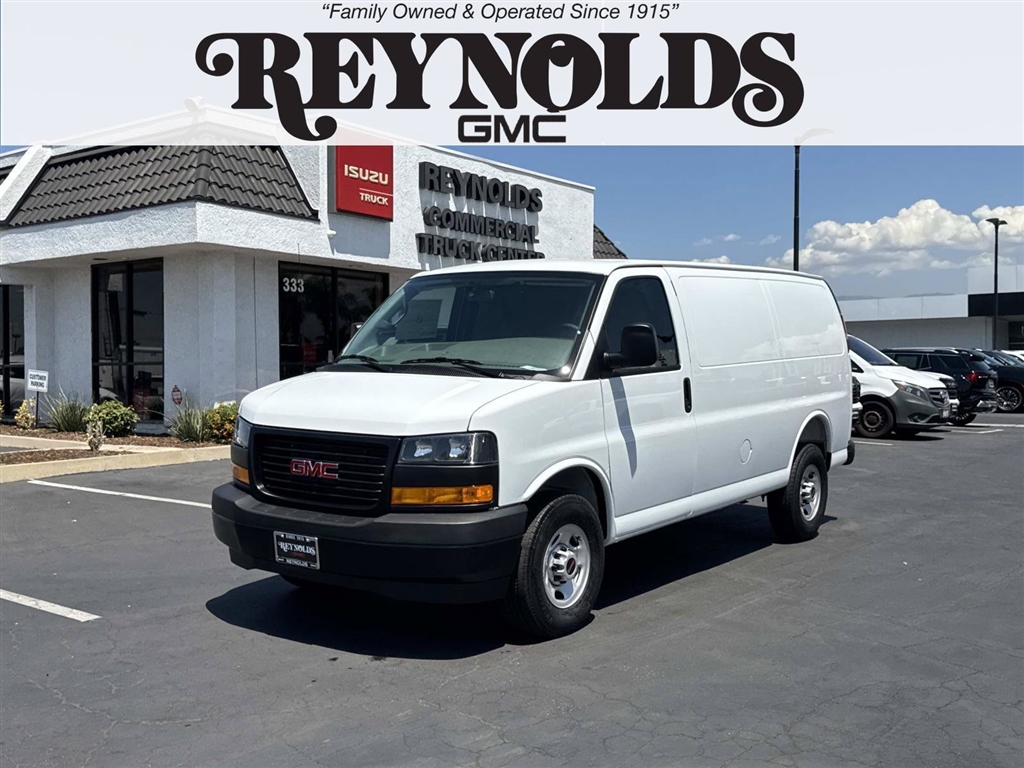
LS 2500 · Cargo Van
$46,798
Stock #260494
View Original Listing
LT · Cargo Van
$54,985

Ext · Cargo Van
$51,515

Ext · Cargo Van
$51,905

907 (VS30) · Cargo Van
$67,191

907 (VS30) · Cargo Van
$67,740

907 (VS30) · Cargo Van
$86,377

907 (VS30) · Cargo Van
$86,785

907 (VS30) · Cargo Van
$78,854

907 (VS30) · Cargo Van
$73,324

907 (VS30) · Cargo Van
$65,342

907 (VS30) · Cargo Van
$91,391

907 (VS30) · Cargo Van
$77,017

907 (VS30) · Cargo Van
$64,560

907 (VS30) · Cargo Van
$72,588
The first question in delivery is not how much the vehicle carries but how many times the driver gets in and out of it. A route with a hundred and twenty stops is a fundamentally different problem from one with twelve, and the vehicles that suit them share almost nothing.
On dense routes, the costs that matter are measured in seconds. Step-in height, door width, how far the driver reaches for a parcel, and how easily the vehicle parks — each of those multiplies by the stop count, and across a year the difference is enormous.
On sparse routes with heavy drops, the calculus inverts. Volume, floor length and a lift gate matter, and the time spent loading and securing at each stop dwarfs the time spent getting in and out of the cab.
Driver fatigue and injury are genuine operating costs in this trade rather than welfare considerations. A high step and an awkward reach produce strains, and strains produce absence, which is more expensive than the specification that would have avoided them.
Urban access is the practical limit almost everywhere in this region. Loading zones, height restrictions in parking structures and residential street width all constrain what can actually complete the route, regardless of what would carry the load most efficiently.
Built for high stop density. Standing height inside, a low step and a wide door make repeated entry and exit fast and far less punishing on the driver, which is the dominant cost on a route with a hundred or more stops.
Suits dense urban routes where parking decides the round. It gives up volume and standing height, so it works for smaller parcels and food delivery rather than for anything requiring a hand truck at every stop.
The general-purpose middle ground, and a reasonable default when routes vary. A proper sliding side door matters more than most buyers expect, because kerbside access from the pavement is safer and faster than working from the rear.
For heavy or palletised drops on sparse routes. The lift gate removes manual handling risk entirely, at the cost of a vehicle that is slower to park, restricted by height limits and more expensive to run.
Reviewed by SoCal Work Trucks editorial team on 2026-09-17. General guidance, not engineering advice — confirm payload, GVWR, towing capacity and upfit suitability against the specific vehicle and the manufacturer’s documentation.