SoCal Work Trucks

Isuzu NQR near Ventura, California

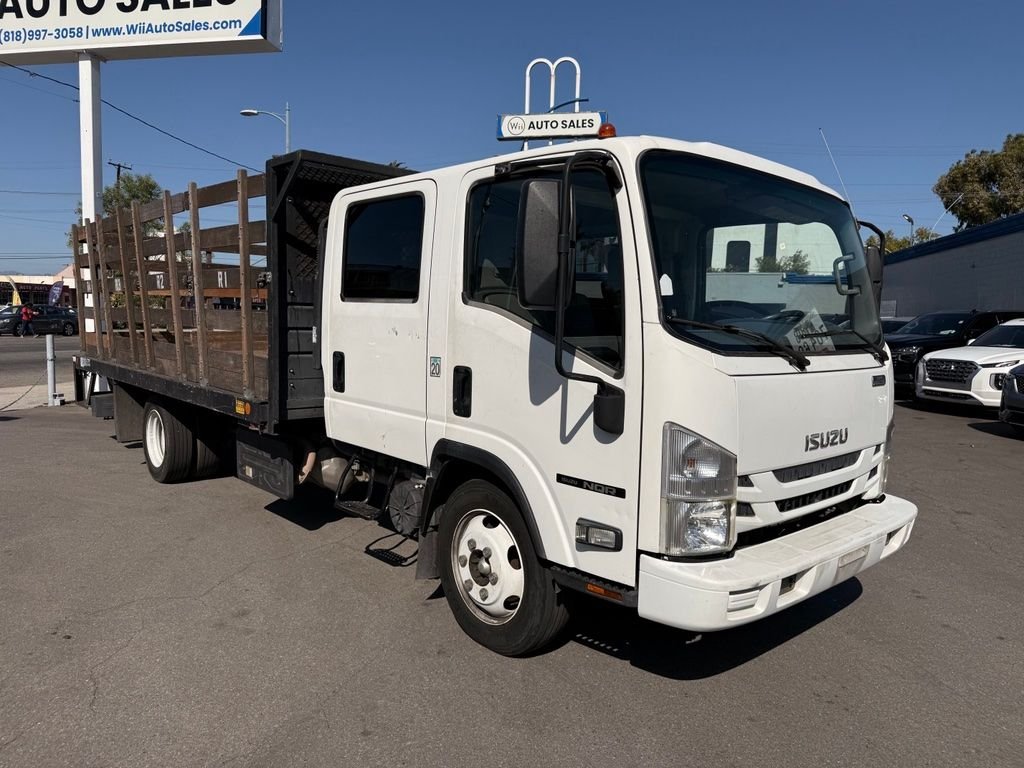
Class 5 cab-over with more payload than the NPR for the same footprint. Below: who sells it near Ventura, what is available now, and how to choose the right configuration.

Buying a Isuzu NQR near Ventura

No sellers in our network are currently listed close to Ventura. Commercial dealers routinely deliver across Southern California, so tell us what you need and we will look more widely.

8 Isuzu NQR listings in Ventura County

Filters1
  • 2019 Isuzu NQR

    $39,895

    Mileage
    155,205 mi
    Listed by an outside seller, CAReference listing
    Last confirmed September 13, 2026 — contact seller to confirm availability
    View Original Listing
  • 2019 Isuzu NQR

    $24,973

    Mileage
    239,552 mi
    Listed by an outside seller, CAReference listing
    Last confirmed September 13, 2026 — contact seller to confirm availability
    View Original Listing
  • 2019 Isuzu NQR

    $40,075

    Mileage
    66,750 mi
    Listed by an outside seller, CAReference listing
    Last confirmed September 13, 2026 — contact seller to confirm availability
    View Original Listing
  • 2018 Isuzu NQR

    $59,995

    Mileage
    66,411 mi
    Listed by an outside seller, CAReference listing
    Last confirmed September 13, 2026 — contact seller to confirm availability
    View Original Listing
  • 2018 Isuzu NQR

    $38,999

    Mileage
    98,642 mi
    Listed by an outside seller, CAReference listing
    Last confirmed September 13, 2026 — contact seller to confirm availability
    View Original Listing
  • 2017 Isuzu NQR

    $38,900

    Mileage
    77,566 mi
    Listed by an outside seller, CAReference listing
    Last confirmed September 13, 2026 — contact seller to confirm availability
    View Original Listing
  • 2016 Isuzu NQR

    $49,995

    Mileage
    65,610 mi
    Listed by an outside seller, CAReference listing
    Last confirmed September 13, 2026 — contact seller to confirm availability
    View Original Listing
  • 2016 Isuzu NQR

    $34,075

    Mileage
    96,552 mi
    Listed by an outside seller, CAReference listing
    Last confirmed September 13, 2026 — contact seller to confirm availability
    View Original Listing

Buying a work vehicle in Ventura

Ventura holds an unusual combination inside a small area: a century-old oil field in the hills, a genuinely working fishing harbour on the shore, and a coastal visitor economy layered over both. Each generates different work and each has its own constraints.

The oil field is the part outsiders forget. Discovered in 1919 and still among the ten most productive in California, it supports well servicing, pipeline work and equipment maintenance in the hills immediately north of town — heavy work with safety requirements unlike anything on a commercial site.

The harbour is a real working port rather than a marina with boats in it. Somewhere between eighty-five and ninety-five active commercial fishing vessels operate from here, making it one of the last genuine fishing harbours left in Southern California, with the ice, refrigeration and repair trades that implies.

Health care is the largest employer overall, anchored by a regional hospital system that is also the biggest private employer in the city. That produces steady technical building work under access and hygiene requirements the facility specifies.

The city also hosts headquarters operations well known beyond the county, including an outdoor clothing company and an advertising technology firm. Corporate campuses of that kind bring presentation expectations and building services demand that the rest of the local economy does not.

Tourism ties it together. Coastal visitors and the national park offshore draw something approaching four hundred thousand people a year, generating roughly eight hundred and fifty million dollars of direct annual impact and supporting around eight and a half thousand jobs.

What Ventura businesses actually buy

Oil field service and well maintenance

Pumping units, gathering lines, tanks and pressure equipment in the hills north of the city. Heavy service trucks carrying specialist tooling, with safety equipment and site certification requirements that do not apply to ordinary commercial contracting.

Commercial fishing fleet support

Engine work, refrigeration, hydraulics, ice plant and deck machinery for a fleet of working boats. Vehicles need towing capability and must manoeuvre on quaysides where space is measured in feet and the surface is permanently wet.

Hospital and medical campus services

A regional hospital system and its clinics require medical gas, backup power, ventilation and plumbing work to standards the facility sets. Clean secure carrying capacity and a presentable vehicle are working requirements in that environment.

Corporate campus building services

Headquarters operations need data room cooling, backup power and general maintenance performed to a visible standard. The vehicle sits in view of the client throughout the visit, which raises presentation from preference to expectation.

Hospitality and visitor accommodation trades

Hotels, restaurants and attractions along the coast require constant building services scheduled around guests. Compact vans suit the older downtown streets and constrained service access far better than a full-size vehicle would.

Residential trades in older housing stock

Hillside and downtown properties of considerable age sustain foundation, plumbing and roofing work. Narrow hillside roads and limited turning space cap practical vehicle length well below what the work itself would suggest.

Local conditions that change the decision

Hillside roads north of the city are narrow and steep, with switchbacks and limited turning space. Anyone working oil field or hillside residential jobs discovers quickly that turning circle is the binding constraint rather than payload.

The downtown grid is old, with tight streets and constrained loading. Visitor traffic through the warmer months compounds it, so contractors serving the coastal strip schedule around the season rather than treating the year as uniform.

Quayside surfaces stay wet and salt-laden year round. Anything working the harbour regularly takes a harder life than a road-only vehicle, and hitch components and wiring in particular need protective attention.

Oil field access roads are unpaved and rutted, with grades that loaded vehicles feel. Clearance and traction earn their cost on that work in a way they simply do not on the coastal flat a few miles away.

Ventura buying questions

Is there really an oil industry in Ventura?
Yes, and a significant one. The field in the hills north of town was discovered in 1919 and remains among the ten most productive in California. It sustains well servicing, pipeline and equipment work with safety and certification requirements of its own.
What does harbour work involve here?
Supporting a genuine working fleet — somewhere between eighty-five and ninety-five active commercial fishing vessels. That means engine, refrigeration, hydraulic and deck machinery work on wet, confined quaysides rather than recreational boat servicing.
How much does vehicle size matter in Ventura?
More than in most places, because the constraints come from two directions. Hillside roads north of town are narrow and steep, and the downtown grid is old and tight. Turning circle usually decides which jobs you can take.
Do the corporate headquarters here generate real work?
They do. Campus operations need data room cooling, backup power and continuous building services. The difference from industrial work is visibility — your vehicle is parked in front of the client for the duration, and presentation is judged accordingly.
Is four-wheel drive justified here?
It depends entirely on whether you work the hills. Oil field access roads are unpaved, rutted and steep, where clearance and traction genuinely earn their cost. Purely coastal and downtown work never calls for it.
How seasonal is the work?
The visitor-facing trades are strongly seasonal, with hospitality maintenance pushed outside the busy months and coastal traffic lengthening journeys through summer. Oil field, harbour and hospital work runs steadily all year.
How aggressive is the environment on equipment?
Harbour-based vehicles take the worst of it — permanently wet, salt-laden quaysides reach hitches, wiring and underbody constantly. Inland and hillside work is far gentler, so where a used vehicle actually spent its time matters a great deal.
Should I buy locally or look inland?
Start local and towards Los Angeles County. Ventura is a long way west of the Inland Empire dealer cluster, and while delivery is available, the distance erodes much of the advantage their larger inventory would otherwise offer.

Local guidance reviewed by the SoCal Work Trucks editorial team, last updated 2026-09-17.

Is the Isuzu NQR the right truck for your work?

Class 5 cab-over with more payload than the NPR for the same footprint.

Routes that outgrew an NPR on weight but still need cab-over manoeuvrability.

Typical specifications

Ranges across common configurations of this model. The figures for any individual vehicle depend on its cab, wheelbase, drivetrain and upfit.

GVWR
17,950 lbs
Payload
9,000–11,500 lbs
Seating
3–7 seats

These are model ranges, not a specific truck. Payload in particular varies by well over 1,000 lbs across configurations. Always confirm against the door-jamb sticker and the manufacturer documentation for the exact vehicle before you buy or load it.

Configurations to choose between

  • Regular and Crew Cab
  • Diesel
  • Multiple wheelbases

What buyers get wrong

Diesel only, which brings after-treatment maintenance that short-trip urban duty cycles handle badly — frequent regeneration cycles on a van that never gets warm cause real downtime. If your routes are short and stop-heavy and your shop prefers petrol simplicity, the gas NPR-HD is the better operational fit despite the lower payload.

Body types it is built as

Who buys the Isuzu NQR

What else to consider

Vehicles commonly cross-shopped against the Isuzu NQR.

Isuzu NQR: the full picture

The NQR is the model people arrive at by elimination rather than by ambition. A business runs an NPR-HD, finds it reaching its rating too often, looks at the NRR and decides that a 24 ft truck is more vehicle than the routes can absorb. The NQR is what sits between those two positions, and a surprising number of operations end up here after trying the alternatives.

The additional 3,450 lbs of rating over an NPR-HD sounds modest written down and behaves very differently in practice. It is frequently the difference between a truck that occasionally has to leave freight behind and one that clears its route in a single load. For any business whose day is shaped by whether the truck can take everything in one trip, that margin is the entire justification.

Dense freight is where the case becomes obvious. Beverages, building materials, tooling, printed matter and packaged food all reach a weight rating long before they fill a body. Operators carrying these routinely discover that their NPR-HD is limited by its plate rather than its space, and that a longer body on the same rating would solve nothing at all.

Body length up to around 20 ft keeps the vehicle within a footprint most established routes can still accommodate. That matters more in Southern California than raw capacity does for many operators, because a great deal of commercial delivery here happens in older business districts, tight retail service yards and residential streets that were never laid out with large trucks in mind.

Mechanically and operationally it behaves like the rest of the range. The cab-forward layout gives direct sight of the front corners and a turning circle that flatters the vehicle length. Servicing means raising the cab, with the workshop clearance requirement that implies. Drivers moving from conventional trucks need a short period to adjust to sitting ahead of the front axle.

The commercial argument is the same one that sells the whole N-Series in this region: dealers stock completed trucks. A business can frequently buy an NQR with a box, stake or refrigerated body already fitted and put it into service the same week, rather than ordering a conventional chassis and waiting on an upfitter queue that routinely runs for months.

How businesses actually use it

Dense freight distribution

Beverage distribution · Building supply · Printing · Packaged food

The clearest reason to choose an NQR over an NPR-HD. Heavy freight reaches a weight plate long before it fills a body, so the additional rating rather than additional length is what converts into completed deliveries per shift.

Typical configuration: Regular Cab with a 16 to 18 ft box and rear or side access

Mid-size refrigerated distribution

Food distribution · Catering supply · Floral · Pharmaceutical

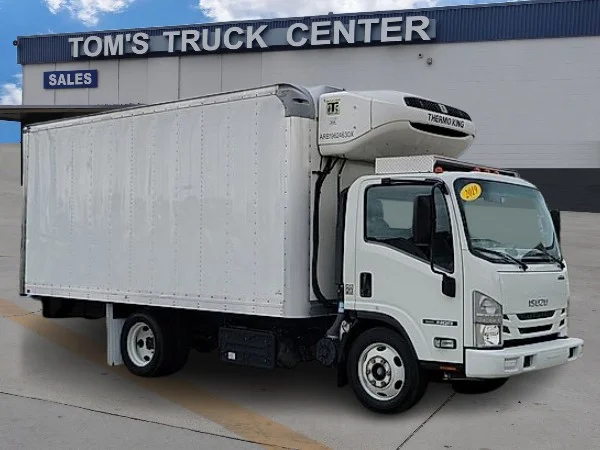
An insulated body and refrigeration unit carry substantial weight before product is loaded. This chassis leaves usable payload afterwards without moving to the length of an NRR. Refrigeration unit hours matter as much as vehicle mileage on anything used.

Typical configuration: Regular Cab with an 18 ft insulated body and reefer unit

Landscape and construction dump work

Landscaping · Hardscape · Grading · Tree service

A dump body carrying soil, base or green waste in volumes beyond a one-ton pickup dump. The truck remains manageable on residential streets, which is where landscape work finishes, and completed dump trucks are often available from dealer stock.

Typical configuration: Regular or Crew Cab with a 12 to 14 ft dump body

Stake bed material delivery

Building supply · Nurseries · Landscape supply · Fencing

Side-loaded by forklift with a long usable deck relative to the wheelbase. Deck height determines whether your suppliers can load you without a ramp, so confirm it against the yards you actually collect from before specifying.

Typical configuration: Regular Cab with a 16 to 20 ft stake body

Equipment and tool transport

Equipment rental · Event production · Scaffolding · Industrial services

Carrying heavy tooling, staging or scaffold components where the load is dense and awkward rather than bulky. A liftgate is usually essential, and its weight should be included in the payload calculation from the outset rather than added afterwards.

Typical configuration: Regular Cab with a 16 ft box and a heavy-duty liftgate

Crew cab landscape and utility operations

Landscaping · Municipal · Irrigation · Facilities

A crew travelling with its equipment in one vehicle rather than needing a separate pickup. This removes a whole vehicle from the fleet, though the longer wheelbase reduces some of the manoeuvrability that made a cab-over attractive in the first place.

Typical configuration: Crew Cab with a dump or landscape body

How to choose the right configuration

Establish whether your constraint is weight or space, because that single answer decides which model in the range you need. If your NPR-HD hits its plate with the body part empty, the NQR solves the problem. If the body fills before the weight does, a longer body on a lighter chassis may serve you better and cost less.

Compare it directly against the NRR rather than assuming the middle is a compromise. The NRR carries more and supports longer bodies, but it is a bigger vehicle to reverse, position and service. If your routes include tight yards or older commercial districts, the NQR may clear the same work with less difficulty every day.

Include the liftgate and any body equipment in your payload arithmetic from the beginning. A pallet-rated liftgate is a heavy assembly hung at the extreme rear of the vehicle, so it takes payload and loads the rear axle disproportionately. Treating it as an afterthought is how operators end up with less usable capacity than they planned.

Confirm workshop arrangements before purchase. Raising the cab to reach the engine needs vertical clearance that many independent shops and some fleet bays cannot provide, and the finished vehicle length adds a second question about which bays can take it at all. Both are trivial to check beforehand and expensive to discover afterwards.

Look seriously at completed used trucks alongside new orders. Because dealers stock finished vehicles, the used market at this size is deep, and buying a bodied truck lets you weigh and inspect the actual vehicle rather than estimating what a new build will produce. For a business replacing a truck urgently, this is usually the faster and better-informed route.

Finally, plan for where the operation is going. If volumes are growing steadily, buying the NQR when your numbers already sit near its ceiling simply moves the problem forward a year. Buying capacity you grow into is generally cheaper than buying a truck twice, provided the larger vehicle still suits your routes.

Our assessment

An editorial evaluation written by the SoCal Work Trucks editorial team, last reviewed 2026-09-04. It is our own assessment, not customer reviews or ratings.

The sensible middle of the Isuzu range and an easy truck to recommend once the numbers point here. It resolves the weight limitation of an NPR-HD without the footprint of an NRR, and it keeps every advantage that makes the N-Series dominant in this region: stock availability, urban manoeuvrability and a rating below the licensing threshold. Choose it from measured loads rather than from a feeling that more is safer.

What it does well

  • Resolves the NPR-HD weight limitation

    The additional rating is frequently the difference between clearing a route in one load and returning to reload, which is the metric that actually pays.

  • Keeps a manageable footprint

    Bodies to around 20 ft stay within what most established Southern California routes and service yards can accommodate, unlike the longer bodies an NRR supports.

  • Stays below the licensing threshold

    At 17,950 lbs GVWR a standard licence generally suffices, so recruitment draws on the ordinary labour market rather than the much smaller pool of licence holders.

  • Completed trucks available from stock

    Dealers hold finished box, stake, dump and refrigerated vehicles, so a business can often buy and work within days rather than waiting months on an upfitter.

  • Cab-forward manoeuvrability

    Direct visibility over the front corners and a tight turning circle for the body length make constrained deliveries genuinely easier than in a conventional truck.

Where it falls short

  • An awkward model to choose confidently

    Sitting between two well-defined trucks, it is easy to talk yourself into either neighbour. Only measured loads and real route constraints settle it properly.

  • Servicing needs cab-tilt clearance

    The cab-over constraint applies in full. Many workshops lack the vertical room, and this is the most common practical regret across the whole category.

  • Firmer ride over distance

    Sitting above the front axle transmits road inputs directly to the driver, which is more tiring on long regional runs than a conventional cab and matters for retention.

  • Body equipment consumes payload quickly

    Liftgates, insulation and refrigeration units take substantial weight before any freight is loaded, and buyers who plan around the chassis figure are consistently caught out.

  • Less crush structure ahead of the driver

    The cab-over layout places the driver above the front axle with less space ahead than a conventional cab, which is a fair consideration when weighing route types and driver experience.

Ownership and used-buying notes

Weigh a used truck as it stands, ideally with a representative load aboard. At this rating the gap between what a truck is plated for and what it habitually carries is where mechanical trouble originates, and a weighbridge ticket costs almost nothing against the price of a rear axle or suspension rebuild.

Examine the body floor, lower door frames and door tracks closely. Distribution vehicles are loaded and unloaded many times daily, frequently with pallet trucks, and the accumulated damage concentrates in exactly those places long before it appears anywhere more obvious.

Operate the cab tilt through its full travel and check the latches. A reluctant or stiff mechanism usually indicates the vehicle has been serviced somewhere without proper clearance, which invites reasonable questions about what else was done awkwardly or skipped altogether.

Questions buyers ask

When does it make sense to move from an NPR-HD to an NQR?
When you regularly reach the weight plate with space still left in the body. The extra rating is what converts into completed deliveries, and it typically shows up with dense freight such as beverages, building materials or tooling. If the body fills before the weight does, a longer body on the lighter chassis is the cheaper answer.
Do I need a commercial licence for an NQR?
Generally no. At 17,950 lbs GVWR it sits below the 26,001 lb point that typically triggers a commercial driver licence requirement in California, which is a large part of why this range is so widely used. Towing raises the combined rating, so confirm your specific setup with the California DMV.
Should I just buy the NRR instead?
Only if your loads or body length genuinely need it. The NRR carries more and takes longer bodies, but it is a larger vehicle to position, reverse and service. If your routes involve tight yards or older commercial districts, the NQR often clears the same work with less friction every single day.
How much can an NQR carry?
Payload commonly runs around 8,500 to 11,000 lbs depending on the body fitted. The body is the major variable: an insulated refrigerated body with a unit and liftgate weighs far more than a plain dry box, and that difference comes straight out of what you can put aboard.
What body length suits an NQR?
Bodies up to roughly 20 ft are common. The right length depends on your freight density rather than the maximum available: with heavy freight a longer body adds no useful capacity because you reach the weight plate first, while making the vehicle harder to place at every stop.
Is petrol available on an NQR?
The petrol option that makes the NPR-HD attractive for short urban stop-start routes is not offered across the heavier models, so plan on diesel and the after-treatment considerations that come with it. The regional distribution duty this truck usually performs suits those systems reasonably well.
Can my workshop service an NQR?
Ask before buying, and ask about clearance and bay length together. Reaching the engine means raising the whole cab, which needs vertical room many shops lack, and the finished vehicle length determines whether the truck fits the bay at all. Both are quick to confirm and awkward to discover later.
Does a liftgate reduce payload much?
More than most buyers expect. A pallet-rated liftgate is a substantial steel and hydraulic assembly mounted at the extreme rear, so it removes payload directly and loads the rear axle disproportionately. It is essential equipment for kerbside delivery, but it belongs in the weight calculation from the start.
How quickly can I get one with a body fitted?
Frequently within days, which is the strongest commercial argument for the range. Dealers stock completed trucks with box, stake, dump and refrigerated bodies already fitted. A conventional chassis cab from another manufacturer typically means months waiting in an upfitter queue.
What should I check on a used NQR?
The cab tilt mechanism and latches first, since a stiff one suggests the truck was serviced without proper clearance. Then the body floor, lower door frames and door tracks, where pallet truck damage concentrates. On a refrigerated body, the unit hours and its service record matter as much as the odometer.
Is a Crew Cab worth having?
It suits operations moving a team as well as a load, typically landscape, municipal and utility crews, and it removes the need for a separate pickup along with that vehicle’s insurance, fuel and maintenance. The cost is wheelbase: the finished truck is longer and turns wider, which erodes some of the manoeuvrability that made a cab-over attractive.
How does an NQR cope with sustained grades?
Descents are the demanding part rather than climbs, and Southern California has plenty of long grades between inland distribution points and the coastal basin. A fully loaded truck puts considerable heat into its brakes on the way down, and repeated daily that shows up as shortened pad and rotor life rather than as any single dramatic event. An exhaust brake takes a meaningful share of that work off the service brakes and is worth having where it is offered. When assessing a used truck, ask about brake service intervals rather than only measuring current pad thickness, because the interval tells you how the vehicle was actually driven and loaded.
Should I buy new or look for a completed used truck?
Both are legitimate, and the answer usually turns on urgency and on how specific your requirements are. Buying used lets you weigh and inspect the actual finished vehicle rather than estimating what a new build will produce, which removes a genuine source of disappointment, and it puts a working truck on the road immediately. Buying new lets you specify the body exactly to your routes and freight, and it starts the maintenance history from zero. Because Isuzu dealers stock completed vehicles, the used market at this size is unusually deep in Southern California, so a business that can work with a body close to its ideal often does better buying an existing truck than commissioning one.
How well does an NQR hold its value?
Solidly, helped by consistent Southern California demand for trucks in this size band and by the depth of the used market that dealer stocking creates. A sound dry box or stake body sells readily. A refrigerated truck is more variable, because buyers price the refrigeration unit separately and high hours without records will pull down the value of the whole vehicle regardless of chassis condition.

Official sources and further reading

Manufacturer and regulatory sources for specifications and requirements. We do not link to other vehicle-selling websites.

Shop Isuzu NQR by model year

Nearby cities

Find a Isuzu NQR near Ventura

Two quick steps. A fleet specialist will follow up.

  1. 1. Your needs
  2. 2. Your details