SoCal Work Trucks

Ram 2500 near Huntington Beach, California

Three-quarter-ton pickup with available Cummins diesel. Below: who sells it near Huntington Beach, what is available now, and how to choose the right configuration.

Buying a Ram 2500 near Huntington Beach

No sellers in our network are currently listed close to Huntington Beach. Commercial dealers routinely deliver across Southern California, so tell us what you need and we will look more widely.

28 Ram 2500 listings in Orange County

Filters
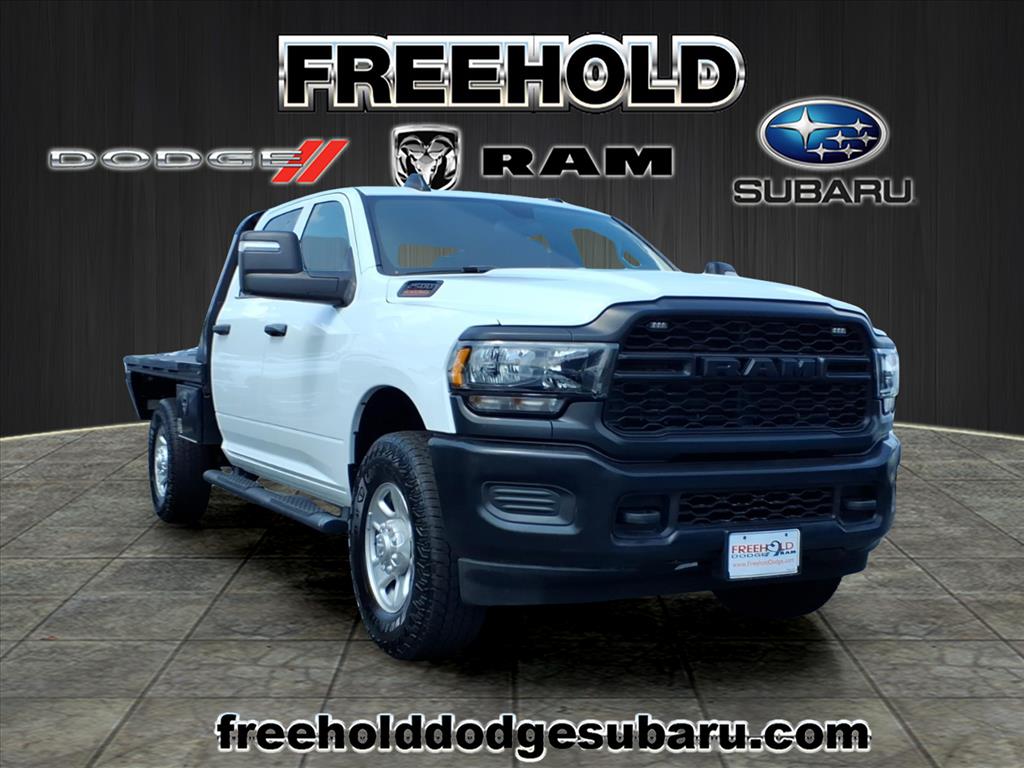
  • 2023 Ram 2500 Tradesman

    2023 Ram 2500

    Tradesman · Pickup

    $39,995

    Mileage
    34,926 mi
    Listed by an outside seller, CAReference listing
    Last confirmed September 13, 2026 — contact seller to confirm availability

    Stock #SU374050

    View Original Listing
  • 2020 Ram 2500 Big Horn

    2020 Ram 2500

    Big Horn · Pickup

    $37,580

    Mileage
    120,631 mi
    Listed by an outside seller, CAReference listing
    Last confirmed September 13, 2026 — contact seller to confirm availability

    Stock #198964R

    View Original Listing
  • 2019 Ram 2500 Big Horn

    2019 Ram 2500

    Big Horn · Pickup

    $40,589

    Mileage
    66,836 mi
    Listed by an outside seller, CAReference listing
    Last confirmed September 13, 2026 — contact seller to confirm availability

    Stock #593586R

    View Original Listing
  • 2018 Ram 2500 ST

    2018 Ram 2500

    ST · Pickup

    $35,773

    Mileage
    95,982 mi
    Listed by an outside seller, CAReference listing
    Last confirmed September 13, 2026 — contact seller to confirm availability

    Stock #390842R

    View Original Listing

Buying a work vehicle in Huntington Beach

The first thing that surprises people about Huntington Beach is that oil and surfing have coexisted here for a century. Wells remain in production in parts of the city and around the wetland areas, and that industry supports a small but genuine technical service sector alongside the tourism the city is better known for.

The tourism side dominates by volume. Hotels, restaurants, retail along the coast and a year-round programme of events generate constant supply and maintenance work, most of it into premises with limited service access and delivery windows arranged around visitors rather than around contractors.

Salt air is the operating factor that separates this city from anywhere inland. Corrosion affects everything left outdoors: body panels, frames, electrical connections, brake components and any exposed metal on a service body. Vehicles here need washing more often and inspecting more carefully underneath than the same truck working in Riverside County.

Housing is substantial, established and largely single-family, which sustains a broad residential service base — plumbing, electrical, roofing, pool work and air conditioning. Because the stock is mature rather than new, that work is repair and replacement rather than first installation.

Marine services are a genuine local niche. Boat maintenance, trailer work and the businesses supporting recreational watercraft require towing capability and the ability to manoeuvre trailers in harbour and launch areas, which is a specification most inland trades never think about.

Property costs are high and yard space is scarce, so many operators serving the city base themselves further inland and travel in. That is common enough locally that it barely counts as a compromise, and it is one reason vehicle purchasing routinely happens well outside the city limits.

What Huntington Beach businesses actually buy

Coastal residential service trades

Plumbing, electrical and air conditioning work across a large body of mature single-family housing. High-roof vans organised for parts inventory, with corrosion protection and more frequent underbody inspection than an inland equivalent would need.

Hospitality supply and maintenance

Hotels, restaurants and coastal retail generating daily deliveries and equipment service into premises with constrained access. Moderate box trucks and refrigerated vans chosen for placement in tight service areas rather than for maximum load.

Marine and trailer services

Boat maintenance, trailer repair and watercraft support around the harbour and launch areas. Pickups specified for towing and for reversing trailers in confined spaces, with hitch equipment and corrosion resistance mattering more than payload capacity.

Oil field and wellhead servicing

A small specialist sector maintaining production equipment still operating within the city and around the wetlands. Service bodies with secure tool storage and the electrical provision to run specialist equipment on site.

Pool and outdoor living maintenance

A substantial pool population combined with year-round outdoor use sustains both routine servicing and remodelling. Routine work suits a purpose-fitted pickup bed; construction and replastering needs genuine dump capacity for material.

Roofing and exterior building repair

Salt air and sun accelerate deterioration of roofs, cladding and exterior fittings across the coastal housing stock. Towing-heavy work moving material in and debris out, with trailers doing much of the carrying.

Local conditions that change the decision

Salt air corrosion is the dominant maintenance consideration and the one inland operators consistently underestimate. Underbody washing, inspection of brake and suspension components and attention to electrical connections all need to happen more often than a standard schedule assumes.

Seasonal and weekend visitor traffic congests the coastal corridor heavily and predictably. Local operators schedule around it rather than fighting it, and a job planned for a summer Saturday afternoon near the pier is a job planned badly.

Service access at coastal commercial premises is generally tight, with shared loading areas and limited turning space. A vehicle that places easily is worth more than one that carries more and cannot get near the door.

Sand is a persistent nuisance on vehicles working near the beach areas, finding its way into air filters, door seals and load floors. It is a minor issue individually and a cumulative one across a vehicle’s life.

Huntington Beach buying questions

Does salt air really affect a work truck that much?
Yes, and it is the clearest difference between operating here and inland. Corrosion reaches frames, brake components, electrical connections and exposed metal on service bodies. Underbody washing and more frequent inspection are genuine requirements rather than precautions.
Are there still working oil wells in Huntington Beach?
Yes. Production continues in parts of the city and around the wetland areas, at a much reduced scale from its peak. It supports a small specialist servicing sector that sits somewhat incongruously alongside the tourism the city is better known for.
What should I check when buying a used truck that has worked coastally?
Get underneath it. Frame rails, brake lines, suspension mounts and electrical connectors are where coastal corrosion shows first, and surface rust on a body panel matters far less than structural corrosion you cannot see from a walk-round.
What vehicles suit marine and trailer work here?
Pickups specified for towing, with proper hitch equipment and good rearward visibility for reversing trailers in confined harbour and launch areas. Corrosion protection matters more than on almost any other local application given the constant salt water exposure.
How much does visitor traffic affect scheduling?
Substantially, and predictably. The coastal corridor congests heavily at weekends and through the summer season. Experienced local operators plan around known patterns rather than by distance, and avoid committing to tight windows near the beach at peak times.
Is four-wheel drive useful in Huntington Beach?
For almost all local work, no. Streets and commercial sites are paved and the weather is mild. The exception is anything regularly launching trailers on unsealed or slipway surfaces, where traction genuinely matters and the case becomes real.
Should I base a fleet in the city or further inland?
Many operators serving Huntington Beach base further inland because property and yard costs here are high and space is scarce. It is common enough to be unremarkable, and the freeway access makes it practical.

Local guidance reviewed by the SoCal Work Trucks editorial team, last updated 2026-09-13.

Is the Ram 2500 the right truck for your work?

Three-quarter-ton pickup with available Cummins diesel.

Crews that value ride quality on long Southern California commutes between sites.

Typical specifications

Ranges across common configurations of this model. The figures for any individual vehicle depend on its cab, wheelbase, drivetrain and upfit.

GVWR
10,000–11,000 lbs
Payload
2,900–4,000 lbs
Towing
13,000–20,000 lbs
Seating
3–6 seats

These are model ranges, not a specific truck. Payload in particular varies by well over 1,000 lbs across configurations. Always confirm against the door-jamb sticker and the manufacturer documentation for the exact vehicle before you buy or load it.

Configurations to choose between

  • Regular, Crew and Mega Cab
  • 6.3 ft and 8 ft beds
  • Gas and Cummins diesel

What buyers get wrong

The coil-spring rear suspension rides better than leaf springs but behaves differently under heavy, concentrated loads. Match it to how you actually load.

Body types it is built as

Who buys the Ram 2500

What else to consider

Vehicles commonly cross-shopped against the Ram 2500.

Ram 2500: the full picture

Among three-quarter-ton pickups the Ram 2500 competes on something its rivals largely do not offer: how it feels when the bed is empty. Ford and Chevrolet use leaf springs at the rear. Ram uses coil springs, with an air suspension available, and the difference is obvious the first time you drive an unladen truck over a broken surface.

Whether that matters depends on your week. A truck that spends its life loaded barely benefits, because every heavy-duty pickup rides acceptably with weight in the back. A truck that runs empty between sites — which describes an enormous number of contractor vehicles in Riverside and San Bernardino counties, where an hour each way is unremarkable — benefits every single day.

The engine choice frames everything else. The petrol V8 is the sensible default for a truck doing local work with intermittent towing: cheaper to buy, cheaper to service, and immune to the diesel after-treatment problems that short trips cause. The Cummins inline-six is the reason many buyers come to Ram at all, and it is genuinely well regarded, but it only pays back on sustained towing and high annual mileage.

That Cummins reputation deserves a note of realism. It is a durable engine with a strong following, and used Cummins trucks hold value accordingly. It is also a substantial purchase premium and a more expensive engine to service, and modern emissions equipment applies to it as much as to anything else. Buy it for the duty cycle, not for the badge.

For fleet buyers, the Tradesman trim is the relevant one. It strips the truck to vinyl floors, basic seating and the equipment that actually earns money, which lowers both the purchase price and the cost of a damaged interior. It is the trim most Southern California contractors should be looking at, and the one least often on a dealer forecourt because showrooms prefer to stock the profitable ones.

The 2500 also sits at a useful regulatory point. At roughly 10,000 to 11,000 lbs GVWR it is a straightforward vehicle to licence, insure and staff, and it does not push you towards the thresholds that begin to complicate matters at one-ton and above. For a business that needs real capability without regulatory friction, that is a meaningful part of the appeal.

How businesses actually use it

Crew transport between distant job sites

General contracting · Electrical · Plumbing · HVAC

Crew Cab trucks covering long daily distances across the Inland Empire, often empty in one direction. This is the duty cycle where the coil-spring rear suspension repays itself, and where driver fatigue over a year is a real cost rather than a marketing point.

Typical configuration: Crew Cab, petrol V8, Tradesman or entry trim

Utility and service body work

Mobile service · Facilities maintenance · Irrigation · Pool service

A service body on a three-quarter-ton chassis handles most trade tool loads comfortably. Weigh the finished truck before committing, because a steel body plus a full complement of tools and parts consumes payload faster than most buyers estimate.

Typical configuration: Regular or Crew Cab with an 8 ft service body

Towing equipment and dump trailers

Landscaping · Hardscape · Fencing · Pool construction

Pulling a dump trailer, skid steer or equipment trailer to site and back. Conventional towing suits this weight well. Once pin weight climbs into gooseneck territory the 3500 becomes the more honest answer, so check what actually lands on your rear axle.

Typical configuration: Crew Cab, Cummins diesel, integrated brake controller

Mobile welding and light fabrication rigs

Mobile welding · Metal fabrication · Structural repair

A welder, generator, gas bottles and steel stock add up quickly and sit permanently in the bed. The payload rating is the constraint here, not the towing figure, and it is worth calculating properly before choosing between the 2500 and the 3500.

Typical configuration: Regular Cab with a flatbed or welding body

Agricultural and ranch work

Agriculture · Ranching · Equine · Vineyard

Common across the inland agricultural areas around Hemet, San Jacinto and Temecula. Four-wheel drive matters on unpaved access, and the ability to tow a stock or equipment trailer while carrying feed or supplies in the bed is the usual requirement.

Typical configuration: Crew Cab, four-wheel drive, conventional hitch

Fleet standardisation for mixed trade work

Multi-trade contractors · Property management · Municipal fleets

Businesses running several trucks often standardise on one platform for parts, servicing and driver familiarity. The 2500 covers a wide enough range of tasks to serve as that platform, with the 3500 available for the specific trucks that need more.

Typical configuration: Crew Cab, Tradesman trim, specified consistently across the fleet

How to choose the right configuration

Start with payload rather than towing, because payload is where three-quarter-ton buyers get caught. A service body, a full toolkit, fuel and two people can consume most of a 2,900 lb rating before you have loaded any materials. Add up what permanently lives in the truck first, and only then ask what you want to put in it.

Choose the engine by annual mileage and towing hours, not by preference. If you tow heavy several days a week or cover high mileage, the Cummins earns its premium in fuel, torque and resale. If you do local work with occasional towing, the petrol V8 costs less to buy, less to service, and avoids the regeneration problems that short urban trips cause diesels.

Take the coil-spring suspension seriously, in both directions. It genuinely improves unladen ride, which is worth real money on long empty runs. It also behaves differently under load than leaf springs, and drivers moving from a Ford or Chevrolet should expect that rather than be surprised by it. If air suspension is offered on the truck you are considering, understand it as an additional system to maintain as well as a benefit.

Be honest about whether you need the 3500 instead. The gap between them is mostly rear axle and payload, and buyers who tow goosenecks or carry heavy permanent bodies are usually better served one step up. Conversely, plenty of businesses buy a 3500 for towing they do four times a year and pay for it every other day.

Look specifically for Tradesman and other fleet trims when buying used. They are the trucks that were bought to work, they usually cost less than an equivalent higher trim, and a vinyl floor survives a decade of work boots in a way carpet does not. The catch is that dealers stock fewer of them, so they take longer to find.

Finally, check your local service arrangements before committing to a Cummins. Diesel servicing is more specialised and the network for it is thinner than for petrol engines in parts of the Inland Empire. A cheaper truck that takes a week to get looked at is not actually cheaper.

Our assessment

An editorial evaluation written by the SoCal Work Trucks editorial team, last reviewed 2026-09-04. It is our own assessment, not customer reviews or ratings.

The most comfortable heavy-duty pickup to drive empty, which is a genuine advantage for crews covering Southern California distances between sites. Capability is competitive rather than class-leading, and the Cummins is excellent but only pays back on real towing hours. Buy the Tradesman with the petrol V8 for local work, the Cummins for sustained towing, and be honest about which of those you actually do.

What it does well

  • Best unladen ride in the class

    Coil-spring rear suspension, with air available, makes empty running noticeably less punishing than leaf-sprung rivals. On long daily distances between Inland Empire sites that compounds into real driver comfort.

  • Cummins diesel with a durability reputation

    A well-regarded inline-six that holds value strongly on the used market. For businesses towing heavy on high annual mileage it is a legitimate reason to choose Ram.

  • Tradesman trim is genuinely fleet-focused

    Vinyl floors, basic seats and working equipment rather than showroom features. Lower to buy and far more tolerant of a decade of tools and boots.

  • Comfortable interior even at working trims

    Ram has invested in cabin quality across the range, and for crews spending two hours a day in the truck that is a retention factor rather than a luxury.

  • Sits below the regulatory complications

    At roughly 10,000 to 11,000 lbs GVWR it is straightforward to licence, staff and insure, without the threshold questions that arrive at heavier ratings.

Where it falls short

  • Payload is easily consumed

    A steel service body, tools, fuel and two occupants can absorb most of the rating before materials go in. Buyers who plan around the towing figure and ignore payload get caught regularly.

  • Cummins premium is substantial

    Both to buy and to service. On a truck doing local work with occasional towing it rarely repays, and short-trip duty cycles cause after-treatment problems the petrol V8 simply does not have.

  • Coil rear suspension behaves differently loaded

    Not worse, but different from the leaf springs most heavy-duty drivers know. Expect a familiarisation period for drivers moving across from other brands.

  • Thinner diesel service network inland

    Specialist diesel servicing is less densely available in parts of the Inland Empire than petrol servicing, which can mean longer downtime when something goes wrong.

  • Fleet trims are harder to find used

    Dealers stock the profitable higher trims, so a used Tradesman takes longer to locate than an equivalent loaded truck. Worth the wait, but plan for it.

Ownership and used-buying notes

On a used Cummins truck, ask for the service records rather than accepting the reputation. The engine is durable when maintained and expensive when it is not, and emissions equipment on a neglected truck is where the large bills live. A documented history is worth paying for on this engine specifically.

If the truck has air suspension, exercise it fully during inspection and listen to the compressor. It is an additional system with its own failure modes, and a truck that has spent years loaded on rough ground will show it here before it shows anywhere else.

Check the rear coil springs and shock mounts for sag and corrosion, and look at how the bed sits relative to the cab. A truck that has been permanently overloaded gives itself away in stance long before the specification sheet suggests anything is wrong.

Questions buyers ask

Why does the Ram 2500 ride better than a Ford or Chevrolet?
Because it uses coil springs at the rear rather than leaf springs, with air suspension available on some configurations. The difference is most obvious with an empty bed over broken surfaces. Loaded, every heavy-duty pickup improves, so the advantage matters most to trucks that run empty between sites.
Is the Cummins diesel worth the extra cost?
It depends on hours towing and annual mileage. Tow heavy several days a week or cover high mileage and it repays in torque, economy and resale. Do local work with occasional towing and the petrol V8 is the better business decision, because short trips are exactly where diesel after-treatment causes downtime.
How much can a Ram 2500 carry?
Payload typically runs around 2,900 to 4,000 lbs depending on cab, drivetrain and engine. The diesel is heavier than the petrol engine and reduces payload accordingly, which surprises buyers who assume the more capable engine means the more capable truck. Check the door placard on the specific vehicle.
What is the Tradesman trim?
Ram's work-focused trim: vinyl floors, basic seating and the equipment a working truck needs, without showroom features. It costs less to buy and copes better with tools and boots over a decade. It is the trim most contractors should want and the one dealers stock least, so expect to search for it used.
Should I buy a 2500 or a 3500?
The 2500 if you tow conventionally and carry moderate loads; the 3500 if you tow goosenecks, carry a heavy permanent body, or regularly find yourself near the rating. Calculate what lands on the rear axle rather than what the trailer weighs, because that is the number that decides it.
How much can a Ram 2500 tow?
Up to roughly 20,000 lbs on the right configuration, with most trucks rated well below that. Cab, engine, axle ratio and hitch type all change the figure substantially, so treat headline numbers as a ceiling for one specification and check the towing guide for the truck you are actually buying.
Does the air suspension cause problems?
It is an additional system, so it is an additional thing to maintain, and on a high-mileage truck that has worked hard it is worth inspecting carefully. That said, it is not a known weak point in normal service. Exercise it through its full range during inspection and listen to the compressor.
Is diesel servicing easy to find in the Inland Empire?
Less so than petrol servicing, particularly away from the main corridors. It is not a reason to avoid a Cummins, but it is a reason to identify your service provider before you buy rather than after. Downtime waiting for a specialist appointment is a real operating cost.
What should I check on a used Ram 2500?
Service records first, especially on a Cummins. Then rear coil springs and shock mounts for sag, the stance of the bed relative to the cab, and the air suspension through its full travel if fitted. A truck that has lived permanently overloaded shows it in how it sits before anything else gives it away.
How does the Ram 2500 hold its value?
Cummins-equipped trucks hold value strongly, helped by the engine reputation and steady demand on the used market. Petrol trucks depreciate more conventionally. A documented service history matters more on this model than most, precisely because buyers are paying for the engine and want evidence it was looked after.
Can a Ram 2500 take a service body?
Yes, and it is a common configuration for mobile trades. The constraint is payload rather than fitment: a steel body is heavy before you add tools, parts and fuel. Weigh the finished truck, and if the numbers are tight, specify the 3500 rather than running at the rating every day.
How does the Ram 2500 handle Southern California heat when towing?
Sustained grades in summer heat are the hardest thing you can ask of any heavy-duty pickup, and the Cajon Pass and the grades out towards Palm Springs are exactly that. Both engines are engineered for it, but cooling system condition is what actually determines whether a truck copes, which makes it a priority inspection item on anything used. Check coolant condition and service history, look for evidence the radiator and intercooler have been kept clean rather than packed with dust and insects, and be realistic that a truck towing near its rating uphill in August will run hotter and use considerably more fuel than any published figure suggests.
Is four-wheel drive worth it for Southern California work?
For most urban and suburban trades, no. Paved sites, dry weather and a loaded rear axle mean two-wheel drive is sufficient nearly all the time, and skipping four-wheel drive saves purchase cost, saves weight that comes straight off your payload, and removes a drivetrain to maintain. It becomes worth having if you regularly access unpaved or graded sites, work agricultural land, or run in soft material such as sand or fresh fill, all of which are common enough inland that plenty of contractors specify it. Decide on the sites you actually visit rather than on the possibility of one difficult day a year.
Is the Mega Cab worth considering for work?
Rarely, for most trades. It trades bed length for rear cabin space, which suits crews who travel far and carry little, but it makes the truck longer to park and reduces the bed you have left to work with. For most contractors a Crew Cab with a full bed is the more useful configuration, and it is easier to sell on.

Official sources and further reading

Manufacturer and regulatory sources for specifications and requirements. We do not link to other vehicle-selling websites.

Shop Ram 2500 by model year

Nearby cities

Find a Ram 2500 near Huntington Beach

Two quick steps. A fleet specialist will follow up.

  1. 1. Your needs
  2. 2. Your details