SoCal Work Trucks

Ram 4500 near Costa Mesa, California

Medium-duty chassis cab for service and dump bodies. Below: who sells it near Costa Mesa, what is available now, and how to choose the right configuration.

Buying a Ram 4500 near Costa Mesa

No sellers in our network are currently listed close to Costa Mesa. Commercial dealers routinely deliver across Southern California, so tell us what you need and we will look more widely.

4 Ram 4500 listings in Orange County

Filters1
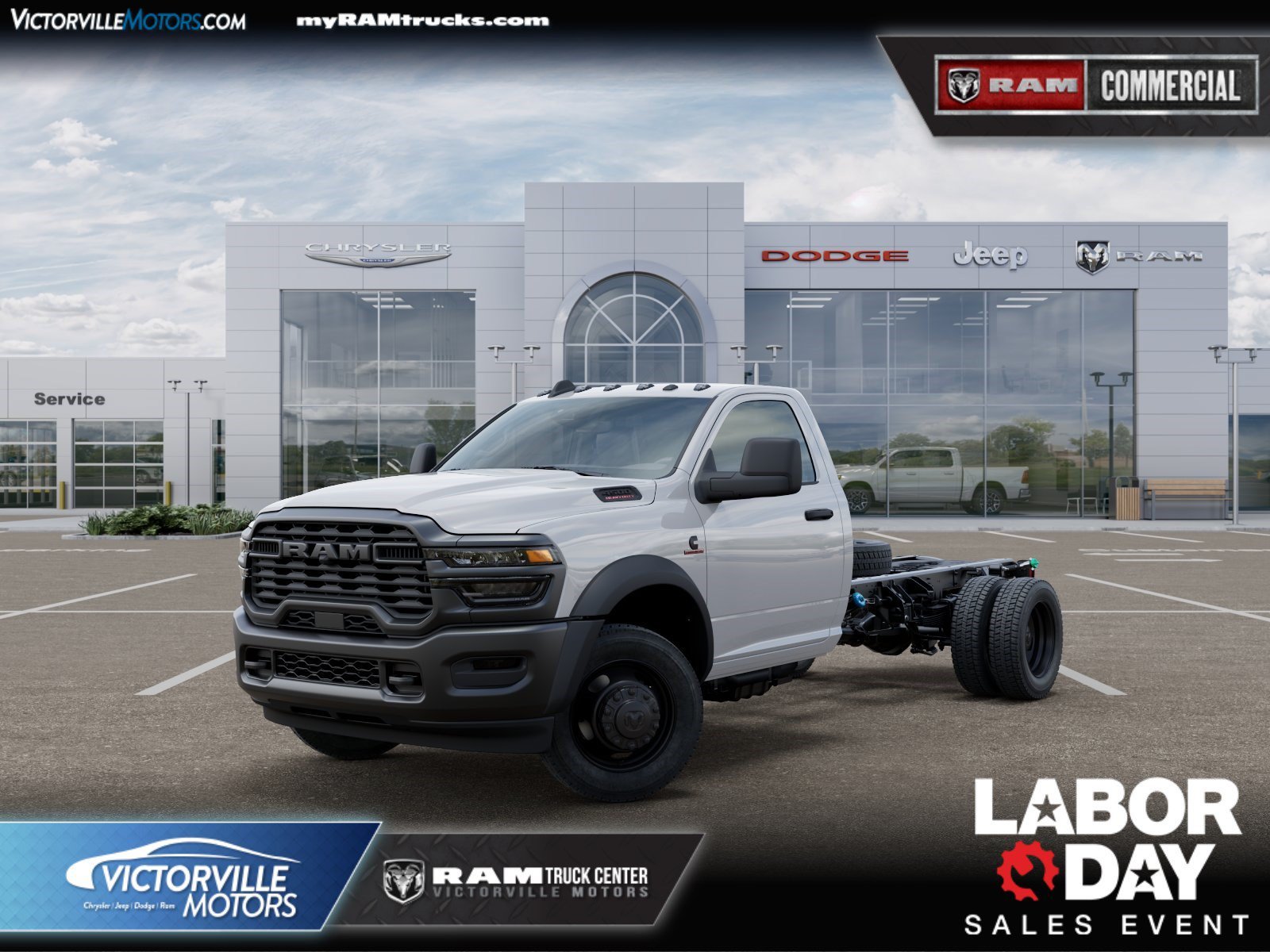
  • 2026 Ram 4500 Tradesman 4X4 Crew Cab DRW 197" WB
    New

    2026 Ram 4500

    Tradesman 4X4 Crew Cab DRW 197" WB · Pickup

    $74,317

    Mileage
    116 mi
    Listed by an outside seller, CAReference listing
    Last confirmed September 13, 2026 — contact seller to confirm availability
    View Original Listing
  • 2026 Ram 4500 Tradesman 4X4 Reg Cab LWB DRW 169" WB
    New

    2026 Ram 4500

    Tradesman 4X4 Reg Cab LWB DRW 169" WB · Pickup

    $70,672

    Mileage
    55 mi
    Listed by an outside seller, CAReference listing
    Last confirmed September 13, 2026 — contact seller to confirm availability
    View Original Listing
  • 2026 Ram 4500 Tradesman Crew Cab DRW 197" WB
    New

    2026 Ram 4500

    Tradesman Crew Cab DRW 197" WB · Pickup

    $91,498

    Listed by an outside seller, CAReference listing
    Last confirmed September 13, 2026 — contact seller to confirm availability
    View Original Listing
  • 2026 Ram 4500 Tradesman Crew Cab DRW 197" WB
    New

    2026 Ram 4500

    Tradesman Crew Cab DRW 197" WB · Pickup

    $69,331

    Listed by an outside seller, CAReference listing
    Last confirmed September 13, 2026 — contact seller to confirm availability
    View Original Listing

Buying a work vehicle in Costa Mesa

What drives commercial vehicle work in Costa Mesa is not manufacturing or freight but audiences. A major retail destination, a performing arts complex and the county fairgrounds together draw very large numbers of people, and almost every trade here exists to prepare, supply or reset the venues they visit.

That produces a rhythm quite unlike an industrial city. Work happens around events rather than across a steady week — load-in before, service during, strike afterwards, frequently overnight and always to a deadline that will not move because it is tied to a public opening.

The design and creative sector is the second distinctive feature. The city hosts a concentration of studios, showrooms and action-sports businesses, which generates fit-out work, showroom installation and the specialist transport of display pieces and fragile materials.

Retail is the third. A large shopping and dining concentration requires constant replenishment and maintenance, carried out in service corridors and shared loading docks that were designed to keep delivery traffic away from customers rather than to make life easy for drivers.

Residential work exists but is secondary, serving established housing rather than new building. As elsewhere along the coast, it is repair and replacement work suited to an organised van rather than the material-hauling trucks inland construction generates.

Property costs are high and industrial land is limited, so contractors serving the city frequently base elsewhere. Combined with dispersed county dealer inventory, that means vehicle purchasing commonly happens well outside the city, with Inland Empire stock a regular destination.

What Costa Mesa businesses actually buy

Event production and staging

Fairground, arts complex and venue activity supporting staging, lighting and audio-visual businesses. Loads are bulky rather than heavy, so box bodies with dependable liftgates matter far more than payload, and schedules are fixed by public opening times.

Retail fit-out and shopfitting

Constant tenant churn across the retail district generates interior construction and display installation. Work happens overnight or outside trading hours, in service corridors sized for modest vehicles rather than full-length trucks.

Restaurant and hospitality supply

A dense dining sector requiring daily deliveries into shared loading areas with strict time windows. Refrigerated vans and moderate box trucks chosen for the ability to place and unload quickly rather than for capacity.

Design showroom and specialist transport

Studios and showrooms needing careful movement of furniture, fixtures and display pieces. Enclosed bodies with proper padding and restraint, where protecting a fragile high-value load matters more than how much of it fits.

Commercial kitchen and refrigeration service

The concentration of food service premises sustains urgent refrigeration and equipment repair. High-roof vans fitted as workshops, carrying enough parts inventory to complete the repair before a venue has to stop trading.

Facilities and property maintenance

Large retail and office properties requiring ongoing building services work. Service bodies and vans configured broadly, with access hours and parking structure clearances dictating vehicle choice more than the work itself does.

Local conditions that change the decision

Service access at the major retail and venue premises is deliberately separated from public traffic, which means narrow corridors, shared docks and limited turning room. Vehicles that place easily are considerably more productive than larger ones that cannot reach the bay.

Parking structure clearance limits catch out anyone running a high-roof van or box body. Measure the structures you must enter before specifying roof height, because the alternative is carrying equipment a long way on foot.

Event traffic is heavy, predictable and concentrated. Fairground and arts complex programmes congest the surrounding roads on known dates, and local operators schedule around published calendars rather than discovering them.

Coastal proximity brings mild temperatures and some salt-laden air, though less aggressively than directly on the shoreline. Corrosion is worth watching on older vehicles without being the dominant concern it is a few miles west.

Costa Mesa buying questions

What work vehicles suit Costa Mesa?
Moderate box trucks with reliable liftgates and high-roof vans. The work is event logistics, retail fit-out and hospitality supply, all into constrained service areas, so the ability to place and unload quickly beats carrying capacity almost every time.
Why does liftgate reliability matter so much here?
Because the loads are bulky rather than heavy and the schedules are fixed by public opening times. A liftgate failure during an event load-in is not a delay you can absorb, which makes its condition and service history a priority when buying.
Are parking structures a real constraint?
Yes, and it is a frequent and avoidable mistake. Much of the retail and office parking here sits below the clearance a high-roof van needs. Check the specific structures you must enter before deciding on roof height.
How much does event scheduling affect the working day?
A great deal. Fairground and arts programmes congest surrounding roads on predictable dates, and venue work itself happens around public openings rather than on a normal weekday rhythm. Local operators plan from published calendars.
Do I need corrosion protection this close to the coast?
It is worth attention without being the dominant concern it is directly on the shoreline. Check underbody condition on older vehicles and wash more often than an inland operator would, but the exposure here is milder than a few miles west.
Is it practical to base a fleet in Costa Mesa?
Industrial land is limited and property costs are high, so many contractors serving the city base elsewhere and travel in. That is common enough to be unremarkable, and the freeway access makes it workable.
How much of the work here happens outside normal hours?
A great deal of it, and that shapes vehicle choice more than people expect. Retail fit-out, venue load-in and much of the facilities work happen overnight or before trading starts, because the premises cannot be disrupted while customers are in them. That puts a premium on good work lighting in and around the vehicle, on secure storage for tooling left in it between night shifts, and on a vehicle quiet enough not to cause complaints in the residential streets bordering some of these sites.
Where should I buy a work vehicle serving this area?
Look well beyond the city. County inventory is dispersed rather than concentrated, and Inland Empire dealers carry deeper stocks of completed upfitted vehicles. Commercial dealers deliver across that distance without difficulty.

Local guidance reviewed by the SoCal Work Trucks editorial team, last updated 2026-09-13.

Is the Ram 4500 the right truck for your work?

Medium-duty chassis cab for service and dump bodies.

Contractor dumps and heavy service bodies below the 19,500 lb tier.

Typical specifications

Ranges across common configurations of this model. The figures for any individual vehicle depend on its cab, wheelbase, drivetrain and upfit.

GVWR
16,500 lbs
Payload
7,500–10,500 lbs
Towing
20,000–35,000 lbs
Seating
3–6 seats

These are model ranges, not a specific truck. Payload in particular varies by well over 1,000 lbs across configurations. Always confirm against the door-jamb sticker and the manufacturer documentation for the exact vehicle before you buy or load it.

Configurations to choose between

  • Regular and Crew Cab
  • Multiple cab-to-axle lengths
  • DRW

What buyers get wrong

Body and upfit lead times often exceed chassis availability. Order the body when you order the chassis, not after it arrives.

Body types it is built as

Who buys the Ram 4500

What else to consider

Vehicles commonly cross-shopped against the Ram 4500.

Ram 4500: the full picture

Nobody browses their way to a Ram 4500. It is a deliberate purchase made by someone who has worked out what their body weighs and discovered that a one-ton chassis cannot carry it honestly. That makes this a specification exercise rather than a shopping decision, and the buyers who do best with it are the ones who arrive with numbers.

The vehicle is sold as a chassis cab and effectively nothing else. There is no pickup bed version to consider. What you are buying is a cab, a frame and a driveline, with the expectation that a body builder turns it into a working truck. That means the purchase runs through two suppliers, and the body builder’s requirements govern more of the order form than the dealer’s options list does.

Its position in the range is genuinely useful rather than a marketing gap. The one-ton below runs out when a service body carries a crane or a compressor, or when a dump body starts moving material every day rather than occasionally. The 5500 above adds capacity but also adds size, cost and a heavier feel on the road. The 4500 covers a wide middle where a lot of Southern California contracting actually sits.

The Cummins being standard rather than optional changes the arithmetic compared with the lighter trucks. On a one-ton, choosing diesel is a decision with a price attached. Here it comes with the truck, which removes a choice but also removes the temptation to under-engine a vehicle that will spend its life loaded. For sustained work at this weight, that is the right engine anyway.

Cab-to-axle dimension matters more on this truck than almost anything else on the order. It determines what body will physically fit and how the finished vehicle carries its load, and it cannot be altered afterwards. Body builders have firm views about which dimension suits which body, and a buyer who orders a chassis before consulting them is gambling with a large sum of money.

Against the Ford and Chevrolet equivalents the differences are modest and mostly commercial. All three are competent chassis with established upfitter support. Ford has the deepest service network in the region, Chevrolet often competes hard on fleet terms, and Ram brings the Cummins and a following that goes with it. Quote the complete finished truck from all three rather than comparing chassis prices.

How businesses actually use it

Crane and compressor service bodies

Mobile mechanics · Industrial maintenance · Crane service · Agricultural service

A service body carrying an articulating crane, a compressor or a welding plant places heavy permanent weight behind the rear axle and adds dynamic loading in use. This is the application where a one-ton is genuinely inadequate and this chassis is comfortable.

Typical configuration: Regular or Crew Cab with an 11 to 12 ft crane service body

Contractor dump bodies

Grading · Hardscape · Demolition · Landscaping

A dump body moving base material, spoil or aggregate daily rather than occasionally. The capacity step over a one-ton reduces round trips measurably on jobs where material volume drives the schedule, while the truck stays usable on residential streets.

Typical configuration: Regular Cab with a 10 to 12 ft dump body

Flatbed and stake material transport

Building supply · Steel · Solar · Modular construction

A flat deck loaded by forklift from either side, carrying dense material where payload rather than deck area is the binding constraint. Deck height and overhang both affect usability at the yards you collect from, so specify against real sites.

Typical configuration: Regular or Crew Cab with a 12 to 14 ft flatbed or stake body

Landscape and irrigation crew trucks

Landscaping · Irrigation · Grounds maintenance · Tree service

A crew cab carrying a team plus a dump or landscape body, replacing a separate pickup and trailer. Removing the trailer simplifies site access and parking, though the longer wheelbase a crew cab requires reduces manoeuvrability, so check your sites first.

Typical configuration: Crew Cab with a landscape dump body

Utility and municipal maintenance

Municipal fleets · Water districts · Public works · Utility contracting

Public-sector fleets standardising one chassis across departments, bodied differently according to task. Common specifications include service bodies with power take-off provisions, small dumps and utility bodies with generator or compressor mounting.

Typical configuration: Chassis cab with power take-off and electrical provisions

Towing and recovery bodies

Vehicle recovery · Roadside assistance · Fleet support

Light recovery and rollback bodies sit naturally on this chassis. Frame rating and wheelbase must match the body builder’s specification exactly, and the finished combined weight ratings deserve checking against licensing requirements before committing.

Typical configuration: Regular Cab with a rollback or wrecker body

How to choose the right configuration

Talk to the body builder before you talk to a dealer, and treat their requirements as the specification. They will tell you the cab-to-axle dimension, wheelbase, frame rating and any driveline provisions their body needs, and every one of those has to be on the order before it is placed. Reversing that sequence produces trucks that cannot take the equipment they were bought for.

Weigh the finished vehicle in your head before you commit to it on paper. Add the body, then the equipment that lives on it permanently, then consumables, fuel and the people in the cab. Whatever remains under the rating is what you can actually carry, and it is routinely far less than the chassis figure implies.

Compare the 3500 and 5500 honestly rather than assuming the middle is right. If a properly specified one-ton covers the work with margin, it costs less to buy, insure and run. If your numbers are already near the 4500 ceiling, the 5500 leaves room for the next body and shows the benefit in brake and tyre life. The middle option is correct surprisingly often, but it should be a conclusion rather than a default.

Plan the schedule around the body build, not the chassis delivery. Upfit queues in Southern California routinely run for months, and unusual bodies run longer. Get a written completion estimate from the builder and make commitments to customers against that date rather than against when the chassis arrives.

Quote all three manufacturers as complete finished trucks. Body builders sometimes price differently by chassis, and incentives vary by month and by fleet programme, so a chassis that looks cheaper can produce a more expensive finished vehicle. The only comparison that means anything is the one that includes the body.

Finally, check where your nearest capable service facility is. Medium-duty servicing is a different proposition from pickup servicing, the network is thinner, and a truck that is awkward to get looked after will cost you more in downtime than any purchase saving. Confirm this before standardising a fleet rather than after.

Our assessment

An editorial evaluation written by the SoCal Work Trucks editorial team, last reviewed 2026-09-04. It is our own assessment, not customer reviews or ratings.

An unglamorous and genuinely useful chassis that solves a specific problem: bodies too heavy for a one-ton, on a truck smaller and cheaper than the class above. The Cummins comes as standard, upfitter support is good, and the middle position suits a great deal of Southern California contracting. Buy it from measured weights, and buy the body before you buy the truck.

What it does well

  • Fills a real gap between one-ton and medium-duty

    Enough frame and axle for crane bodies and daily dump work without the size, cost and road manners of the class above. A lot of contracting sits exactly here.

  • Cummins diesel as standard

    Removes the temptation to under-engine a truck that will spend its life loaded, and brings an engine with a strong durability reputation and solid used demand.

  • Established upfitter support

    Southern California body builders know this frame well, so service, dump and flatbed configurations are predictable to order and straightforward to repeat.

  • Still manageable on residential streets

    Meaningfully easier to place than a heavier chassis, which matters for landscape and contracting work that finishes in established neighbourhoods.

  • Sensible base for fleet standardisation

    One chassis bodied several ways across departments simplifies parts, training and driver familiarity, which is usually worth more than optimising each truck separately.

Where it falls short

  • Chassis cab only

    There is no pickup version, so this is only the right vehicle if a body is being built. Buyers wanting a bed should be looking at the one-ton instead.

  • The body governs the timeline

    Upfit queues of several months are normal, and the chassis is rarely the constraint. Businesses needing a working truck quickly should look at completed used vehicles.

  • No engine choice

    The Cummins is standard, which suits sustained heavy work but removes the cheaper petrol route that suits trucks doing lighter local duty with frequent short trips.

  • Medium-duty servicing is less widely available

    Fewer facilities handle this weight class than handle pickups, and the gap is more noticeable away from the main corridors. Downtime is the cost of getting this wrong.

  • Easy to over- or under-specify

    Cab-to-axle and frame decisions are permanent, and a mistake produces either a truck that will not take the body or one carrying capacity it never uses.

Ownership and used-buying notes

Establish who built the body and whether they are still trading. On a chassis cab the body carries much of the value and most of the maintenance burden, and parts for a one-off build from a company that has closed can be effectively unobtainable. Recognised Southern California builders are both easier to support and easier to resell.

Inspect the frame where the body is mounted, looking for drilling, welding or evidence of repair. A body fitted without regard to the manufacturer’s guidance loads the frame in ways it was not designed for, and the consequences appear as cracking or distortion rather than as anything obvious on a test drive.

On a dump body, cycle it fully and watch the hydraulics, checking the pump, rams, hoses and hinge points under load rather than empty. On a crane body, ask for the crane’s own inspection and service record, since it is a separate piece of lifting equipment with its own obligations and its own expensive failure modes.

Questions buyers ask

Is the Ram 4500 available as a pickup?
No. It is sold as a chassis cab, intended for a body builder to fit a service body, flatbed, dump or similar. If you want a bed, the 3500 pickup is the vehicle to look at. Buying a 4500 only makes sense when a body is part of the plan.
When should I choose a 4500 over a 3500?
When the body plus its permanent equipment exceeds what a one-ton can carry honestly. Crane service bodies, compressor units and dump bodies used daily are the usual triggers. If a properly specified 3500 covers the work with margin, it costs less to buy and run and is easier to live with.
When should I step up to a 5500 instead?
If your calculated weights already sit near the 4500 ceiling, or if you expect the work to grow. Running any chassis permanently at its rating costs you in brakes, tyres and resale. The 5500 usually costs modestly more and leaves room for the next body you buy.
What is cab-to-axle and why does it matter so much?
It is the distance from the back of the cab to the centre of the rear axle, and it determines what body will fit and how the load sits over the axle. It is fixed when the chassis is built and cannot be changed afterwards, which is why the body builder must specify it before the order is placed.
Do I need a commercial licence for a Ram 4500?
For the truck alone, generally not, since it sits below the 26,001 lb point at which California licensing requirements typically change. A completed truck plus a loaded trailer can produce a combined rating that does cross it, so confirm your specific configuration with the California DMV.
How long does a body build take?
Commonly several months once the chassis arrives, and longer for specialist bodies such as cranes or recovery equipment. The chassis is seldom the delay. Get a written estimate from the builder and make customer commitments against that rather than against vehicle delivery.
Is the Cummins the only engine?
Yes, it comes as standard at this weight, which suits a truck that spends its working life loaded. It does mean there is no cheaper petrol option for lighter duty, and modern diesel after-treatment considerations apply, though sustained working loads are the duty cycle those systems handle best.
How does the Ram 4500 compare with an F-450 or Silverado 4500HD?
All three are competent chassis with good upfitter support, and the honest differences are commercial. Ford has the densest service network in the region; Chevrolet often competes hard on fleet terms; Ram brings the Cummins. Quote all three as complete finished trucks rather than comparing chassis prices.
What should I check when buying a used Ram 4500?
The body first, since that is where the value and the risk sit: who built it, whether they still trade, and whether parts remain available. Then the frame for drilling or welding from the upfit. Then hydraulics on a dump, or the crane’s own inspection record if one is fitted.
Can one 4500 chassis serve several different roles?
Not really, once bodied — the body is effectively permanent. What fleets do instead is standardise on the chassis and body it differently for different departments, which gives shared parts, shared technician knowledge and driver familiarity across a varied fleet while each truck stays purpose-built.
How well does a Ram 4500 hold its value?
Reasonably, and the body matters more than the chassis. A quality service or dump body from a recognised Southern California builder, in good condition with documented maintenance, sells readily because demand for working trucks at this weight is steady. An unbranded one-off build is much harder to value and slower to sell.
Does the 4500 need four-wheel drive for Southern California work?
For most contracting, no. Sites are largely paved, the weather is dry for most of the year, and a loaded chassis with weight over the rear axle finds traction well enough. Leaving it off saves purchase cost, saves weight that comes straight off payload, and removes a drivetrain that needs servicing on a truck that already has plenty to maintain. It earns its place if you regularly reach graded or unmade sites, work on fresh fill or soft ground, or operate on agricultural land, all of which are common enough inland that plenty of contractors specify it deliberately.
How does a loaded 4500 cope with grades and brakes?
Sustained descents are the hard part rather than the climbs, and Southern California has plenty of long grades between inland sites and the coastal basin. A fully loaded dump or service body puts real heat into the brakes on the way down, and repeated over months that shows up as shortened pad and rotor life rather than as any dramatic event. An exhaust brake takes a meaningful share of that work off the service brakes and is worth having. When buying used, ask about brake service intervals rather than only current pad thickness, because the interval tells you how the truck was actually worked.
What are the main running costs at this weight?
Tyres and brakes are the recurring items and both cost more than on a one-ton, particularly on a truck that works loaded and descends grades regularly. Beyond that, budget body maintenance as a separate line — hydraulics, crane servicing, hinge and mounting inspection — because on a chassis cab it is frequently the body rather than the truck that takes the vehicle off the road.

Official sources and further reading

Manufacturer and regulatory sources for specifications and requirements. We do not link to other vehicle-selling websites.

Shop Ram 4500 by model year

Nearby cities

Find a Ram 4500 near Costa Mesa

Two quick steps. A fleet specialist will follow up.

  1. 1. Your needs
  2. 2. Your details