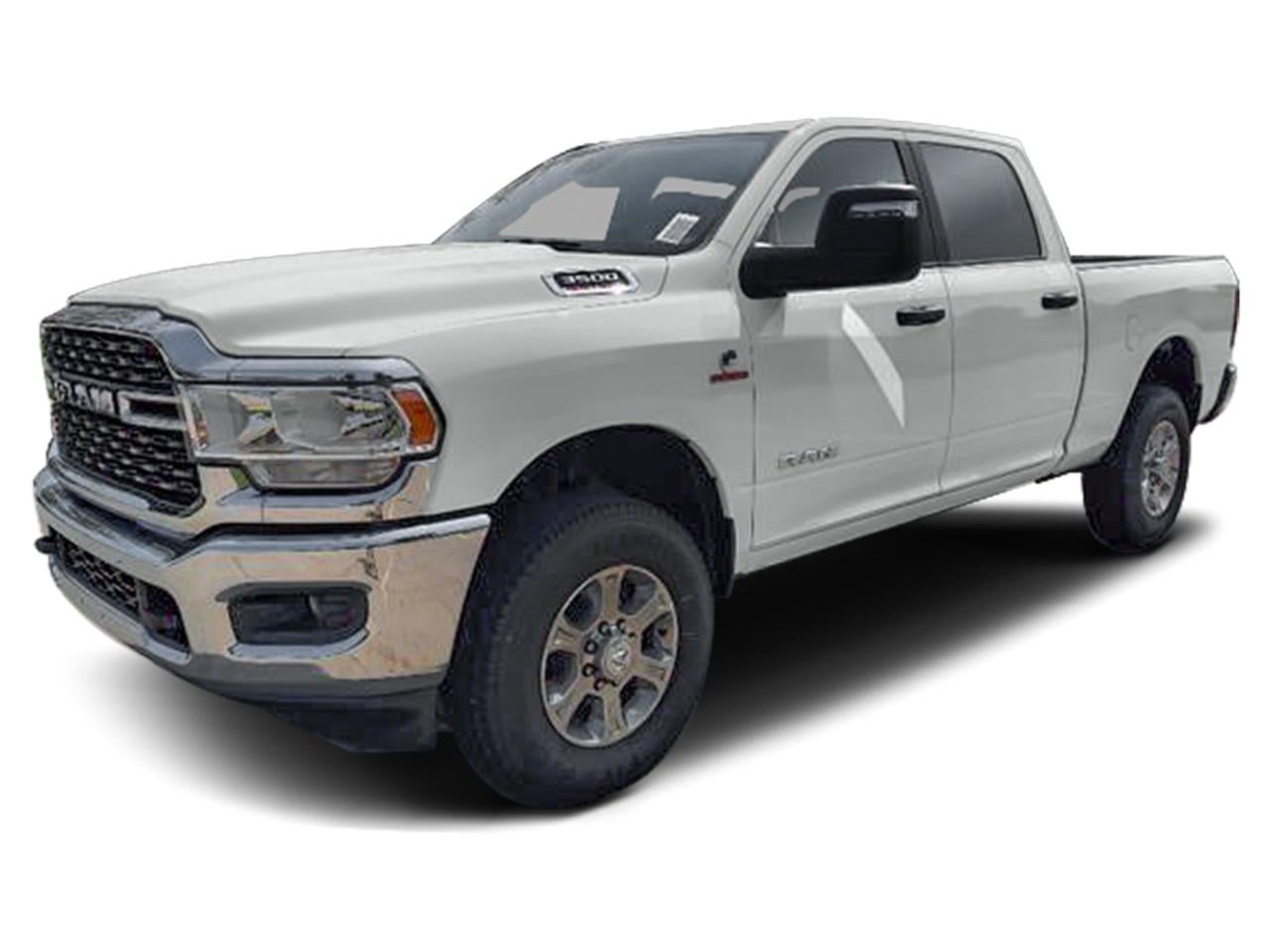
- Should I get single or dual rear wheels?
- Calculate what lands on the rear axle. Gooseneck pin weight runs roughly a fifth to a quarter of the loaded trailer, and a permanent body adds its own. If that sits comfortably within a single-wheel axle rating, take the narrower truck: it parks more easily and costs less in tyres. If it does not, the dually is not optional.
- Why is the advertised payload so much higher than the truck I was quoted?
- Because the maximum belongs to a stripped regular-cab dually with the petrol engine. Adding a crew cab, four-wheel drive and the diesel each reduce payload, and most working trucks have all three. The door placard on the specific vehicle is the number that governs.
- Can a Ram 3500 really tow 37,000 lbs?
- One particular configuration can, on a gooseneck, with the right axle ratio and drivetrain. Most trucks on a forecourt are rated considerably lower. Treat the headline as a ceiling for one specification and check the towing guide and door placard for the vehicle you are buying.
- Pickup or chassis cab for a dump body?
- Chassis cab. It is designed for a body to be mounted on the bare frame, and your upfitter will specify cab-to-axle to suit the body length. Fitting a dump insert into a pickup bed is possible but carries less and wastes the payload the bed itself consumes.
- Is the Cummins worth it in a 3500?
- If you tow heavy most weeks or cover high mileage, yes — it repays in torque, fuel and resale. If you tow occasionally and work locally, the petrol engine costs less to buy and service and avoids the after-treatment issues short trips cause. Decide on towing hours, not on reputation.
- How does the 3500 compare with an F-350 or Silverado 3500HD?
- Capability is broadly comparable and the honest differentiators are the engine, the ride, and your dealer relationship. Ram offers coil rear springs and available air suspension; Ford has the deepest commercial network in Southern California. Cross-shop all three on the specification you actually need.
- Do I need a special licence for a Ram 3500?
- For the truck alone, generally not. Towing changes it: combined ratings at this weight can cross thresholds that affect licensing in California. Confirm your specific truck and trailer combination with the California DMV, because the answer determines who on your team can drive it.
- Is the air suspension worth having on a working truck?
- If loads vary through the day, yes. Keeping the truck level under changing pin weight preserves headlight aim, hitch geometry and brake balance, which matter more loaded than empty. The cost is one more system to maintain, and it is worth exercising fully when inspecting a used truck.
- What should I check on a used Ram 3500 chassis cab?
- The body first, since that is where the value is: dump hinges, rams and hydraulic pump, or flatbed deck condition. Then the frame for drilling or welding from the upfit. Then the rear tyres, inner ones included, for even wear. Ask who built the body, because a recognised builder is much easier to resell.
- How long does a dump body take to build?
- Typically six to sixteen weeks after the chassis arrives, depending on the upfitter and their backlog. If you need the truck working sooner, a completed used unit is usually faster and has the advantage that you can weigh the finished vehicle rather than estimating what it will come out at.
- Is a 3500 enough, or should I look at a 4500?
- If you are specifying near the top of the 3500 range, look at the 4500. It costs somewhat more and carries considerably more, and the margin shows in brake life, tyre wear and resale. The 3500 makes most sense when it comfortably covers the work rather than just barely covering it.
- What does a dually cost to run compared with a single-wheel truck?
- The obvious difference is six tyres instead of four, and at one-ton sizes those are not cheap items, so a full replacement set is a noticeably larger bill arriving on the same schedule. Beyond tyres the gap is smaller than people expect: fuel use rises slightly with the extra weight and rolling resistance, and insurance is often marginally higher. The cost that rarely gets counted is time. A dually is slower to park, harder to place on residential streets and awkward in older commercial structures, and if that describes most of your week you are paying for capability in daily minutes as well as in money.
- How hard is a one-ton dump truck on brakes in hilly terrain?
- Harder than most buyers plan for, and Southern California has plenty of sustained descent between inland job sites and the coastal basin. A loaded dump body descending a long grade puts real heat into the brakes, and repeated over months that shows up as shortened pad and rotor life rather than as a dramatic failure. An exhaust brake, where available on the diesel, makes a genuine difference by taking load off the service brakes. When buying used, ask about brake service intervals rather than just current pad thickness, because the interval tells you how the truck was actually driven.
- How well does a Ram 3500 hold its value?
- Diesel trucks hold value strongly, helped by steady demand for one-ton towing capability. Chassis cabs with quality bodies from recognised Southern California builders sell particularly well. Documented service history matters most on the diesel, where buyers are paying for the engine and want evidence it was maintained.